

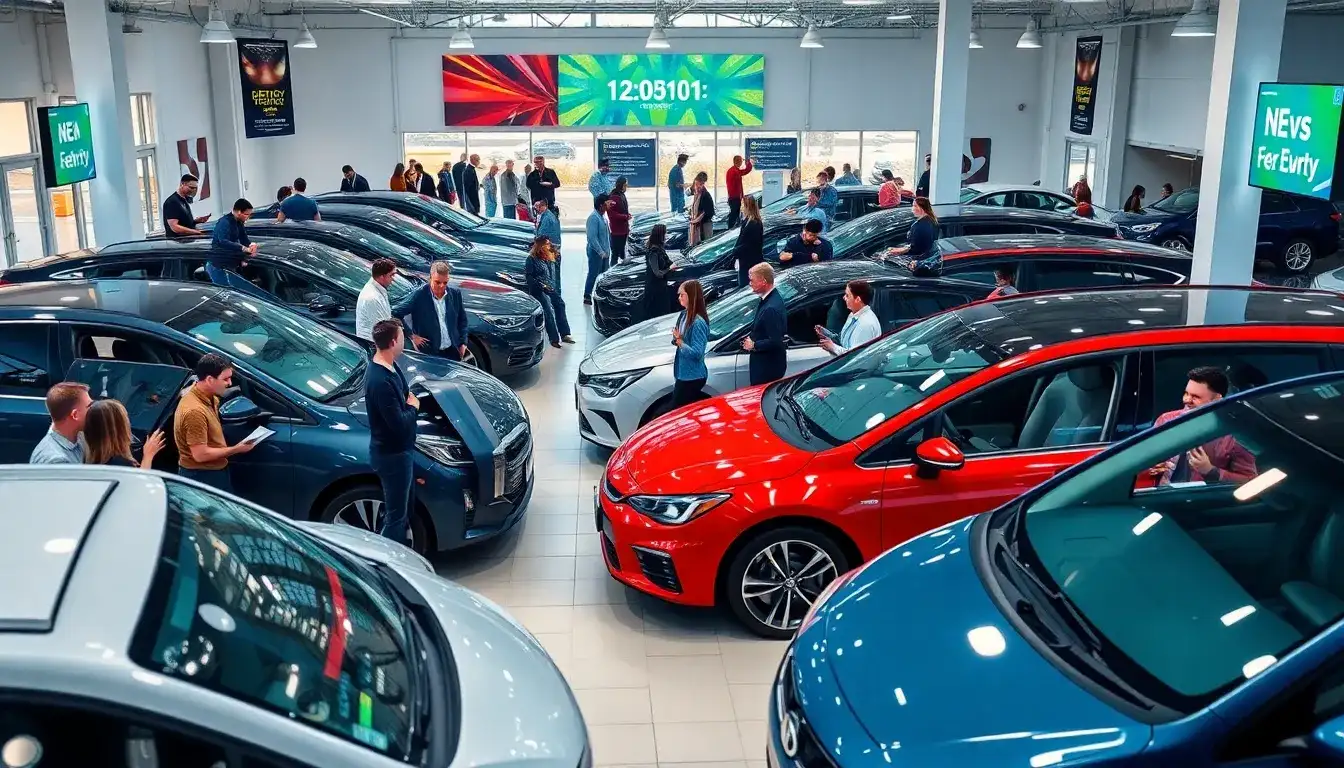
The exemption of the vehicle purchase tax for new energy vehicles will decline next year, prompting both automakers and consumers to seize the last opportunity to benefit from this policy.
As of January 1, 2026, the full exemption on vehicle purchase tax, which has been in place for ten years and has supported the rapid expansion of China’s new energy vehicle market, will transition to a new model where the tax will be halved. This change will directly impact consumers’ budget planning for vehicle purchases and their payment costs.
Recently, the Ministry of Industry and Information Technology, along with two other departments, jointly announced the technical requirements for new energy vehicle products regarding the reduction and exemption of vehicle purchase tax for 2026–2027, clarifying the relevant adjustments. The new approach of “no exemption for non-compliant vehicles” has become a consensus in the industry.
Automakers are accelerating their actions. On one hand, many manufacturers are launching new models in the second half of this year to take advantage of the policy benefits, driving an increase in orders and striving to meet their annual sales targets. On the other hand, established market leaders are preparing a lineup of models that will require delivery next year, with tax difference subsidies becoming a mainstream strategy among automakers.
This policy shift reflects a transition in China’s new energy vehicle industry from relying on policy incentives for growth to achieving development through core technologies. Industry experts agree that the competition in the automotive market will increasingly focus on technology, brand, service, and user experience, initiating a longer-term quality competition.
On October 9, a joint announcement by the Ministry of Industry and Information Technology, the Ministry of Finance, and the State Taxation Administration provided clarity on the technical requirement adjustments for pure electric passenger vehicles and plug-in hybrid vehicles (including range-extended hybrids). From 2026 onward, models listed in the “Catalog of New Energy Vehicles Eligible for Purchase Tax Exemption” must comply with these announced requirements.
The new regulations specifically aim to promote upgrades in battery capacity and hybrid systems, optimize driving experience, and enhance product safety and competitiveness. According to Cui Dongshu, secretary-general of the Passenger Car Association, “Strict standards will drive companies to produce higher-performance models that meet consumer demands for long range and low energy consumption, thereby expanding the market and supporting green and low-carbon development, achieving a win-win for industry and consumer upgrades.”
Wang Huan (a pseudonym), a representative from a new energy brand, analyzed that this adjustment reflects the overall technical advancement of China’s new energy vehicles, pushing automakers to improve their products and focus more on technology upgrades. In the context of the industry’s “anti-involution,” this is a sign of guiding rational competition.
To support the development of the new energy vehicle industry, China has exempted vehicle purchase tax since 2014, with a maximum exemption of 30,000 yuan for each new energy passenger vehicle. This year marks the final year of the exemption benefits. In 2026 and 2027, the purchase tax for new energy vehicles will be halved, with a maximum reduction of 15,000 yuan per vehicle. Wang Huan stated that the 15,000 yuan reduction for new energy passenger vehicles in 2026 indicates that models priced at 300,000 yuan or below listed in the tax exemption catalog will still benefit. For models priced at 500,000 yuan, the tax reduction will decrease from 30,000 yuan to 15,000 yuan, dropping the exemption rate from 60% to 30%.
Most automakers are cautiously optimistic about the market impact of the new regulations. NIO’s founder, Li Bin, explicitly mentioned in an interview that all automakers will face significant pressure in the first quarter of next year due to the decline in purchase tax exemptions, which may lead to a rush in demand. He predicts that nationwide new energy vehicle sales in the first quarter of next year could be about half of those in the fourth quarter of this year. During the 2025 World New Energy Vehicle Conference, a leader from a state-owned automotive enterprise suggested a smooth transition for the purchase tax changes, starting implementation from the off-peak season.
As the reduction and exemption policies are closely linked to technical requirements, the “no exemption for non-compliant vehicles” rule presents challenges for certain technical routes and models. Some industry professionals believe that range-extended models will have a lower compliance threshold, while certain heavy traditional plug-in hybrid models will face greater challenges. Based on interviews with industry insiders, there is a general consensus that the gradual withdrawal of purchase tax incentives is an inevitable trend. “Through differentiated tax rates, standardized technical requirements, and refined management, we will drive the industry from relying on policy support to becoming self-sustaining in the market. This is a necessary requirement for the new energy vehicle industry to mature,” they stated.
As the countdown to the adjustment of the new energy vehicle purchase tax begins, automakers are scrambling to board the “last train of benefits.” In September, the Chinese auto market experienced the most concentrated wave of new car launches in history, with over 70 new models introduced. Wang Huan referred to this as “a decisive battle concerning the annual sales targets and future market positioning.” Monthly data released by automakers shows that companies like XPeng, Li Auto, and Xiaomi have high completion rates for their annual sales targets, while brands like BAIC and Zeekr are experiencing challenges in meeting their goals, particularly in the fourth quarter.
“The most challenging situation is for automakers that have yet to gain traction,” Wang Huan remarked. He noted that if they struggle to sell well this year under the purchase tax exemption, it will definitely be harder next year. Hence, the issue of the purchase tax significantly affects automakers’ sales and overall success.
On October 13, data from the Passenger Car Association revealed that retail sales of new energy passenger vehicles reached 1.296 million units in September, a year-on-year increase of 15.5% and a month-on-month increase of 16.2%. The substitution effect of new energy vehicles for traditional fuel vehicles has also accelerated.
The influx of new models has temporarily boosted order volumes for some automakers; however, the upcoming changes in purchase tax could pose new challenges for these orders. A manager from a NIO store in North China informed reporters that placing an order for the new generation ES8 likely means that delivery and invoicing cannot be completed before the end of the year, resulting in a wait time of several months. “Ordering means waiting” is particularly evident for some models.
Observations from the second and third quarters of this year indicate good market sales, yet there is a need to wait for next year’s delivery for certain model matrices, including the new generation NIO ES8, AITO M7, and Xiaomi YU7. Many of these models have already exceeded their production capacity based on this year’s order volumes. As a result, purchase tax difference subsidies have become a new strategy for some automakers. NIO has stated that if customers complete their orders now but due to manufacturer reasons must wait until next year for delivery, they can use purchase tax difference subsidy vouchers to reduce the vehicle price, with a maximum discount of 15,000 yuan. Additionally, AITO, Zunjie, and other products under the “Huawei system” have also launched similar schemes.
Wang Huan believes that this effectively transforms the risks faced by consumers regarding decision-making and purchase tax uncertainties into costs for automakers. Furthermore, this approach helps convert the hesitant consumer base into actual orders. A seasoned automotive observer noted that with NIO and AITO introducing purchase tax subsidy schemes, Xiaomi may also consider similar actions. “Even NIO, which is currently in a loss position, has provided subsidies; Xiaomi, with ample cash reserves, also has the capacity to support users,” they asserted. However, the challenge for Xiaomi lies in whether it can accommodate consumers who impulsively place orders but later realize they have to wait until next year for delivery, thus missing the purchase tax exemption benefits.
As automakers rush to collect orders amid the release of consumer benefits, the pressure now shifts to the delivery side. How can they manage to seize the policy window while also betting on their delivery speed? September and October are the last months for electric vehicles to enjoy tax exemptions, and more consumers are starting to take notice of the rising costs associated with the vehicle purchase tax. Wang Huan articulated that due to models that do not meet the new technical requirements being ineligible for tax exemptions, consumers’ purchasing costs will change. Some outdated models may exit the market due to non-compliance with new requirements, potentially narrowing the range of options for consumers in the short term. However, in the long run, this will encourage the market to offer more quality products.
From observations of various brands in the market, many new energy vehicles are promoting “new car benefits” instead of price reductions, while traditional fuel vehicles are adopting “price-for-volume” strategies. In several sales stores in Beijing, considerable discounts are being offered on fuel vehicles, with some models from brands such as Audi seeing discounts exceeding 150,000 yuan. For example, a store in a core urban area has provided a cash discount of over 150,000 yuan on certain models.
Wang Huan believes that this year’s “golden September and silver October” is of pivotal significance, as it not only features a concentration of policy benefits being realized but also confirms that there is a strong demand for new energy products in the market. Even with the decline in tax exemptions, new energy vehicles still possess formidable competitiveness due to their advantages in intelligence, usage costs, and driving experience.
The initiation of the vehicle purchase tax exemption policy has been a critical catalyst for the growth of China’s new energy vehicle industry, which has evolved from nonexistent to substantial. This year, the retail penetration rate of domestic new energy vehicles has consistently surpassed 50%, leading industry insiders to widely believe that the window for the industry to transition from a “policy incubator” to a “market jungle” has arrived.
“In the future, the market will test the true product strength, cost control capabilities, and market adaptability of automakers,” Cui Dongshu remarked.
Original article by NenPower, If reposted, please credit the source: https://nenpower.com/blog/new-energy-vehicle-purchase-tax-reduction-set-for-next-year-automakers-and-consumers-rush-to-seize-final-benefits/

