

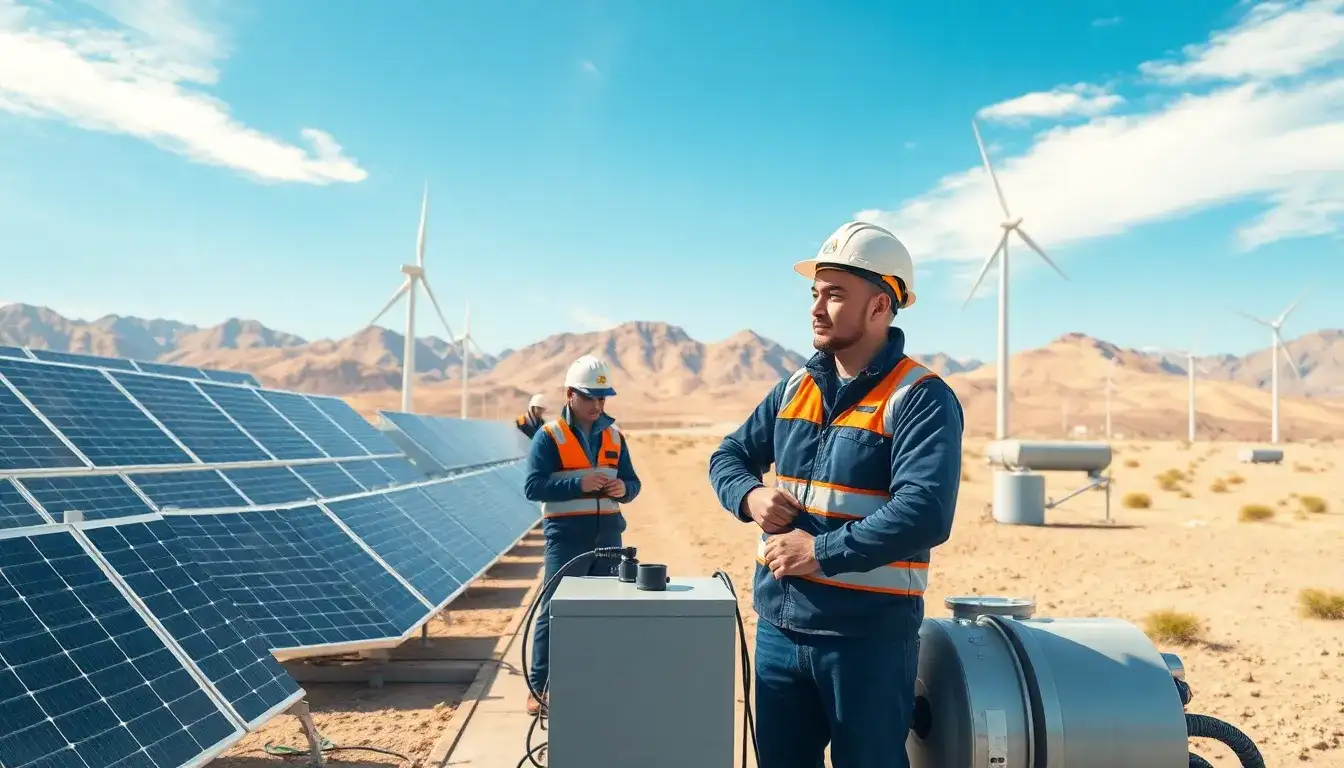
Recently, during a visit to the Shijianfang Wind Farm in Hami, Xinjiang, I observed the province’s first independent energy storage station on the grid side, known as the Woneng Shijianfang Energy Storage Station. This facility comprises 27 storage units that charge during off-peak electricity hours and discharge during peak times, effectively managing the consumption of renewable energy while also capitalizing on price differences between peak and off-peak electricity to enhance economic returns. “The energy storage station can achieve two charges and two discharges daily, with a conversion efficiency of nearly 90%,” stated Shi Mingsheng, the station’s manager.
In Xinjiang, innovative energy storage projects like the Woneng Shijianfang Energy Storage Station are continuously emerging. According to statistics from the State Grid Xinjiang Electric Power Company, as of the end of February, over 200 new energy storage stations have been built in the region, with a total installed capacity of 9.777 million kilowatts and 32.663 million kilowatt-hours.
In recent years, the scale of renewable energy development in Xinjiang has accelerated. By the end of last year, the installed capacity for renewable energy surpassed 100 million kilowatts. However, the renewable energy supply in Xinjiang exhibits seasonal variability, characterized by strong production in spring and autumn and lower output in winter and summer. This pattern contrasts with the high load peaks typically seen in winter and summer, presenting challenges for electricity supply security. Innovative energy storage technologies, known for their efficiency and high quality, are becoming critical regulators for energy transformation in Xinjiang. Promoting new energy storage is seen as a key strategy for ensuring the rapid development of renewable energy and stable electricity supply.
At the Huaren Xianshuichuan Wind Power Energy Storage Station in Hami, the world’s first 100-megawatt-class modular grid-connected energy storage station completed its performance testing on May 30 of last year. This project addresses the stability issues associated with large-scale modular energy storage stations operating in parallel, marking a significant breakthrough in the field of energy storage technology.
Currently, Xinjiang’s new energy storage projects continue to achieve technological advancements. In March of this year, the 300-megawatt/1200-megawatt-hour modular independent energy storage project in Kizilsu has been connected to the grid and delivering electricity for four months. Utilizing advanced modular control technology, this project effectively balances grid power while significantly enhancing the grid’s stability and regulatory capacity. It can charge up to 1.2 million kilowatt-hours of electricity, sufficient to support approximately 200,000 households’ electricity needs during the evening peak for six hours, with an annual adjustable power capacity of around 384 million kilowatt-hours.
The list of new energy storage projects announced in Xinjiang for 2024 includes 41 independent energy storage projects utilizing various technologies such as lithium iron phosphate, hydrogen storage, and thermal storage, indicating a broad application potential for diverse energy storage technologies in the energy sector. In 2024, Xinjiang’s new energy storage is projected to achieve a total charging capacity of 4.48 billion kilowatt-hours, effectively increasing the utilization rate of renewable energy by 3.6%. “From a scaling perspective, the new energy storage capacity added in 2024 is expected to reach 5.553 million kilowatts and 19.529 million kilowatt-hours, reflecting a year-on-year growth of 139%,” said Li Changling, Deputy Director of the Energy Development Research Center at the State Grid Xinjiang Economic Research Institute.
Original article by NenPower, If reposted, please credit the source: https://nenpower.com/blog/new-energy-storage-projects-in-xinjiang-continue-to-advance/

