

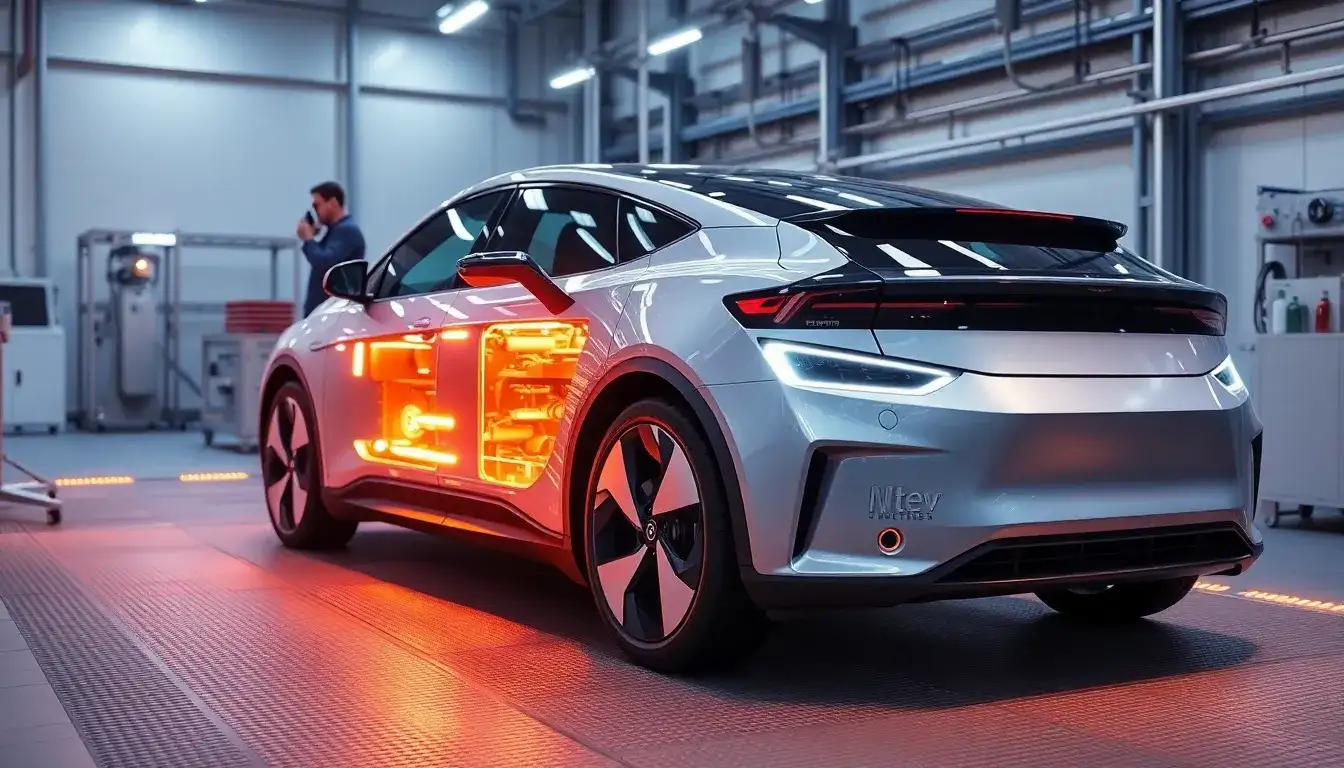
With the approach of July 2024, a significant change is set to transform the electric vehicle (EV) industry. The Ministry of Industry and Information Technology is implementing a mandatory national standard titled “Safety Requirements for Power Batteries Used in Electric Vehicles” (GB38031-2025), which has been dubbed the “strictest battery standard in history.” This new regulation will redefine safety benchmarks in the EV market.
Previously, battery standards functioned as a “passing grade,” but the new regulations will establish a “survival line.” Three core changes are particularly noteworthy, addressing critical concerns for consumers.
Firstly, the new standard mandates that the warning time for thermal runaway in battery systems extends from the previous allowance of 5 minutes after thermal runaway to a requirement of at least 2 hours without flames or explosions after thermal runaway is triggered. Additionally, all monitored temperature points must not exceed 60°C. This requires battery systems to have proactive measures to prevent thermal propagation. Notable advancements such as CATL’s “bionic honeycomb structure” and BYD’s “blade battery multi-dimensional thermal insulation technology” are leading solutions to this challenge.
Secondly, the new standard enhances both thermal runaway alarms and protective measures. The old standard required a warning 5 minutes before the passenger cabin could be endangered by thermal runaway. In contrast, the new regulations mandate that smoke must not enter the passenger cabin during the 5 minutes before and after the alarm is triggered. This is to ensure that passengers are promptly alerted to risks and can evacuate quickly, addressing the critical issues of rapid fire spread and limited escape time in electric vehicle fire incidents.
Lastly, the new standard introduces additional testing scenarios that cover more potential risks. These include a bottom impact test, which simulates scenarios where the vehicle’s undercarriage strikes the ground. The battery pack must withstand three impacts from a 30mm diameter steel ball at a speed of 50 km/h (150J energy) without leakage, fire, or explosion, while also meeting insulation resistance standards. Furthermore, a rapid charging cycle safety test is included, which addresses concerns about battery aging due to frequent fast charging. This requires the battery to pass external short circuit tests after completing 300 fast charge cycles, ensuring no fire or explosion occurs. Testing involves charging from 20% to 80% state of charge, with each charge session lasting no longer than 15 minutes.
The introduction of the bottom impact test and the fast charging safety test specifically targets two common risks associated with daily driving. For instance, the bottom impact test enhances the battery’s resistance to impacts, effectively reducing the risk of fire resulting from bumps on rough roads. Similarly, the fast charging safety test alleviates concerns regarding the impact of frequent rapid charging on battery lifespan and safety. This dual safety upgrade is expected to significantly lower the risk of accidents in new energy vehicles.
In light of this news, many potential EV buyers may be reconsidering their plans. Should they wait until after July 2024 to make a purchase? Fortunately, several brands have already announced that their models comply with the new standards, including the recently launched Dongfeng Nissan N7, the 2025 Exeed Star Era ET, and the GAC Toyota BZ3X, all of which emphasize adherence to the 2026 standards. Therefore, if you plan to buy a vehicle this year, choosing established and mainstream brands should provide peace of mind.
In conclusion, the new battery standard is not an endpoint but rather a new starting point for the energy revolution. The 2025 version of the standard, through technological upgrades, enhanced testing, and stricter regulations, shifts battery safety from being “passively protected” to “actively suppressed,” compelling industry innovation and market consolidation. Consumers can expect safer products as a result.
Original article by NenPower, If reposted, please credit the source: https://nenpower.com/blog/new-battery-standards-set-to-transform-electric-vehicle-safety-in-2024/

