

U.S. Tariffs Challenge! Solar Thermal Alliance Special Discussion: Searching for Solutions to Industry Dilemmas
Date: May 3, 2025
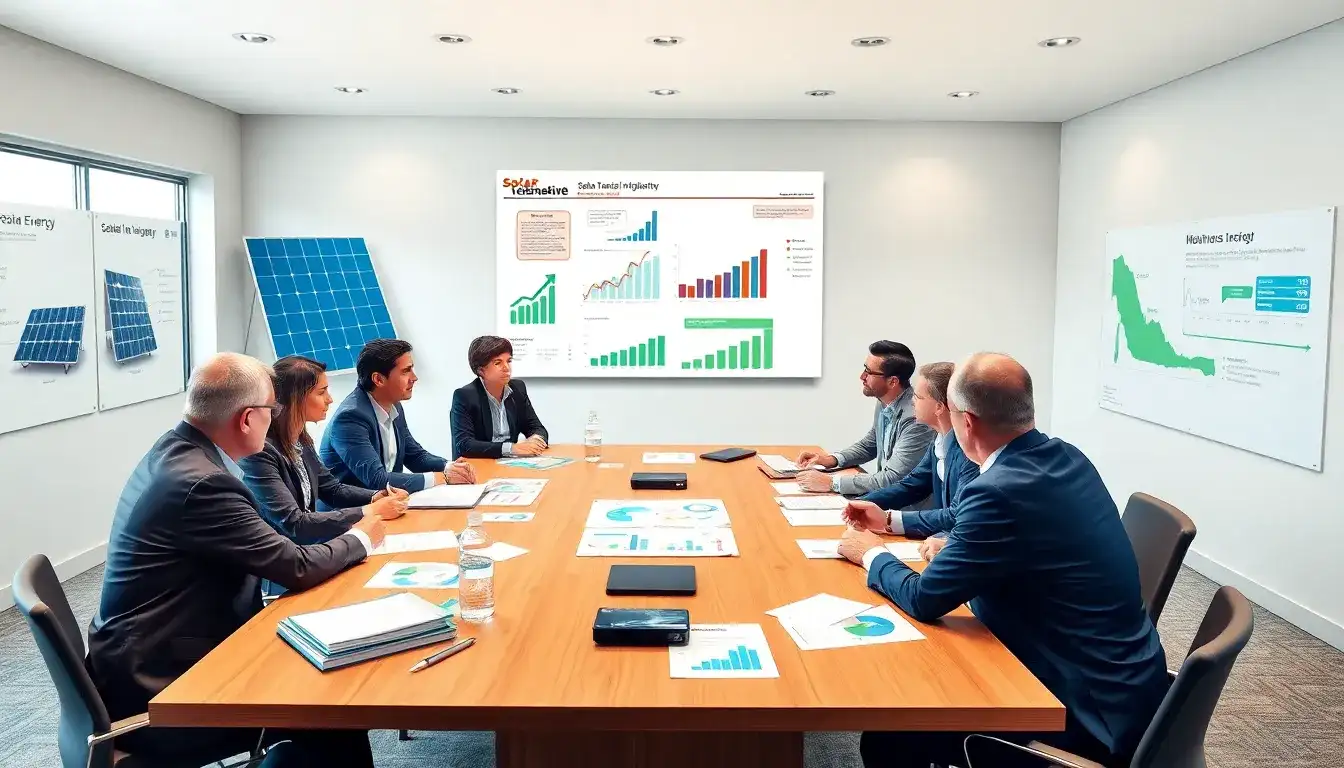
On the afternoon of April 30, 2025, the National Solar Thermal Industry Technology Innovation Strategic Alliance (referred to as the “Solar Thermal Alliance”) held a discussion titled “Impact of U.S. Tariff Policy on the Solar Thermal Power Industry.” Over 70 industry experts and representatives from various sectors of the supply chain gathered online to review the supply chain status of key technologies, special materials, and components related to the U.S. market within the solar thermal industry. They conducted an in-depth analysis of the potential impacts of U.S. tariff policies on the solar thermal sector, aiming to explore innovative collaboration pathways for the industry under the new circumstances. The meeting was chaired by Professor Liu Leping, Vice Chairman of the Solar Thermal Alliance.
At the start of the meeting, Wang Zhifeng, Chairman of the Solar Thermal Alliance and researcher at the Chinese Academy of Sciences, introduced the background of the meeting. He pointed out that U.S. tariff policies are affecting the global economy and introducing uncertainty into the future development of the solar thermal industry. To gain further insights into these potential impacts, the Solar Thermal Alliance invited Professor Cui Fan from the School of International Trade and Economics at the University of International Business and Economics to deliver a keynote presentation.
As an authority on international trade policy, Professor Cui elaborated on the tariff policies enacted during the Trump administration. He noted that the U.S. aims to address internal fiscal deficits, imbalances in international payments, and deindustrialization through high tariffs, while also attempting to curb the development of Chinese manufacturing. He discussed China’s strategies for responding to U.S. tariff policies, emphasizing the government’s commitment to upholding the fundamental rules of the World Trade Organization and its own developmental interests. Professor Cui suggested that the U.S. may maintain high tariff levels for an extended period, urging China to closely monitor policy changes and enhance communication and cooperation with other WTO members to prevent discriminatory tariffs imposed by other nations under U.S. pressure. While the U.S. was once a leader in solar thermal technology, the current administration is heavily investing in traditional fossil energy, which may slow the growth of new energy industries, including solar thermal power. In the context of the trade war, China’s solar thermal sector should consolidate its existing technological and supply chain advantages while expanding applications to ensure supply chain autonomy. Additionally, it must continue to strengthen international economic and technological cooperation with Belt and Road Initiative countries to foster new competitive advantages.
Representatives from various sectors of the solar thermal supply chain—including materials, components, design, system integration, and power plant operation—engaged in discussions on how to mitigate the impacts of tariff policies, enhance supply chain collaboration, and promote technological innovation. Attendees generally agreed that while U.S. tariff policies do not significantly impede the development of the solar thermal industry, challenges remain.
In terms of raw materials, the impact of U.S. tariffs on nickel-based alloys is limited, primarily affecting certain high-performance materials and high-temperature alloy raw materials. However, these impacts are mostly seen in cost increases rather than supply disruptions. In the equipment and components sector, the import of certain precision parts for core equipment will inevitably face obstacles, including mirror assemblies and precision instruments. Equipment such as molten salt pumps is significantly affected by U.S. tariff policies, with tariffs on pumps and valves having risen sharply, resulting in cost increases of over $20,000 per molten salt pump and severely compressing profit margins, potentially leading to order transfers. In design and system integration, some critical technologies related to design authorizations and industrial software applications still pose challenges. During the meeting, several representatives expressed confidence in replacing imported products with localized materials, components, and software. However, concerns remained regarding rising costs, extended product delivery times, and certain companies within the supply chain maintaining an import dependency due to ideological differences.
To tackle these challenges, the solar thermal industry needs to adopt effective response strategies. On one hand, it should intensify research and development, usage, and promotion of domestic materials and components, while actively encouraging the application of local software to reduce reliance on U.S.-related components, designs, and control software. On the other hand, a diversified market development strategy should be implemented to actively explore international markets along the Belt and Road Initiative, optimizing supply chain and market regional layouts. Furthermore, the localization of products and services should be advanced by improving product quality standards and establishing third-party evaluation and certification mechanisms, thereby boosting the confidence of investors and design institutes in non-U.S. products and services.
In the long term, technological advancements and policy support will play a crucial role in mitigating the impacts of U.S. tariff policies. Currently, the localization rate of equipment in China’s solar thermal power sector exceeds 96%, with remaining components having domestic solutions available, such as absorber coatings, nickel-based alloy materials, heliostat backing paints, and molten salt pumps/valves, which are already widely used in projects. The performance of molten salt pumps even surpasses that of foreign products. While U.S. tariff policies may have some impact on existing procurement contracts involving the U.S., they also present an opportunity to promote product localization, accelerating the replacement process for key materials and components, which is beneficial for industry development.
In conclusion, Liu Leping summarized the meeting by stating that participants had focused on the potential impacts of U.S. tariff policies, systematically identifying the issues hindering development and sharing their latest research findings on turning challenges into opportunities, showcasing the confidence and strength of the entire supply chain in facing challenges. He noted that the outcomes of today’s meeting were substantial, and the Solar Thermal Alliance will actively leverage its platform for technological and strategic services in the solar thermal industry, working with experts to compile a special report for member organizations. He emphasized that China’s solar thermal power sector is resilient and has significant potential, and this discussion provided clear insights for responding to U.S. tariff policies. It is crucial for the entire supply chain to unite and seize developmental opportunities amidst adversity.
Original article by NenPower, If reposted, please credit the source: https://nenpower.com/blog/navigating-u-s-tariff-challenges-solar-thermal-alliance-discussion-on-industry-innovation-and-strategies/

