

Price vs. Value: How Can China’s Photovoltaic Industry Break Through?
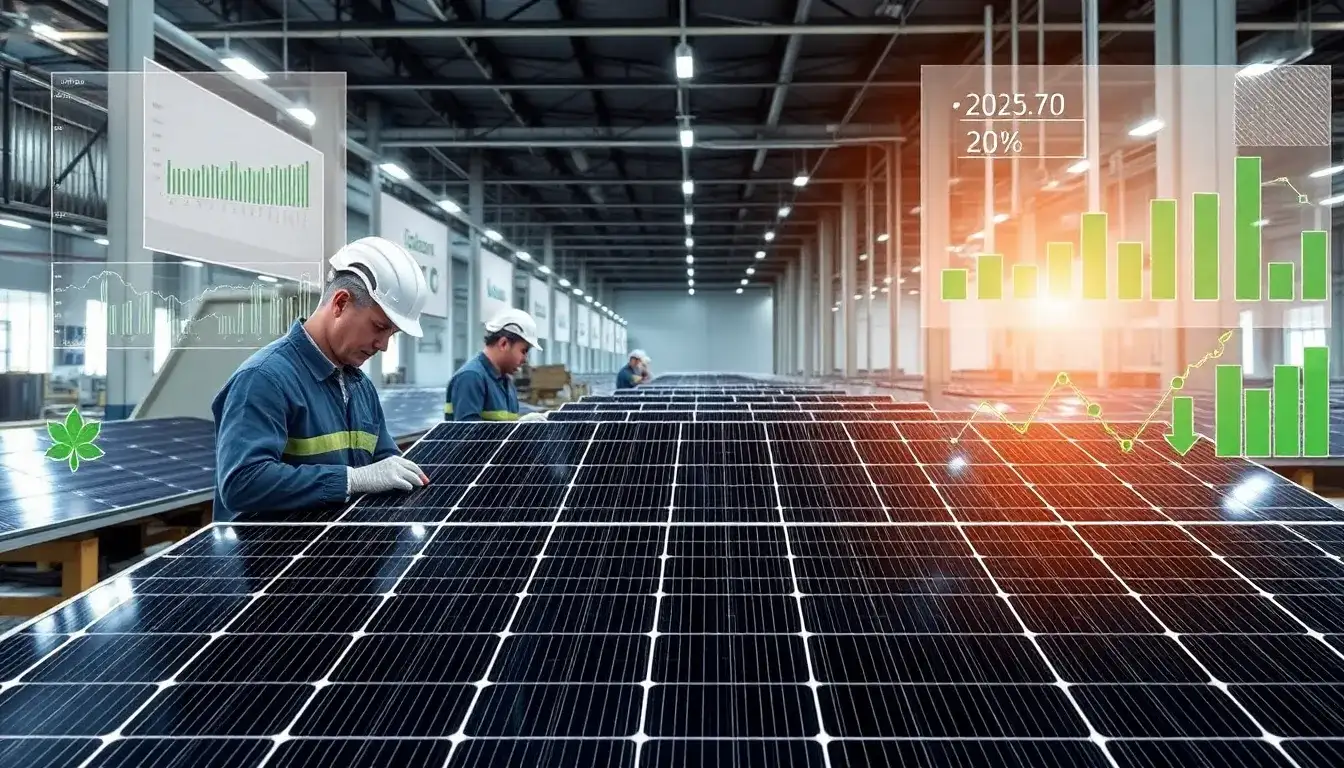
Over the past decade, the Chinese photovoltaic (PV) industry has experienced explosive growth, largely due to supportive national industrial policies. However, since the second half of 2023, the industry has faced significant challenges, including a continuous decline in prices, deteriorating quality, and widespread decreases in corporate profitability. At one point, the price of solar modules fell below 0.6 yuan per watt. The chaotic price wars and homogeneous competition have severely hindered industry upgrades.
In August 2025, the Ministry of Industry and Information Technology (MIIT) led a meeting with six national ministries to discuss the regulation of competition within the photovoltaic industry, aiming to shift the focus from scale expansion to quality enhancement, and from price wars to competition based on technology and services.
Disorderly Competition: The Quality Concerns Behind Price Wars
In recent years, the Chinese photovoltaic industry has achieved impressive results, boasting a “super high global market share and rapid technological iteration.” However, investment in PV manufacturing has also seen a “rush” scenario, with production capacity shifting from abundance to oversupply. This has led to a series of “complications” becoming increasingly apparent.
The most pressing issue is the dramatic drop in product prices and significant corporate losses. Some segments even experienced “price crashes,” ultimately leading to chaotic and harmful low-price competition. For instance, in 2024, the photovoltaic industry faced an unprecedented price collapse, with polysilicon prices dropping over 35%, silicon wafer prices falling more than 45%, and module prices decreasing by over 25%. This brutal price war has harmed not only PV manufacturing companies but has also created challenges for the entire industry.
As prices fell, the quality benchmark was also compromised. Data from the National Solar Photovoltaic Product Quality Inspection and Testing Center shows that from 2019 to 2024, the overall pass rate for photovoltaic modules dropped from 100% to 62.9%, with the non-compliance rate in the first half of 2025 approaching 16%. The report further indicates that non-compliance primarily exists in several areas: mechanical load failures (5 batches), substandard photoelectric conversion efficiency (8 batches), and power mislabeling (3 batches). Components such as glass, frames, films, solder strips, and junction boxes have all shown quality issues.
The alarming data reflects a troubling reality. In a highly competitive environment, some companies have resorted to “cutting corners, misrepresenting quality, and mislabeling power output,” sacrificing module quality for short-term survival, which exacerbates the overall decline in quality. Since 2024, a surge in low-quality modules has led to numerous incidents, including fires, structural collapses, hot spots, and significant power reductions, resulting in substantial losses for owners. Quality issues in PV modules have become a major concern for downstream power plant developers and pose a significant challenge across the entire supply chain.
This raises the question: What is the future of China’s photovoltaic industry?
Collaborative Efforts: From “Support” to “Regulatory Optimization” for High-Quality Development
To address the quality crisis in the photovoltaic sector and promote healthy and sustainable industrial development, various stakeholders have begun to take action. On the regulatory front, the MIIT, the State Administration for Market Regulation, and the National Development and Reform Commission, among others, have successively introduced policies related to manufacturing thresholds, standard systems, and price regulations, gradually establishing a collaborative governance system that covers market order and product quality in the PV sector. This aims to create a new framework for high-quality development.
The China Photovoltaic Industry Association has repeatedly urged companies to practice self-discipline, resist destructive low-price competition, and adhere to quality standards, calling for strict compliance with regulations to eliminate practices such as cutting corners and mislabeling power output. Testing institutions also need to enhance their capabilities to jointly promote standardized industry development.
Downstream power plant companies are actively exploring solutions as well. For example, Sunshine New Energy, a leading player in renewable energy development, not only focuses on innovations in power plant technology but also adopts a life-cycle perspective on photovoltaic modules. To effectively tackle the ongoing decline in overall module quality over the past two years, the company has established a specialized team in photovoltaic technology, set up testing laboratories, and created a comprehensive standard and evaluation system covering materials, processes, and testing. They aim to set “high reliability, high power generation, and greater friendliness” as strict selection criteria, ensuring quality at every stage of raw material sourcing, manufacturing, and testing.
Data shows that in several projects developed by the company, such as Datong Yunzhou and Chizhou Juanqiao, the selected modules exhibit stable and leading power generation efficiency, validating the sustained value brought by high standards.
Moreover, to build high-quality power plants, Sunshine New Energy has collaborated with the Jianheng Certification Center to release a technical maturity evaluation standard for “good photovoltaic power plants.” Ji Zhenshuang, deputy director of the Beijing Jianheng Certification Center, stated, “The evaluation standard is a product of deep integration of theory and practice, clearly defining core evaluation dimensions such as applicable scope, power generation performance, safety, and reliability, while also refining verifiable criteria and testing methods.”
As a leading developer of power plants and a specialized user of modules, Sunshine New Energy can act as a guardian of high-quality standards, leveraging insights from its technology leadership and module usage to promote high-quality development in the industry. This not only ensures the quality of photovoltaic products from the source but also paves a new path for the photovoltaic industry to transition from “scale expansion” to “quality enhancement.”
This article does not constitute investment advice, and investors undertake risks based on their own decisions.
Original article by NenPower, If reposted, please credit the source: https://nenpower.com/blog/navigating-the-challenges-how-chinas-solar-industry-can-overcome-price-and-quality-issues/

