

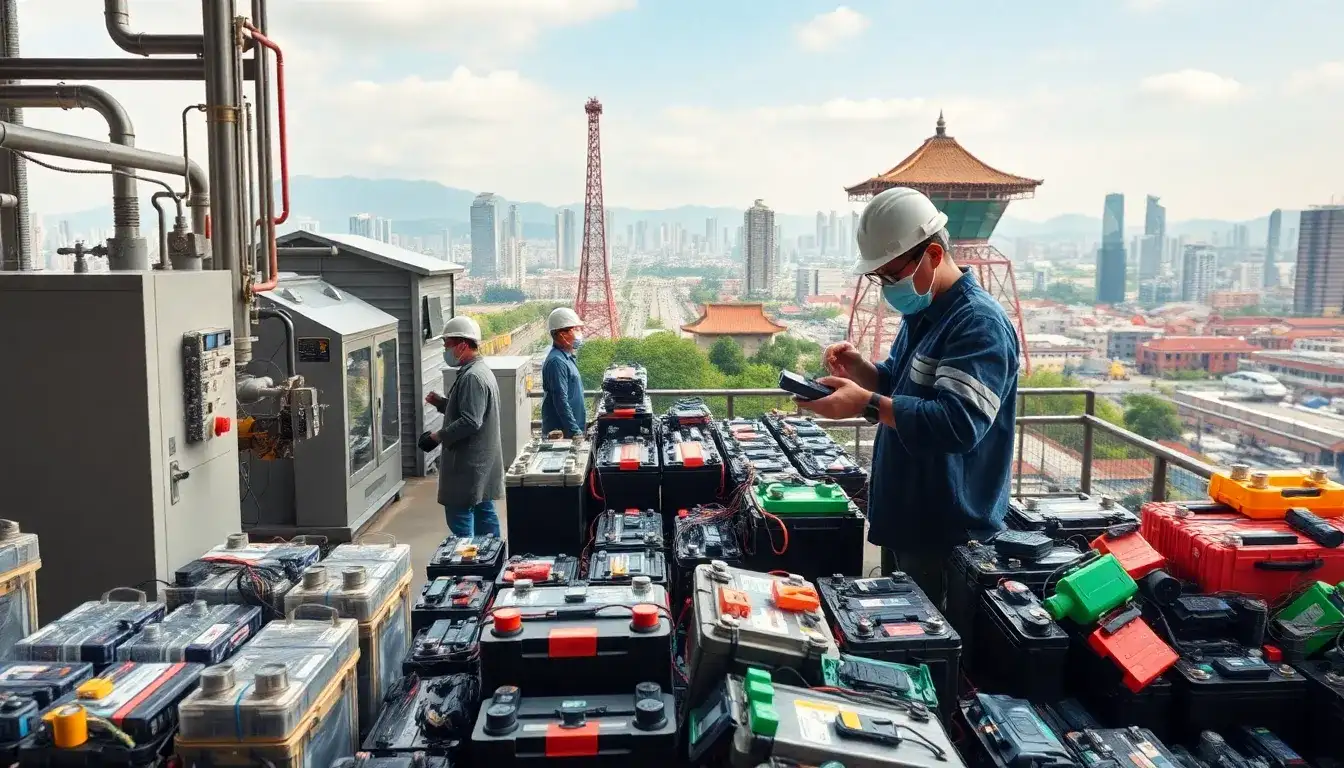
With significant policy and market support, the recycling of power batteries is poised for explosive growth. According to projections, the retired power battery volume in China is expected to reach 20.2 GWh by 2024, with the market size potentially expanding to 55.6 GWh by 2025.
Currently, the recycling industry for used batteries is primarily dominated by distributors, leaving crushing and hydrometallurgical plants under pressure regarding profitability. It is highly likely that the market size for power battery recycling will surpass 100 billion yuan in the future, with leading companies vying for market share. Notably, enterprises like CATL and GEM are actively positioning themselves in the power battery recycling sector.
According to the latest data from the Ministry of Public Security, by the end of 2024, the number of new energy vehicles in China is expected to reach 31.4 million, representing 8.90% of the total vehicle population. Among these, pure electric vehicles will account for 22.09 million, or 70.34% of new energy vehicles. In terms of growth, 11.25 million new energy vehicles were registered in 2024, making up 41.83% of all newly registered vehicles, marking an 837.50% increase compared to 2019.
On the policy front, the Ministry of Industry and Information Technology has revised the “Standards for the Comprehensive Utilization of Retired Power Batteries from New Energy Vehicles (2019 Edition)” into the “Standards (2024 Edition),” which will be released on December 16, 2024. The new standards focus on four key areas:
- Optimizing the technical indicators system, increasing the lithium recovery rate during the smelting process from 85% to 90%, and introducing new recovery indicators for electrode powders and impurities.
- Updating standards and norms, including the addition of dismantling standards for used power batteries and coding regulations.
- Introducing requirements for lithium-ion batteries used in electric bicycles to enhance the recycling framework.
- Strengthening product quality management and location requirements for enterprises.
On February 21, 2025, the State Council approved the “Action Plan for Improving the Recycling System for New Energy Vehicle Power Batteries.” The meeting highlighted the importance of enhancing the recycling and utilization capacity of power batteries as they enter a phase of large-scale retirement. As reported by Xinhua News, officials noted that improving battery recycling supports the high-quality development of the new energy vehicle industry, safeguards national resource security, and reduces environmental pollution.
Considering that power batteries typically have a lifespan of 5-8 years, a new wave of retirements is expected around 2025. Coupled with the recent “trade-in” subsidy policy and pressures from resource scarcity and rising costs, the TTIR analysis indicates that the battery recycling sector may soon enter a period of rapid growth. In 2019, the market size for power battery recycling was approximately 5 billion yuan, and it is projected to exceed 48 billion yuan by 2024, indicating a robust growth trend.
According to various analyses, the retired power battery volume in China is expected to reach 20.2 GWh in 2024, a year-on-year increase of 48.53%, with the market size predicted to reach 55.6 GWh by 2025. Looking ahead to 2030, the CABRCA forecasts a more conservative estimate, expecting retired batteries and new energy vehicles to reach 148.7 GWh and 2.9891 million units, respectively. Additionally, the annual average compound growth rate for retired batteries and new energy vehicles from 2025 to 2030 is anticipated to be 37.64% and 38.11%, respectively.
The optimistic forecast by the China Business Industry Research Institute suggests that by 2030, the recycling scale for power batteries could increase dramatically to 380.3 GWh. Furthermore, GEM predicts that power batteries will enter a phase of large-scale scrapping by 2026 and a phase of explosive retirement by 2030.
Currently, once the capacity of a power battery drops below 80%, it must be recycled. There are two primary recycling methods: cascade utilization and dismantling. The most commonly used batteries in vehicles today are lithium iron phosphate batteries and ternary material batteries. The former are typically reused as energy storage batteries due to their long cycle life, while ternary batteries are more suitable for resource recovery due to their higher value in reclaiming metals like nickel, cobalt, and lithium.
From a competitive and developmental perspective, the collection, classification, and transportation of used batteries involve numerous stakeholders, including electric vehicle manufacturers, battery producers, electronics manufacturers, and individual consumers. As of June 2022, there were 14,967 certified recycling service points for new energy vehicle batteries in China, classified into three categories: official recovery channels of automobile companies, specialized dismantling companies, and new energy firms with various qualifications.
The number of battery recycling-related enterprises in China has also shown a yearly growth trend over the past decade. In 2021, the annual registration number surged by 300% to 27,400, marking a peak in registration growth over the past ten years. In 2023, the registration number reached 46,200, the highest in the past decade. However, the recycling industry has faced challenges due to a tight supply of retired batteries and a continued low operating rate.
Currently, the main profits in the power battery recycling industry are monopolized by distributors, while crushing and hydrometallurgical plants struggle with profitability. As recycling channels are established, companies with poor sourcing, smaller processing scales, and lower technical capabilities are being phased out, reshaping the competitive landscape. For instance, Tianneng Co., Ltd. reported a 43.08% year-on-year decline in revenue for its lithium battery recycling division in 2024, while GEM‘s income from power battery utilization increased by 1.14% to 1.144 billion yuan.
According to company registrations, as of December 19, 2024, there are 40,200 registered battery recycling companies in China, a decrease of 6,000 from 2023. Key players in the upstream of the recycling industry include major power battery manufacturers like CATL, BYD, and Sunwoda, while midstream consists of recycling enterprises such as GEM, Banpu, and Ganfeng Lithium.
As a leader in the power battery sector, CATL considers the recycling of renewable materials crucial for ensuring a sustainable “zero-carbon strategy.” The company and its subsidiary, Banpu, are expanding their recycling channels globally and have established partnerships with over 60 overseas entities across 26 countries and regions. By 2024, CATL had set up a comprehensive recycling network capable of processing 270,000 tons of used batteries annually, achieving recovery rates of 99.6% for nickel-cobalt-manganese metals and 93.8% for lithium.
As of now, Banpu has established over 240 recycling points in China, with a total recycling volume of 128,700 tons in 2024, yielding 17,100 tons of lithium salts. Since 2015, GEM has focused on power battery recycling, building five major recycling and processing centers throughout China, and being recognized by the Ministry of Industry and Information Technology as a compliant entity. With a disassembly capacity of 550,000 tons annually, GEM recovered 27,400 tons of power batteries in 2023, accounting for over 10% of the total domestic utilization of retired batteries.
Looking ahead to 2030, GEM aims to achieve a recycling scale exceeding 500,000 tons and sales exceeding 10 billion yuan, with the total recovery of other metals and plastics reaching 10 million tons per year. The establishment of the China Resource Recycling Group on October 18, 2024, is also seen as a significant milestone ahead of the anticipated boom in the power battery industry. This new central enterprise, with a registered capital of 10 billion yuan, will focus on resource recycling and create a national platform for resource recovery.
In summary, the future of the power battery recycling industry is likely to become a battleground for major players. The ability to build a strong upstream and downstream industry chain alliance and create an efficient, cost-effective closed-loop recycling system will determine who secures a favorable competitive position and captures a larger market share in this multi-billion yuan market.
Original article by NenPower, If reposted, please credit the source: https://nenpower.com/blog/navigating-the-booming-billion-dollar-market-of-power-battery-recycling-in-china/

