

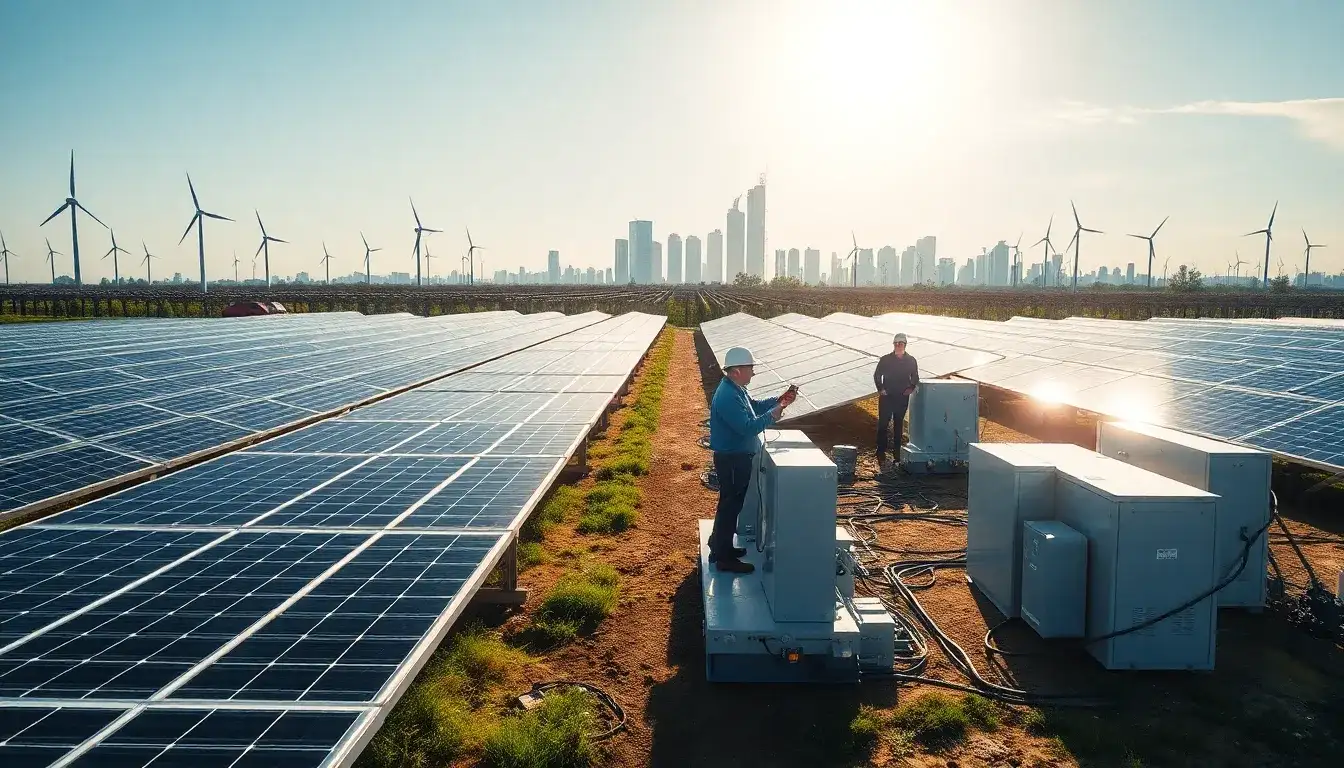
Thanks to its strategic investments in the solar energy storage sector, Sunshine Power reported a profit of 7.7 billion yuan in the first half of the year, despite challenging market conditions. The company’s market capitalization recently surpassed 300 billion yuan, making it the third listed company in the photovoltaic industry, following LONGi Green Energy and Tongwei Co., to reach this milestone.
Currently, the integration of solar and storage solutions is becoming standard practice among photovoltaic companies. In addition to early adopters like Canadian Solar and Trina Solar, there are rumors that LONGi Green Energy is looking to acquire a storage company. Industry experts believe that the domestic market will likely ease restrictions on spot market pricing, which could maximize the value of photovoltaic and storage integration as price differentials widen. Furthermore, the growing demand for self-consumption scenarios presents additional opportunities for solar and storage solutions.
While the fundamentals of the photovoltaic industry are showing some improvement, optimism remains cautious. Several interviewees predict that the development of solar and storage integration, particularly in storage, is becoming essential for photovoltaic companies to overcome challenges and create new growth trajectories. However, companies that enter the storage market without adequate preparation may struggle to achieve profitability in the current highly competitive landscape.
Recently, it was reported that LONGi Green Energy has invested in a storage company, Jingkong Energy Technology Co., Ltd., and is in discussions to acquire another storage firm. A representative from LONGi Green Energy commented, “We are continuously evaluating our strategy in the storage business, but specific outcomes are still uncertain.” According to industry insiders, LONGi’s entry into the storage sector could facilitate the integration of solar and storage solutions, enhancing the synergy between photovoltaic generation and energy storage.
This is not the first time LONGi Green Energy has been linked to storage investments. During a research event last November, the company stated its strong support for hydrogen energy development and noted, “Currently, we have not made a clear decision regarding energy storage, and discussions are ongoing.” Although LONGi’s plans for solar and storage integration are still pending further validation, many photovoltaic companies are already adopting this model.
According to disclosures from Canadian Solar, the company has signed contracts for solar storage systems amounting to 3 billion USD as of the end of the first half of the year. It anticipates a storage shipment of between 2.1 and 2.3 GWh in the third quarter, with total annual shipments reaching 7 to 9 GWh. This segment continues to lead in gross margins and is becoming a core engine for profit growth. JinkoSolar also aims to meet a total shipment target of 6 GWh for the year while advancing the global deployment of integrated solar and storage solutions.
Trina Solar reported in its half-year financial statement that it has over 10 GWh of storage orders, with a significant portion coming from overseas clients. In mid-September, Trina announced contracts totaling 2.48 GWh with three customers in China, Latin America, and the Asia-Pacific region, including a 1 GWh overseas order utilizing a grid-forming system.
According to Yue Fen, Deputy Secretary-General of the Zhongguancun Energy Storage Industry Technology Alliance, photovoltaic companies have inherent advantages in the storage sector due to three main factors: first, the overlapping customer base—both solar and storage target power generation companies and large industrial users, allowing photovoltaic firms to leverage existing customer relationships; second, the strong demand binding—energy storage is a rigid requirement for absorbing renewable energy, directly addressing fluctuations in photovoltaic generation; and third, the shared technological foundation—both sectors rely on power conversion systems (PCS), creating potential for collaborative advancements in research and supply chain management.
“Energy storage systems effectively address the challenges of photovoltaic absorption and grid stability, making their integration a necessary step in the energy transition,” said Yang Bao, President of Trina Solar’s Energy Storage Division. As renewable energy becomes more prevalent in the market, the shift from policy-driven support to market-based transactions for energy storage is gaining momentum, further solidifying the collaboration between solar and storage.
As market demands evolve, photovoltaic firms must focus on key areas to enhance their solar and storage integration efforts. Yue Fen notes that as renewable energy increasingly enters the market, photovoltaic systems may experience zero or negative pricing during peak generation periods. Current policies still allow some photovoltaic projects to maintain reasonable returns, but without such mechanisms, projects may face curtailed production or must invest in complementary storage systems to shift low-priced midday generation to peak evening consumption, thus relying on the economic viability of price differentials.
She emphasized that the Notice on Further Deepening the Construction of the Electricity Spot Market (referred to as “Document 136”) explicitly suggests that “spot market price limits will be appropriately relaxed in the future.” This policy direction is expected to widen price differentials, enabling solar and storage models to unlock their economic potential. On the consumer side, the national government has issued guidelines for green electricity direct connection and zero-carbon park development, opening new scenarios for energy storage growth.
For instance, the green electricity direct connection projects mandate that the annual self-consumption of renewable energy must account for no less than 60% of the total available generation and 30% of total consumption, with an ongoing goal to increase self-consumption ratios to at least 35% by 2030. “The high standards for green electricity utilization will create a demand for high-proportion energy storage systems, further expanding growth opportunities in the storage sector,” Yue added.
As renewable energy’s share grows, the grid’s stability requirements are becoming increasingly stringent. Storage is a key solution for addressing the intermittency and volatility of photovoltaic generation, making its integration with the solar industry an inevitable trend. Yang Bao noted that as applications diversify, achieving collaborative development through microgrids, zero-carbon parks, and solar-storage charging stations is becoming a widely accepted consensus in the industry.
To address the high demand for self-consumption, he highlighted that Hubei Province mandates that the annual self-consumption of electricity generated from rooftop solar installations should ideally be no less than 50%. Project entities are encouraged to enhance their self-consumption ratios through solar-storage integration. Yang Bao emphasized that reinforcing technological innovation and building a collaborative ecosystem around research, intellectual property, and industry standards are crucial for photovoltaic enterprises entering the storage market.
“Solar-storage systems are not merely products; they represent comprehensive solutions,” Yang stated, emphasizing the need for companies to leverage high-level technological innovations to meet regional specifications and diverse market needs. For example, Trina Solar is strategically transforming toward a solution-oriented approach this year, utilizing its technological advantages to provide comprehensive solutions for customers.
It is noteworthy that the shift from policy-driven “strong storage” to economics-driven strategies indicates that companies need to focus more on the actual economic benefits of projects to create real value for clients. Despite the photovoltaic industry being in a cyclical trough with major product prices still low, companies that have proactively embraced solar-storage integration are already reaping the rewards. For instance, Sunshine Power’s revenue reached 43.5 billion yuan, a 40% increase year-on-year, with a net profit of 7.7 billion yuan, marking a 56% growth.
The company attributes its profitability to contributions from photovoltaic inverters and storage solutions. Similarly, Canadian Solar is one of the few photovoltaic companies that reported profits in the first half of the year, with its resilience stemming from strategic decisions in photovoltaic operations and breakthroughs in its second growth curve through energy storage. During this period, it delivered 3.1 GWh of storage systems (including residential storage), with 2.2 GWh delivered in the second quarter, representing over 140% growth quarter-on-quarter. Yang Bao highlighted the company’s comprehensive technical capabilities and scenario-based solutions, coupled with a robust global local service network and a forward-thinking approach towards innovation and sustainable development.
As for the operational philosophy, the company focuses on enhancing overall project yield through solar-storage integration to meet market demands. For example, a benchmark project in Qinghai, known for “wind-solar-storage collaborative desertification control,” precisely meets customer needs. Yue Fen pointed out that while both the photovoltaic and storage industries face fierce competition, leading storage firms maintain strong profitability due to their technical and scale advantages, whereas smaller companies often find themselves in a loss-making situation.
Currently, companies focusing solely on photovoltaic or storage are actively expanding into integrated energy services, virtual power plant operations, and electricity market transactions to mitigate cyclical risks. However, she cautioned that firms lacking technological reserves or a deep understanding of market and policy dynamics may struggle to achieve profitability if they hastily enter the storage market amid intense competition.
“As the economic benefits of solar-storage integration become more apparent, it is becoming a strategic direction for photovoltaic companies to break free from low-price competition. The integration of solar and storage is key to navigating industry cycles and achieving sustainable development,” Yang Bao stated. Presently, both domestic and international solar-storage markets are showing positive signs. In China, local policies supporting Document 136 are being rolled out, enhancing the profitability model for large-scale storage and shifting demand from policy-driven mandates to economics-based frameworks.
Notably, in August, procurement volumes for storage systems/EPC reached 69.4 GWh, setting a new monthly record and demonstrating the robust and high-growth demand. The international solar-storage market is similarly on an upward trajectory. Sunshine Power anticipates that the global compound annual growth rate for energy storage will conservatively reach 20% and optimistically could reach 30% in the coming years. In particular, the European market is seeing strong demand in both large-scale and commercial storage, while the U.S. market benefits from subsidy policies that will remain in place until 2033, ensuring favorable economic conditions for storage. Additionally, Australia is expected to have a storage demand of 10 GWh by 2026, indicating robust growth.
Original article by NenPower, If reposted, please credit the source: https://nenpower.com/blog/navigating-industry-cycles-the-promise-of-energy-storage-and-solar-integration/

