How Can China’s Photovoltaic Industry Overcome Challenges?
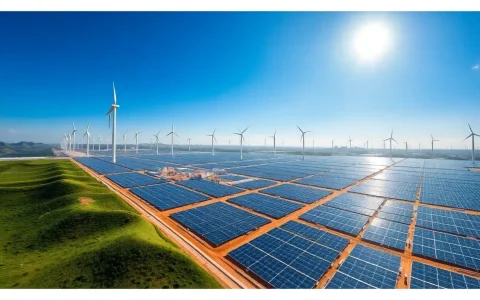
Over the past decade, the Chinese photovoltaic (PV) industry has experienced explosive growth, largely due to supportive national industrial policies. However, since the second half of 2023, the industry has faced serious challenges, including a continuous decline in prices, deterioration in quality, and widespread decreases in corporate profitability. At one point, the price of PV modules fell below 0.6 yuan per watt. Disordered price wars and homogenized competition have significantly hindered the industry’s upgrade.
In August 2025, the Ministry of Industry and Information Technology (MIIT) led a meeting with six national ministries to discuss regulating the competitive order of the PV industry. The goal is to shift the industry from rapid expansion to quality enhancement, moving away from price wars toward competition based on technology and services.
Challenges Arising: Quality Concerns Behind Price Wars
In recent years, China’s PV industry has achieved remarkable milestones, boasting a super high global market share and rapid technological iterations. However, this rapid investment in PV manufacturing has led to overcapacity, resulting in significant “side effects.” The first major issue has been a drastic drop in product prices and severe losses for companies, leading to a situation where some sectors experienced “price trampling” and fell into a pit of chaotic, low-price competition. For instance, in 2024, the industry witnessed an unprecedented price collapse, with polysilicon prices dropping by over 35%, wafer prices by over 45%, and prices for solar cells and modules falling by over 25%. This brutal price war has not only harmed manufacturing companies but has also forced the entire industry to confront these challenges.
With the price defenses breached, the next concern was the erosion of quality standards. Data from the National Solar PV Product Quality Inspection and Testing Center indicates that from 2019 to 2024, the overall qualification rate of PV modules decreased from 100% to 62.9%, with the non-conformance rate approaching 16% in the first half of 2025. The report highlights several areas of non-compliance, including mechanical load failures (5 batches), substandard photoelectric conversion efficiency (8 batches), and power mislabeling (3 batches, nameplate deviation). Issues have been noted in components such as glass, frames, encapsulants, solder strips, and junction boxes.
The alarming data reflects underlying causes. In an intense competitive environment, some enterprises have resorted to “cutting corners,” delivering substandard products, and misrepresenting power ratings to gain short-term survival advantages, thereby exacerbating the overall decline in module quality. Since 2024, inferior modules have surfaced, leading to frequent incidents such as fires, structural failures, hot spots, and significant power losses, resulting in substantial losses for owners. Quality issues with PV modules have become a significant concern for downstream power plant developers and a major dilemma for the entire industry chain. This raises the question: What is the future path for China’s photovoltaic sector?
Collaborative Efforts: From “Support” to “Regulated Optimization” for High-Quality Development
To address the quality crisis in the PV industry and promote sustainable development, various stakeholders have actively taken action. On the regulatory front, multiple departments, including the MIIT, the State Administration for Market Regulation, and the National Development and Reform Commission, have successively introduced policies concerning manufacturing thresholds, standard systems, and price regulations. This is gradually constructing a collaborative governance system covering market order and product quality, paving the way for a new paradigm of high-quality development in the entire industry chain.
The China Photovoltaic Industry Association has repeatedly advocated for corporate self-discipline, urging companies to resist harmful low-price competition. It calls for businesses to uphold quality standards, strictly enforce regulations, and eliminate practices such as corner-cutting, substandard replacements, and power mislabeling. Testing institutions also need to enhance their capabilities to collectively promote standardized industry growth.
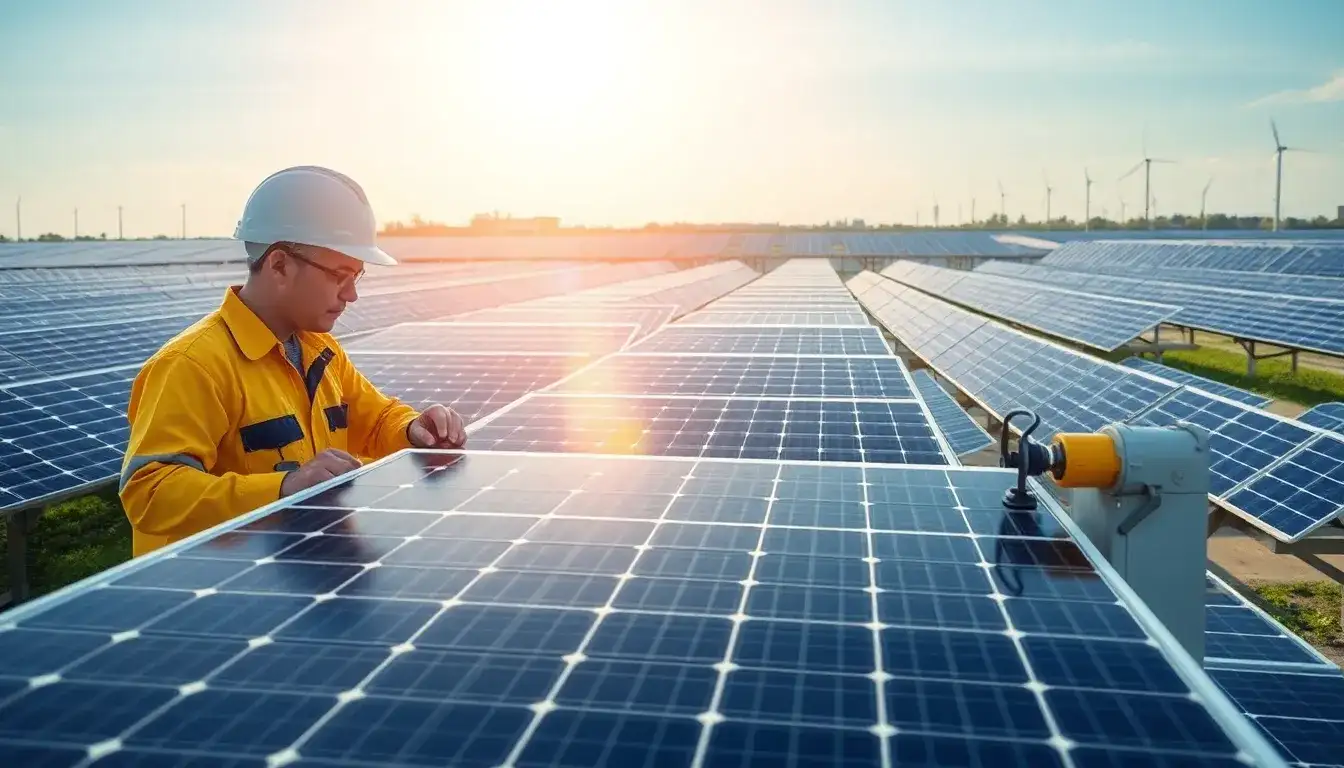
Downstream power plant companies are also actively seeking solutions. For instance, Sunshine New Energy, a leading renewable energy developer, is not only focused on technological innovation in power plants but also adopts a full lifecycle perspective on PV components. To effectively address the ongoing decline in quality, the company has formed a specialized PV technology team and established testing laboratories, developing comprehensive standards and evaluation systems covering materials, processes, and testing. They are committed to setting rigorous standards for components that ensure “high reliability, high power generation, and environmental friendliness,” while closely monitoring raw materials, manufacturing, and testing to guarantee superior performance in long-term generation efficiency, environmental sustainability, and safety.
Moreover, to establish high-quality power plants, Sunshine New Energy has collaborated with the Certification Center for Good Photovoltaic Power Plants to release maturity evaluation standards. The Deputy Director of the Beijing Certification Center, Ji Zhenshuang, stated, “The evaluation standards are the result of a deep integration of theory and practice, clearly defining core evaluation dimensions such as applicability, power generation performance, safety performance, and reliability, while detailing actionable verification criteria and testing methods.” As a leading power plant developer and professional component user, Sunshine New Energy can serve as a guardian of high-quality standards based on its technological leadership and component utilization, while also providing insights that drive component innovation, thus becoming a cornerstone for promoting high-quality development in the PV industry. This shift not only ensures the quality of photovoltaic products from the source but also opens a new path for the industry to transition from “scale expansion” to “quality enhancement.”
Disclaimer: The views expressed in this article are solely those of the author and do not reflect the position of the Global Mineral Network. The content provided is for reference only and does not constitute investment advice. Readers are advised to take personal responsibility for their own decisions.
Original article by NenPower, If reposted, please credit the source: https://nenpower.com/blog/navigating-challenges-in-chinas-solar-photovoltaic-industry-from-price-wars-to-quality-improvement/