

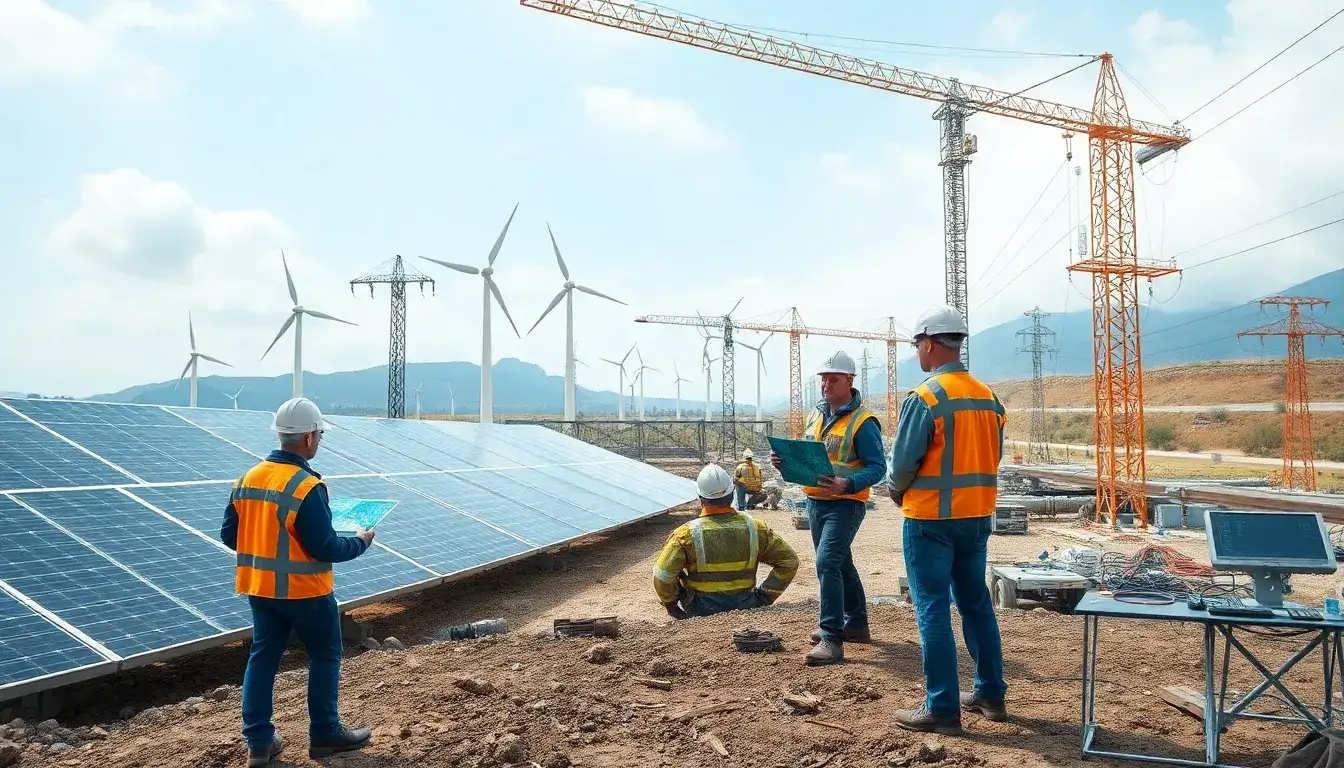
The construction of a new power system is facing numerous challenges and complex pathways. As a new wave of technological revolution and industrial transformation sweeps across the globe, the energy and power sectors are undergoing structural changes and systemic reshaping. Currently, China has become the world leader in renewable energy integration, boasting the largest scale and fastest growth rate. The acceleration of building a new power system presents higher demands and new challenges for innovation in power technology.
Industry experts emphasize the necessity for the power sector to strengthen core technology development, harness digital technologies for industry transformation, expand integrated innovation application scenarios, and establish an open collaborative innovation system to support the construction of the new power system through technological advancements.
Technological innovations are paving the way for the new power system. For instance, at the Huangshi Integrated Testing Base of the Guangdong Power Supply Bureau, intelligent detection robots are autonomously completing performance tests for distribution transformers and surge arresters. The team from the Digital Distribution Network Department has developed this robot to meet the digital empowerment needs of the new power system, fully replacing traditional manual operations. This innovation has achieved zero electric shock risk with integrated intelligent testing, improved overall work efficiency by 78%, and released 60% of labor resources, significantly enhancing the digital and intelligent level of the grid. This achievement was awarded a gold medal at the recent 50th Geneva International Invention Exhibition, and related technologies have generated 24 independent intellectual properties.
As of March 2025, China’s total installed power capacity reached 3.43 billion kilowatts, with clean energy accounting for over 59% of the total. For the first time, installed capacity for wind and solar energy has surpassed that of thermal power, with electricity consumption from clean energy reaching 29% of total energy consumption. Over the years, China has maintained a record for the safe operation of the world’s largest ultra-high voltage grid. The enhancement of technological innovation capabilities underpins the stable and secure supply of electricity while supporting green and low-carbon development.
Recent advancements include the successful development of a 300-megawatt F-class heavy-duty gas turbine, a 26-megawatt capacity for offshore wind turbines, and a 34.85% conversion efficiency for silicon-perovskite photovoltaic cells. Additionally, several demonstration projects have been launched, including the world’s first high-temperature gas-cooled reactor, a 300-megawatt compressed air energy storage facility, and a 110-megawatt solar thermal power station. New technologies such as virtual power plants, digital twins, intelligent inspection, and smart distribution networks are rapidly evolving, contributing to the efforts to meet carbon neutrality goals and build a new power system.
According to the China Electricity Council, the past year saw the power industry awarded one National Natural Science Award, 13 Science and Technology Progress Awards, and three Technological Invention Awards, accounting for 6.8% of total awards. Since 2021, over 230 technological achievements have been recognized as the first of their kind in China’s energy sector.
However, the construction of the new power system faces significant challenges ahead. Xin Baoan, Chairman of the China Electricity Council and President of the Global Energy Interconnection Development and Cooperation Organization, estimates that global electricity consumption will grow by about 4% annually over the next three years, with clean energy sources meeting over 90% of new electricity demand. The rapid iteration of low-carbon technologies, including renewable energy, energy storage, hydrogen, and nuclear energy, is reshaping the global energy landscape. It is crucial to ensure energy security and resilience during this transitional period.
The “14th Five-Year Plan” period is critical for achieving carbon peak targets and advancing the construction of a new power system, as the power sector faces new technological challenges. Xin pointed out that the technical foundations, structural characteristics, and operational properties of the new power system are undergoing significant changes. As the proportion of renewable energy increases, the number of end-use electrical devices is also rapidly growing, leading to more pronounced “dual peak” characteristics in power supply and demand, thereby complicating adjustments and increasing the challenges posed by extreme weather events.
Currently, many areas of power development in China have entered “uncharted territory,” necessitating reliance on technological innovation to address various challenges in building a new power system. Rao Hong, Chief Scientist at the Southern Power Grid and Director of the National Key Laboratory for DC Transmission Technology, noted that the “new” aspect of the new power system is manifested in the “high proportion of renewable energy” and fundamentally in the “high proportion of power electronics.” As the new power system evolves, the characteristics of power electronics will become increasingly pronounced, with newly added electronic equipment replacing some synchronous machines, thereby reshaping the system’s dynamic characteristics.
While China’s power technology development is noteworthy, challenges remain in several key technologies, equipment, and core materials. For instance, components like photovoltaic encapsulants and wind turbine main bearings still require imports, and long-cycle electrochemical storage technology needs innovative development. The integration of artificial intelligence with power development presents a host of new tasks and challenges.
To tackle these new tasks, the power industry must focus on integrating digital technologies such as artificial intelligence and big data into its operations. Xin emphasized the importance of independent innovation and accelerating breakthroughs in core technologies in key areas including renewable energy generation, smart grids, energy storage, CCUS (carbon capture, utilization, and storage), and hydrogen energy. A system engineering approach is essential for constructing the new power system, with technological innovations guiding equipment advancements.
As the production structure of electricity undergoes profound changes, there is a need to re-evaluate the functional positioning of traditional energy sources and adjust technological development directions to timely supplement and enhance stability elements such as inertia, regulation, and support. For example, accelerating the construction of hybrid storage power stations and applying variable-speed pumped storage units will satisfy the growing demand for renewable energy regulation.
Moreover, as the energy transition progresses, the future power system will become increasingly complex and challenging to balance. Traditional experience may not suffice to solve unforeseen problems. The rapid development of digital technologies, including artificial intelligence, offers new possibilities for reshaping the innovation ecosystem of the power industry.
Experts in the industry recommend that systemic innovation be pursued to enhance overall efficiency in the innovation framework. This includes stimulating innovation vitality, optimizing research organization models, and accelerating the cultivation of leading talents in key fields. Establishing effective evaluation and incentive mechanisms will allow more scientific and technological talents to emerge, driving the transformation of innovative solutions into real productivity.
Original article by NenPower, If reposted, please credit the source: https://nenpower.com/blog/navigating-challenges-and-pathways-in-the-construction-of-new-power-systems/

