

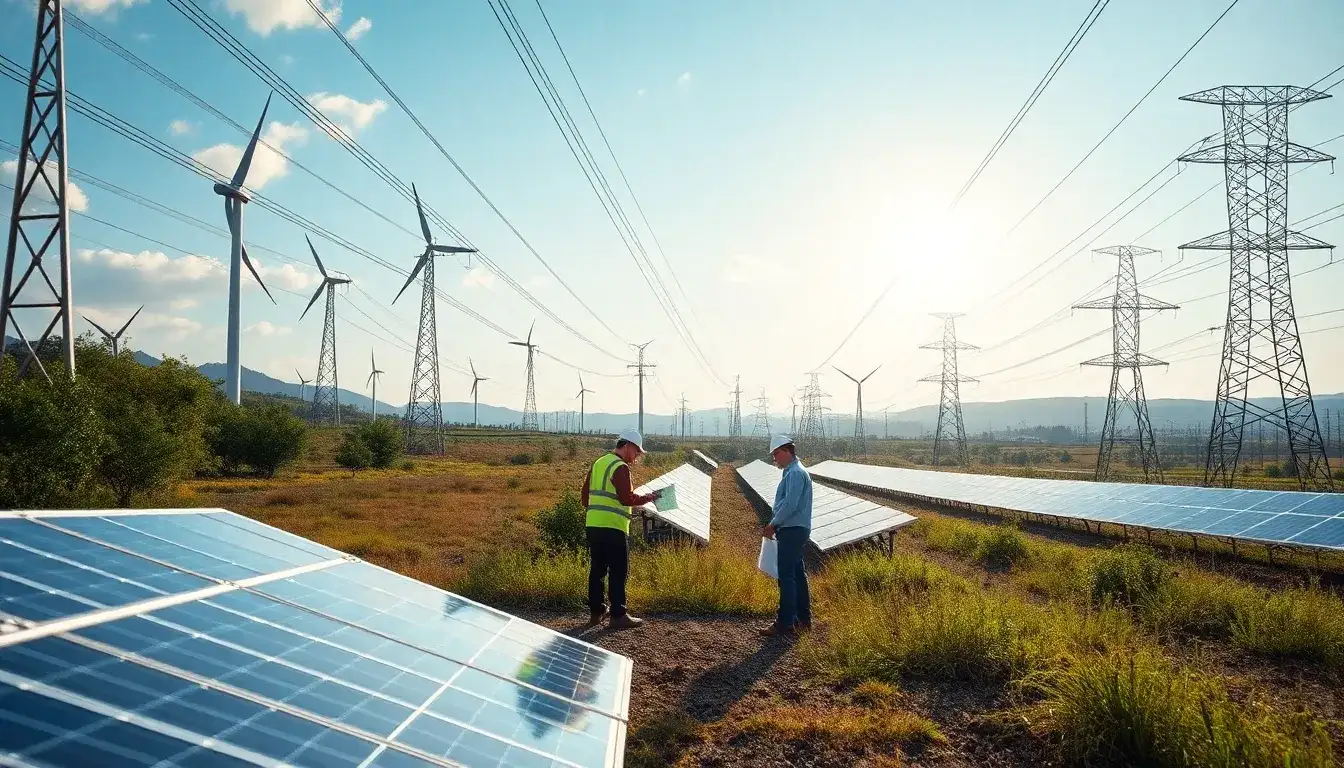
With an investment of 4 trillion yuan taking shape, the State Grid has set its sights on constructing a new type of power system during the 14th Five-Year Plan period. This ambitious initiative aims to enhance the accessibility and reliability of electricity in various sectors, including electric vehicle charging and industrial power supply, while efficiently delivering renewable energy to households.
On January 15, the State Grid announced that its fixed asset investment during the 14th Five-Year Plan is expected to reach 4 trillion yuan, marking a 40% increase compared to the previous five-year period. This investment will focus on building a smarter and greener grid system, driving the coordinated development of the entire new power system supply chain. It aims to add approximately 200 million kilowatts of new renewable energy capacity annually and increase the share of non-fossil energy consumption to 25%.
Energy serves as the “blood” of economic and social operations, while the power grid acts as the “main artery” and “capillaries” for energy distribution. The 4 trillion yuan investment is designed to tackle challenges in harnessing and utilizing renewable energy sources such as wind and solar power. The goal is to streamline the entire energy production, transmission, and consumption process, ensuring that clean electricity flows seamlessly into various industries, benefiting countless households.
The core focus of this investment is the green transformation, with every yuan allocated precisely addressing the needs of the “dual carbon” goals. From the vast photovoltaic arrays in the deserts of Qinghai to the wind farms in Inner Mongolia, the continuous generation of green electricity urgently requires an upgraded grid to transport it across mountains and seas to all corners of the country. To facilitate this, during the 14th Five-Year Plan, the State Grid will prioritize improving system regulation capabilities and strategically layout pumped storage power stations to support the scalable development of the new energy storage industry.
As the number of electric vehicles continues to rise, the demand for charging facilities is also increasing. The grid construction will keep pace with supporting projects to meet the connectivity needs of 35 million charging facilities. The efficient utilization of clean energy relies heavily on a strong and reliable grid platform.
Given the uneven distribution of energy resources and demand across the country, the “West-to-East Electricity Transmission” and “North-to-South Electricity Supply” strategies will remain crucial for the foreseeable future. To efficiently supply clean energy from the West to the economically developed East, the State Grid will expedite the construction of high-voltage direct current transmission corridors, enhancing inter-regional transmission capacity by over 30% compared to the end of the previous five-year plan. This initiative will particularly support the development and delivery of large-scale clean energy bases in the “Shage Desert” and Southwest regions, allowing for the full realization of clean energy’s value.
In addition to strengthening the grid’s “main artery,” the upgrade of the distribution network—its “capillaries”—will also be a priority. The State Grid will continue to advance the construction of distribution networks in urban, rural, and remote areas, actively exploring end-user supply models and off-grid microgrid systems to enhance the reliability of electricity supply in underserved regions.
Such initiatives have already shown results in various places. For instance, Yunxiao in Fujian, one of the first pilot counties for rural energy revolution, has vigorously promoted the development and utilization of new energy. The Yunxiao Xiahe microgrid demonstration project features the nation’s first core equipment capable of flexible interconnectivity across different voltage levels, significantly improving the capacity for renewable energy integration. Additionally, the State Grid Jiangsu Electric Power has established the country’s first integrated charging station for wind, solar, storage, and charging, powered by wind and solar energy, offering charging prices that are over 20% lower than standard stations, effectively meeting the charging needs of local residents and passing vehicles, and generating an estimated additional income of 250,000 yuan annually for the village collective.
With a significant investment of 4 trillion yuan, how will the State Grid ensure precise and efficient application of these funds? The State Grid has stated that it will rigorously control construction costs, optimize resource allocation during operations, and focus on improving quality and efficiency in investment decisions. This approach aims to ensure that every yuan invested yields maximum benefits, enabling the orderly advancement of grid construction.
As the power grid thrives, so too does energy, and a strong energy sector translates to a robust nation. From the flexible direct current projects on the Tibetan Plateau to intelligent microgrids in the Guangdong-Hong Kong-Macao Greater Bay Area, the State Grid is committed to using sustained, high-intensity investment to accelerate the construction of a new grid platform that integrates generation and distribution, thereby fortifying national energy security and facilitating the transformation of more wind, solar, and hydro energy into clean electricity.
Original article by NenPower, If reposted, please credit the source: https://nenpower.com/blog/national-grids-4-trillion-yuan-investment-targets-new-energy-power-system-development/

