

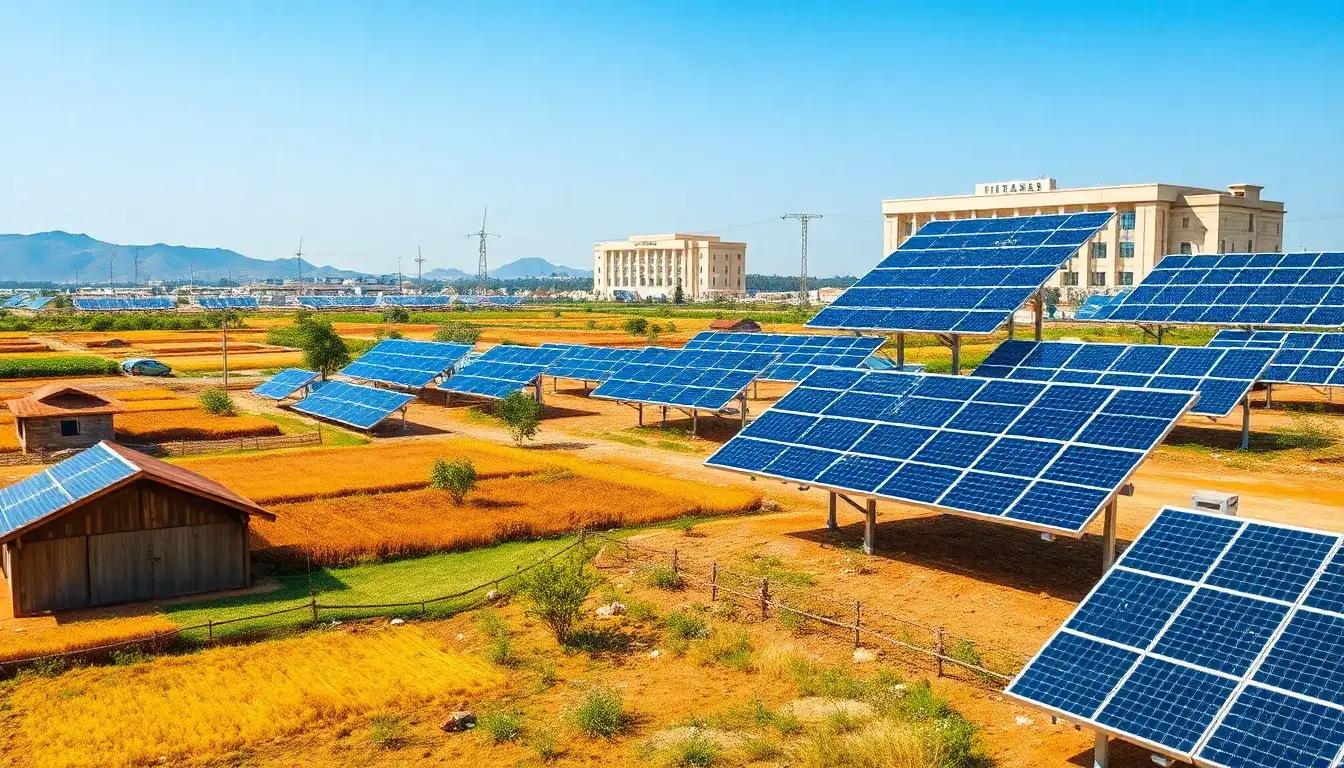
Significant Announcement! The National Energy Administration Reports 24 Issues Related to Distributed Photovoltaics Across 11 Provinces
On April 22, the National Energy Administration released a report titled 2024 Special Supervision Typical Cases on the Registration and Grid Connection of Distributed Photovoltaics, highlighting major problems identified during the supervision of distributed photovoltaic registration and grid connection in provinces such as Hebei.
<h2>1. Issues with Distributed Photovoltaic Registration</h2>
<ol>
    <li>In Dongying City, Shandong Province, the Administrative Approval Service Bureau required a project owner to connect with a specific new energy company before proceeding with registration.</li>
    <li>A notice from a county in Xianyang City, Shaanxi Province, stipulated that individuals applying for household photovoltaic registration must provide additional documentation, including a housing load-bearing capacity assessment and approval from the township government. Additionally, it restricted the choice of photovoltaic inverter products to those listed in the <b>Qualified Supplier List for Distributed Photovoltaic Inverters in Shaanxi Province</b>. This notice was abolished in October 2024.</li>
    <li>A non-individual household distributed photovoltaic project in Xiangyang City, Hubei Province, submitted a commitment letter concerning flight safety, a loan declaration, a authenticity commitment, and a registration commitment for the rooftop photovoltaic project.</li>
    <li>A county in Liaoyang City, Liaoning Province, required non-individual project units to register local companies and sign a cooperation development agreement with a state-owned enterprise established by the county government, while imposing tax and investment thresholds. In Chaoyang City, a town signed a tripartite agreement requiring a commitment for resource recovery from agricultural and forestry waste as a condition for distributed photovoltaic registration.</li>
    <li>In Chenzhou City, Hunan Province, a county signed a framework agreement with a company in November 2023, granting that company the right to develop distributed photovoltaics on 2.58 million square meters of urban and rural rooftops, while other companies needed approval and were required to pay fees for registration.</li>
    <li>From July 2023 to September 2024, a county in Xiangyang City, Hubei Province, suspended all distributed photovoltaic project registrations due to previous safety incidents.</li>
    <li>A power company in Yongzhou City, Hunan Province, did not register 66 household photovoltaic projects with the local energy authority until September 2024, despite the projects having started in 2022. By the end of October 2024, a power company in Changsha City still had 345,000 kilowatts of operational distributed photovoltaic projects unregistered, impacting 13,869 households. By December 6, 2024, all registration procedures were completed as planned.</li>
    <li>In June 2024, the Development and Reform Bureau in Meizhou City, Guangdong Province, issued a notice to postpone the registration of distributed power projects in areas with insufficient grid capacity.</li>
    <li>A county in Chengde City, Hebei Province, acknowledged receipt of a project detail list for household rooftop distributed photovoltaics but failed to issue standard registration documents.</li>
    <li>In Zhejiang Province, a distributed photovoltaic project was halted due to conflicts over rental agreements, but registration cancellation was not completed. A new agreement with a new rooftop owner was made in March 2024, which complicated the registration process.</li>
    <li>In Xinyang City, Henan Province, a distributed photovoltaic project was officially registered on December 1, 2023, although the registration certificate was dated October 18, 2023.</li>
    <li>A rooftop distributed photovoltaic project in Pan County, Guizhou Province, had a total registered capacity of 20.2 megawatts but lacked necessary details such as project names and capacities in its registration documents.</li>
</ol>

<h2>2. Issues with Distributed Photovoltaic Grid Connection</h2>
<ol>
    <li>A county in Huainan City, Anhui Province, issued a management method requiring project applicants to submit township government consent when applying for installation of distributed photovoltaic projects. The local development and reform commission has since mandated a revision.</li>
    <li>A distributed photovoltaic project in Weinan City, Shaanxi Province, lacked complete grid connection documents including power purchase contracts and lease agreements. Additionally, some components were not certified.</li>
    <li>A project in Zhoukou City, Henan Province, was registered under a company name, while the power company registered it under an individual's name.</li>
    <li>Due to local regulations, a power company in Weinan City, Shaanxi Province, received applications for 31,441 distributed photovoltaic projects but took over 20 working days to process approvals for only 1,236 projects.</li>
    <li>A power company in Zhejiang Province took 62 working days to approve a distributed photovoltaic project, which exceeded the required timeframe.</li>
    <li>A distributed photovoltaic project in Qinhuangdao City, Hebei Province, was approved for grid connection, but there were discrepancies in the recorded voltage levels.</li>
    <li>In some cities in Liaoning Province, grid connection capacity assessments produced only binary results (either red or green) rather than the required three-tier assessment.</li>
    <li>A power company in Chizhou City, Anhui Province, publicly listed some grid connection capacities as zero, despite being classified as green.</li>
</ol>

<h2>3. Issues with Distributed Photovoltaic Trading and Settlement</h2>
<ol>
    <li>A distributed photovoltaic project in Huangshi City, Hubei Province, exhibited inconsistencies between the power purchase contract, grid connection acceptance documents, and the marketing system regarding the grid capacity.</li>
    <li>A power purchase contract in Xinyang City, Henan Province, lacked clear payment account details and measurement methods, leading to discrepancies in billing.</li>
    <li>In Yongzhou City, Hunan Province, 25% of distributed photovoltaic projects had monthly billing, while 33% were billed quarterly and annually, with some projects still pending settlement.</li>
</ol>

For any news tips or contributions, please contact Ms. Chen at <b>13693626116</b> or via email at <a href='mailto:chenchen@bjxmail.com'>chenchen@bjxmail.com</a>.
Original article by NenPower, If reposted, please credit the source: https://nenpower.com/blog/national-energy-administration-reports-24-issues-in-distributed-photovoltaic-projects-across-11-provinces/

