

Nandu Power: Committed to the Energy Storage Industry to Achieve Carbon Neutrality
After four months of rigorous preliminary screening, journalist research, and expert evaluations, the list of recipients for the inaugural “Exploring ESG Benchmark Enterprises in China’s Yangtze River Economic Belt” has been officially announced. Nandu Power has been awarded the “Excellent ESG Case in the Yangtze River Economic Belt” award, highlighting the company’s ESG practices.
Nandu Power integrates ESG principles throughout its operations, establishing closed loops in lithium and lead battery production, resulting in a recovery capacity of 25,000 tons, effectively giving products a second life. The company has developed innovative cutting and disassembly techniques to achieve precise separation of high-value materials such as nickel, cobalt, manganese, and lithium. The energy storage stations built by Nandu Power are equivalent to planting 10.68 million trees.
Founded in 1994, Zhejiang Nandu Power Supply Co., Ltd. (referred to as Nandu Power) has consistently focused on the development and application of energy storage technologies and products. The company provides battery products, system integration, and services primarily in the new and industrial energy storage sectors. It has established a comprehensive industrial chain that spans from lithium battery manufacturing to system integration, operation services, and lithium resource recovery, creating an integrated ecosystem around its energy storage business.
Nandu Power’s exceptional technological capabilities have earned it the status of a national high-tech enterprise and a national technology innovation demonstration enterprise. The company boasts a nationally recognized laboratory, a post-doctoral research station, and an academician workstation, holding core technology patents in new battery materials, technologies, and structures. Nandu Power has played a leading role in the formulation of several energy storage standards.
With a commitment to green and sustainable development, Nandu Power integrates ESG principles throughout its operations. By merging the upstream and downstream industrial chains, it has created closed loops for lithium and lead batteries, utilizing advanced techniques to minimize resource extraction and extend product lifecycles.
During a complex battery recovery task involving batteries nearly one meter in length, Nandu Power’s team faced challenges due to the use of adhesives instead of traditional metal components, which made it difficult to extract the electrodes. Following a thorough project assessment, the team devised technical solutions, optimizing experimental processes to develop a targeted cutting and disassembly method. This self-developed disassembly technique reduced costs by approximately 1,000 RMB per ton compared to industry standards and improved efficiency by over 50%, earning high praise from clients.
Additonally, Nandu Power is actively developing core technologies for the industrialization of lithium iron phosphate battery repairs. The recovery team conquered challenges in lithium iron phosphate repair technology within two months, and completed the design and construction of the production line in just four months. By September 2021, Nandu Power’s lithium battery recovery project achieved trial production, yielding over 500 tons of lithium iron phosphate cathode materials and selling 396 tons.
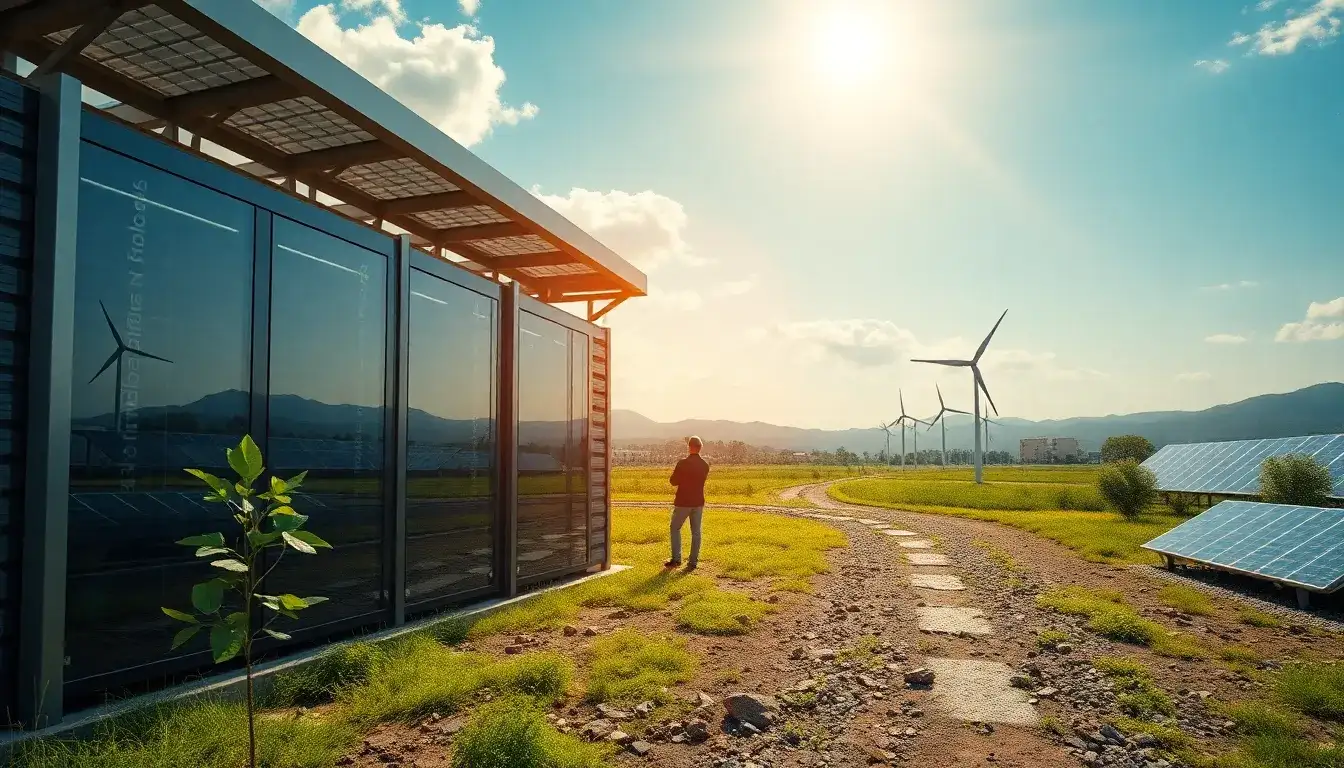
Nandu Power is also making significant strides in integrating energy storage with photovoltaic and other renewable energy sources, demonstrating remarkable results. In recent years, the energy storage stations built by the company have collectively discharged 336.37 GWh, which is equivalent to saving 96,000 tons of standard coal and reducing carbon dioxide emissions by 195,000 tons, akin to planting 10.68 million trees.
With a 30-year history, Nandu Power remains dedicated to driving product innovation. The company utilizes advanced technologies to enhance energy efficiency and reduce greenhouse gas emissions per unit of product. By implementing a green packaging strategy that includes moderate packaging, reuse, and material recycling, Nandu Power has achieved a material recycling rate of over 90% for regenerated wood.
The company has established its first virtual power plant in Germany, managing distributed energy storage stations to consolidate capacities, thereby integrating energy storage with local electricity loads and providing comprehensive energy management services.
In recent years, Nandu Power has further explored the unique technical requirements, product specifications, sales channels, and customer segments across power generation, grid, and user sides. The company meticulously develops differentiated vertical products tailored to specific application scenarios, effectively meeting core customer needs.
On the power generation side, Nandu’s energy storage systems excel in integrated applications with wind and solar energy. Their battery cells’ consistency, coupled with a robust battery management system (BMS), enables autonomous operations and effective tracking of dispatch plans, enhancing overall performance.
On the grid side, Nandu’s energy storage systems utilize an energy management system (EMS) for local intelligent energy management, device monitoring, and fault alarms. They also comply with grid AGC/AVC dispatch instructions, achieving fully automated local control and energy management to address low energy storage utilization rates and declining investment returns.
For users, Nandu’s commercial energy storage systems are equipped with an intelligent EMS that optimizes energy dispatch based on various factors like electricity pricing, environmental conditions, and costs. This facilitates peak load shaving, demand control, and reverse power protection.
With extensive application experience, Nandu Power can design integrated strategies and controls for energy storage systems based on specific scenarios and actual customer needs, ensuring optimal solution alignment.
Through decades of accumulation and development, Nandu Power has established comprehensive technical capabilities encompassing energy storage solution design, system integration, operation maintenance, and the integration of source, grid, load, and storage. The company has successfully built a complete energy storage industrial chain, from battery cell products to system integration and operational services, including resource recovery.
Nandu Power’s three decades of focused efforts have resulted in significant achievements in energy storage technologies and products, overcoming multiple key technical challenges and establishing a robust energy storage industrial layout with an increasingly prominent competitive advantage. Recognizing the importance of the energy storage industry to the stability of power systems and the safety of life and property, the company prioritizes safety as its foremost consideration and relentless pursuit.
In terms of battery safety, Nandu employs advanced composite solid-state electrolyte membranes in conjunction with lithium-conductive electrolyte coating technologies to significantly reduce the use of flammable organic electrolytes, thereby enhancing intrinsic material safety. The company adheres to a stacking process to ensure that cells remain flat during cycling, evenly distributing internal stress and eliminating stress concentration at curved corners, thus progressively enhancing safety.
On the management safety front, Nandu’s BMS monitors critical parameters such as voltage, current, and temperature in real-time. With a four-tier protection system comprising data collection, charge/discharge control, system management, and cloud services, the system maintains accurate health monitoring of the batteries. In the event of any anomalies, the BMS promptly issues alerts, significantly reducing the risk of system failures and forming a solid second line of defense for management safety.
To further enhance safety measures, the company has established a proactive safety mechanism following the principle of “one prevention, two leaks, three extinguishments.” This includes a multi-dimensional early warning system driven by data and battery mechanism models, facilitating three levels of detection and warning to effectively prevent thermal runaway incidents. The system is equipped with inhibitors that directly act on the cells within the PACK, efficiently preventing fires and continuously suppressing thermal runaway. Strategies based on thermal runaway models are employed to control valves and release inhibitors multiple times to extend protection durations. In terms of passive fire safety, each PACK contains micro suppression devices for backup and dual protection.
As one of the first global companies to obtain UL9540 and UL9540A certifications for MW-class container energy storage systems, Nandu Power leads the way in global energy storage safety standards. To date, the company has successfully passed over 200 global energy storage safety certifications, including important global financial qualification licenses, showcasing Nandu Power’s robust capabilities.
Under the guidance of carbon neutrality goals, the energy storage industry is experiencing unprecedented development opportunities in an ever-changing market environment. Reducing carbon emissions in high-energy-consuming manufacturing sectors is a critical step towards achieving national carbon neutrality goals. In light of these goals, Nandu Power is committed to “breaking new ground” through technological and management innovations to pursue green development.
Nandu offers a diverse range of battery products, each with unique performance attributes to meet the needs of different user groups. Particularly in the transportation sector, Nandu’s advantages in new energy vehicles and light electric vehicles are especially pronounced.
The new product series of Nandu’s power lithium battery packs employs long-life lithium iron phosphate battery technologies, featuring high assembly rates, efficient space utilization, and compact structures. The new lithium battery series utilizes high-safety lithium iron phosphate and lithium manganese technologies, with a lifespan of over five years under regular use, while addressing challenges related to weight, weather resistance, and mileage display associated with iron-lithium batteries.
For light electric vehicles, Nandu Power has introduced a “battery swapping service” covering over 20 cities and more than 250 stores, cumulatively deploying over 20,000 battery sets and serving more than 13,000 riders. This service addresses issues related to the difficulty of battery replacement, charging inconvenience, and long charging times, earning widespread acclaim from end users.
Moreover, Nandu Power has launched an intelligent charging and battery swapping “mobile emergency power vehicle,” introducing a “true battery swapping” model that enables bidirectional battery swapping between vehicles and power cabinets, eliminating dependency on circuits and environments during cabinet deployment. Currently, the “mobile emergency power vehicle” charges overnight and operates during the day, assisting the grid in peak shaving and valley filling, while also reducing charging costs through price differentials. The vehicle can be integrated with renewable energy generation, successfully converting the battery vehicle’s energy use from zero to whole, becoming a key player in achieving carbon neutrality for shared mobility.
Original article by NenPower, If reposted, please credit the source: https://nenpower.com/blog/nandu-power-advancing-the-energy-storage-sector-to-achieve-carbon-neutrality/

