Morgan Stanley Increases Projections: “China’s Robot Sales Are Set to Double”
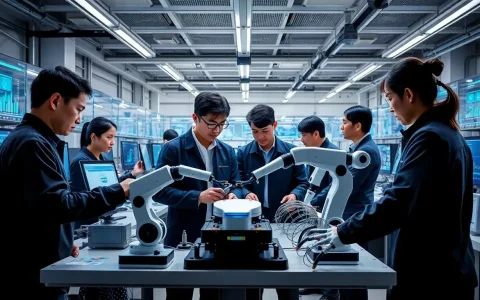
According to a report by the South China Morning Post on February 29, driven by the rapid growth of China’s robotics industry, the American investment bank Morgan Stanley has raised its sales forecast for humanoid robots in China for 2026. The bank now expects this year’s sales to increase by 133% to 28,000 units, doubling the previous forecast of 14,000 units. This adjustment is based on the latest industry data for 2025 and the current development pace.
Morgan Stanley also anticipates that humanoid robot sales in China will experience exponential growth, rising from approximately 12,000 units in 2024 to 262,000 units by 2030, and reaching 2.6 million units by 2035. A report from Yushu Technology highlighted that declining production costs will gradually lower the barriers to acquiring robots. As the core hub of the global humanoid robot supply chain, China’s raw material costs for robot production are expected to decrease by 16% this year. Meanwhile, Bain & Company predicts that by 2035, the prices of related global components will fall by around 70%.
Morgan Stanley believes that this decline in costs will significantly reduce the prices of humanoid robots. In low- and middle-income countries, including China, the price of humanoid robots is expected to drop from $50,000 in 2024 to about $21,000 by 2050. In developed countries like the United States, the average price is forecasted to decrease from $200,000 to $75,000 over the same period. The bank predicts that the practical applications of humanoid robots will become increasingly widespread. By 2036, the number of humanoid robots in use globally is expected to reach 25.4 million units, accounting for 2% of the entire robotics market, which includes robotic arms and wheeled robots. This share is projected to rise to 13% by 2040 and further to 42% by 2044.
By 2050, global humanoid robot deployment could surpass 1 billion units, with over half of these applications in middle- to high-income countries, including China. Market research firm Counterpoint Research reports that China is currently the world’s largest market for humanoid robot applications, anticipated to account for over 80% of global deployment by 2025. The domestic humanoid robot industry has fully initiated its market promotion, with several manufacturers recently collaborating with CCTV’s Spring Festival Gala, a prestigious cultural event that serves as a significant platform for companies to showcase their market influence. So far, four embodied intelligence manufacturers have announced their participation in the 2026 gala.
According to the WeChat account of the “General Manager’s Office of the Central Broadcasting Network,” Songyan Power has become a partner for humanoid robots at the gala, while Galaxy General Robotics is the designated partner for large model robots, and Magic Atom has been recognized as a strategic partner for intelligent robots. Yushu Technology has confirmed its partnership for the gala as well, marking its third appearance. Previously, the company introduced a robotic bull named “Benben” during the 2021 Lunar New Year Gala and collaborated with Zhang Yimou last year to create the humanoid robot program “Yang BOT,” which became a hot topic in the tech discussions of that year’s gala.
The Beijing Robot Industry Development Investment Fund (Limited Partnership), an investor in Yushu Technology, Galaxy General, and Songyan Power, stated that Yushu’s humanoid robot will showcase cutting-edge motion control technology at the gala. Galaxy General will demonstrate the robot’s instant reaction capabilities and “warm service” attributes, leveraging its self-developed “brain-like” large model. Songyan Power will focus on the fusion of technology and culture.
Shoucheng Holdings, another investor in these three companies, noted that the frequent appearances of robot manufacturers on the gala stage reflect three major industry trends: first, consumer-oriented, performance-based, and emotionally valuable scenarios remain core application directions in the early stages of robot development; second, the industry is entering a critical phase of reaching the C-end market and establishing national-level trust; and third, the humanoid robot industry is gradually transitioning from the experimental technology validation phase to the commercialization stage in 2026.
On January 23, the renowned market research firm IDC released a report titled “Global Humanoid Robot Market Analysis,” indicating that the market is set for explosive growth in 2025, with Chinese manufacturers leading the scaling process. In terms of market performance, the global humanoid robot market is expected to grow rapidly in 2025, with shipments of around 18,000 units and sales reaching approximately $440 million, reflecting a year-on-year increase of about 508%, with Chinese manufacturers taking the lead. Zhiyuan Robotics is expected to ship around 5,200 units, followed closely by Yushu Technology with about 4,700 units, while other manufacturers like Leju Robotics, Accelerated Evolution, and Songyan Power are projected to ship around 1,000 units each. International manufacturers are still in the pilot stage.
Full-size bipedal robots are expected to contribute the highest sales revenue, with Zhiyuan Robotics leading the industry. Additionally, Chinese firm Zhiyuan (AGIBOT) has claimed first place in three categories: “Shipments in Five Major Mainstream Scenarios,” “Global Overall Shipments,” and “Full-Size Segment Shipments.” Earlier reports by CNN highlighted that since 2015, when China listed robotics as one of its ten key industries, the sector has entered a fast track of development, with over 150 humanoid robot companies currently operating domestically, and the number continues to grow.
Li Shi, Deputy Secretary-General of the China Automation Society, emphasized that the deep involvement of local governments in Beijing, Shanghai, and Shenzhen, along with significant financial investments and extensive media coverage, has greatly enhanced the social impact of robotics. Continued policy support has also been reinforced, as evidenced by the 2021 release of China’s five-year development plan for the robotics industry, which aims to achieve international leadership by 2035 through policies like increased R&D expense deductions, making robots an integral part of economic development, daily life, and social governance. In March 2025, “embodied intelligence” was mentioned for the first time in the government work report, further promoting the practical application of robotics technology.
On the enterprise side, research and testing are rapidly advancing, with companies like Yushu Technology and Leju already testing humanoid robots’ capabilities in material handling and sorting within factory environments. In August of last year, Hu Debo, CEO of Shanghai Kepler Robotics Co., Ltd., told Observer Network that China possesses unique advantages in the global humanoid robot competition that other countries lack. He noted that China has the most diverse manufacturing application scenarios globally and that Chinese companies have strong innovation capabilities and rapid iteration abilities at the application development and implementation level, which is becoming increasingly evident. Additionally, in the critical area of real-machine data collection for embodied intelligence, China can efficiently gather vast amounts of data at low costs, far surpassing the cost control capabilities of Western countries—this is one of China’s core competitive advantages.
Elon Musk, who has consistently shown keen interest in China’s robotics industry, stated during a recent earnings call that the largest competitors in the humanoid robot sector currently come from China. When asked about the global competitive landscape for Tesla’s humanoid robots, Musk remarked that China excels not only in large-scale manufacturing but also in the application of artificial intelligence technologies and is continuously advancing. “Therefore, China is undoubtedly Tesla’s most formidable competitor,” he emphasized. Musk also highlighted that Tesla has not yet encountered strong competitors outside of China, stating, “Competing with China will be a tough battle, and no one should underestimate China; it is a highly potent competitor.”
Original article by NenPower, If reposted, please credit the source: https://nenpower.com/blog/morgan-stanley-projects-doubling-of-chinas-humanoid-robot-sales-by-2026/