

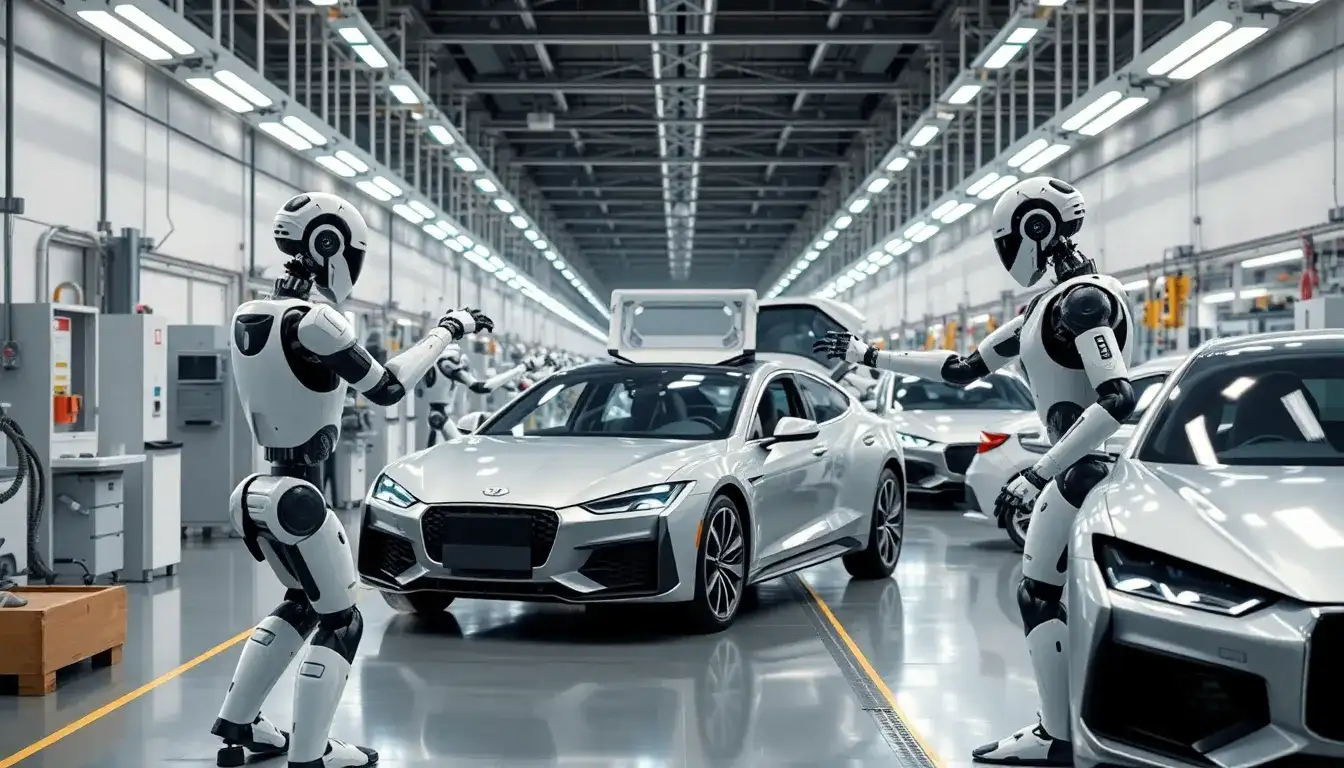
Modern vehicles are set to be embedded with humanoid robots in the United States by February 13, 2026, according to a report from AGV Network. During the CES 2026 event, Hyundai unveiled plans for humanoid robots developed by Boston Dynamics. These robots, including the Atlas model, are scheduled to start production in the U.S. by 2028. The production will focus on “high-performance components” while ensuring compliance with safety and quality standards.
The plan emphasizes integrating “industrial-grade machine learning” for the development of these humanoid robots, which are expected to enhance productivity in manufacturing sectors. From a product perspective, Boston Dynamics aims to position Atlas as an “enterprise-grade” machine, capable of autonomous operation and various control methods, with a maximum payload capacity of 50 kg and operational efficiency in extreme temperatures ranging from -20°C to 40°C.
Powered by software, these robots can connect with MES and WMS systems to realize the concept of “a machine learning ecosystem.” Robert Playter, CEO of Boston Dynamics, highlighted that Atlas is designed to be the “best machine for the job,” aiming to make industrial work safer and more efficient. Unlike the traditional view of robots as mere “mechanical assemblies,” the modern vehicle industry is pushing towards a combination of “robots and AI” integration.
According to multiple media reports, companies like NVIDIA will supply the necessary AI infrastructure, while Alphabet (Google) and DeepMind are collaborating to explore humanoid robots’ capabilities. Carolina Parada from Google DeepMind noted that their humanoid robots are designed to learn through various tasks, ultimately aiming to achieve a “common-sense understanding” of the world.
By leveraging advanced learning algorithms, Boston Dynamics aims to ensure that Atlas can potentially operate autonomously in production lines by 2028. This development is representative of the broader trend in the vehicle manufacturing industry, which is focused on enhancing efficiency and safety in operations.
In conclusion, the integration of humanoid robots into modern vehicles is expected to revolutionize the industry. As the production capabilities of these robots expand, they will likely play a crucial role in shaping the future of manufacturing and automation.
Original article by NenPower, If reposted, please credit the source: https://nenpower.com/blog/modern-vehicles-to-integrate-human-like-robots-in-american-manufacturing-by-2026/

