

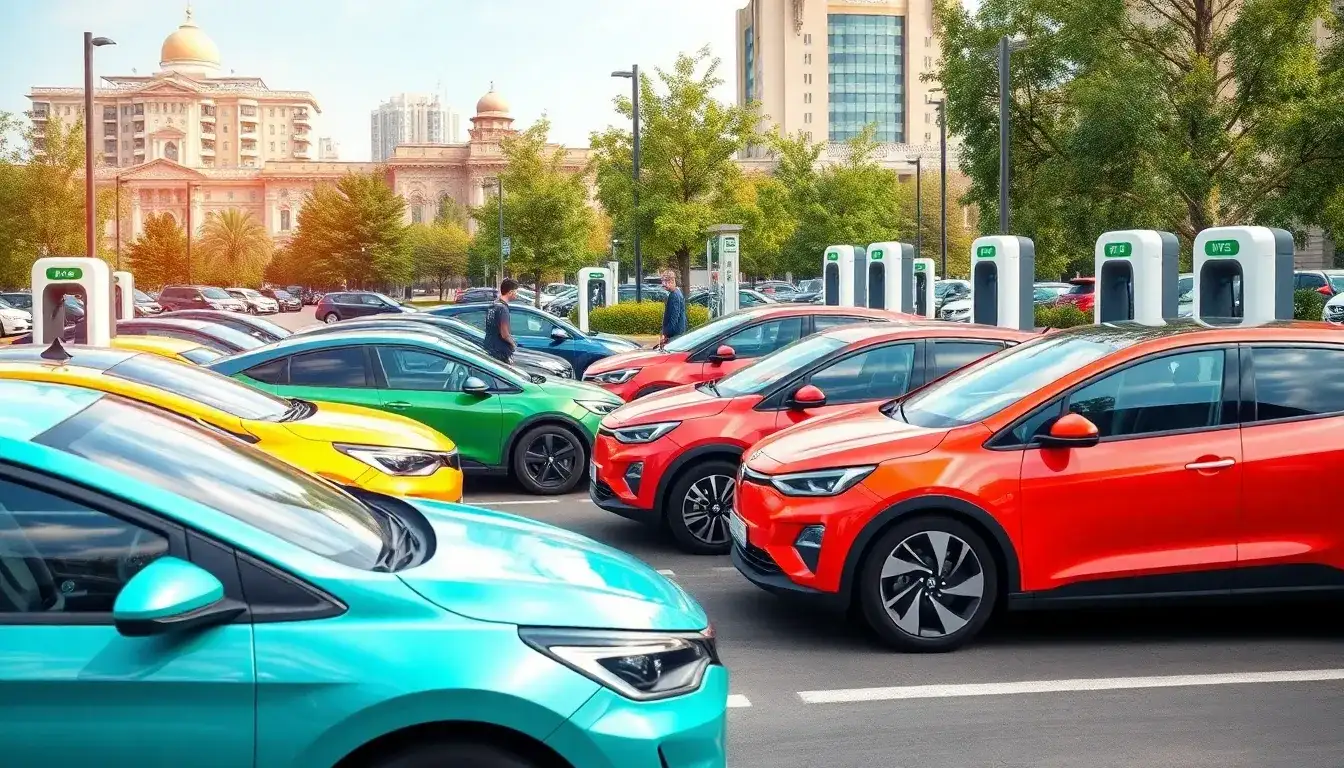
2025 Uzbekistan New Energy Electric Vehicle and Charging Station Market Analysis
Introduction to EVSU 2025 Exhibition
The EVSU 2025 Exhibition will take place from August 23-26, 2025, in Tashkent, Uzbekistan. This annual event is organized by Intro and coincides with the 2025 Uzbekistan Photovoltaic Battery Energy Storage Exhibition. The exhibition is the largest and most influential professional event in the new energy transportation sector in Central Asia.
Industry Overview
The Uzbek government is accelerating the transition to a “green economy”, aiming to increase the share of new energy vehicles (NEVs) to 25% by 2030. The EVSU 2025 Exhibition will feature leading global electric vehicle manufacturers, charging technology suppliers, and industry experts showcasing the latest products, technologies, and solutions to promote sustainable transportation in the region.
Market Analysis
1. Overview of the Electric Vehicle and Charging Station Market
The Uzbek government is strongly promoting the development of the electric vehicle industry. Incentive policies, such as purchase subsidies, reduced import tariffs, and investments in charging infrastructure, are set to enhance the share of electric vehicles to 25% by 2030. As of 2024, the country announced collaborations with several international car manufacturers to establish local production lines and implement strict emission standards for conventional vehicles.
Currently, the number of public charging stations is limited, primarily concentrated in major cities like Tashkent and Samarkand, and a comprehensive fast-charging network is still in development. However, the government plans to establish 5,000 charging stations by 2025 and collaborate with private enterprises to develop charging stations along highways, indicating significant market potential.
2. Segmentation of the New Energy Electric Vehicle and Charging Station Industry
Types of New Energy Electric Vehicles
- Battery Electric Vehicles (BEVs): Affordable models from brands like BYD and Chery, as well as high-end models from Tesla.
- Plug-in Hybrid Electric Vehicles (PHEVs): Suitable for regions with underdeveloped charging facilities, including models from Toyota and Hyundai.
- Fuel Cell Electric Vehicles (FCEVs): In early stages, with pilot projects being explored by the government.
- Electric Buses and Commercial Vehicles: Used mainly for urban public transportation and logistics.
Types of Charging Stations
- AC Slow Charging Stations: Power ranging from 3.7kW to 22kW, suitable for homes, malls, and offices.
- DC Fast Charging Stations: Power from 50kW to 350kW, primarily installed on highways, gas stations, and city centers.
- Ultra-Fast Charging Stations: Power exceeding 350kW, currently rare.
- Battery Swap Stations: Suitable for taxis and commercial vehicle fleets, with brands like NIO exploring entry into Uzbekistan.
3. Government Policies and Support Services
The Uzbek government recently launched a “Green License Plate” program to promote the use of new energy vehicles. Owners of electric vehicles with green plates will enjoy benefits such as exemptions from traffic restrictions, free parking, and access to bus lanes. These incentives significantly enhance consumer willingness to buy electric vehicles. In Tashkent’s central environmental area, conventional vehicles are completely banned, and municipal parking lots offer two hours of free parking for new energy vehicles.
4. Market Trends
The Uzbek NEV market is witnessing a dual driving trend of local production + Chinese technology. Starting in 2025, all electric vehicles sold in Uzbekistan must include at least 15% local components, attracting companies like BYD and Chery to establish factories locally. Currently, the Tashkent NEV Industrial Park has seven battery pack assembly plants, and localization rates are increasing by 5% annually.
5. Current Developments
The electric vehicle market in Uzbekistan is experiencing a wave of electrification and digitalization. A pilot V2G (Vehicle-to-Grid) project launched in Tashkent allows electric vehicles to act as mobile energy storage units, providing power back to the grid during peak demand periods. Additionally, the world’s first wireless charging road has been established in Samarkand, allowing electric vehicles to charge while driving.
6. Electric Vehicle Brand Market Share
In the electric vehicle market, Chinese brands lead with a dominant share of 72%. BYD holds the largest share at 38%, followed by Chery at 19% and GAC Aion at 15%. Local brand UzAuto Motors has launched the “Uz-Dolphin,” claiming 12% of the market share upon its release. The charging infrastructure is similarly led by Huawei Digital Energy, which dominates the ultra-fast charging market.
Conclusion
Uzbekistan is on track to become a key player in the new energy transportation sector in Central Asia, with significant developments in both electric vehicle manufacturing and charging infrastructure. The government’s supportive policies and strategic initiatives are paving the way for a sustainable transportation future.
Original article by NenPower, If reposted, please credit the source: https://nenpower.com/blog/market-analysis-of-uzbekistans-new-energy-electric-vehicle-and-charging-station-sector-in-2025/

