

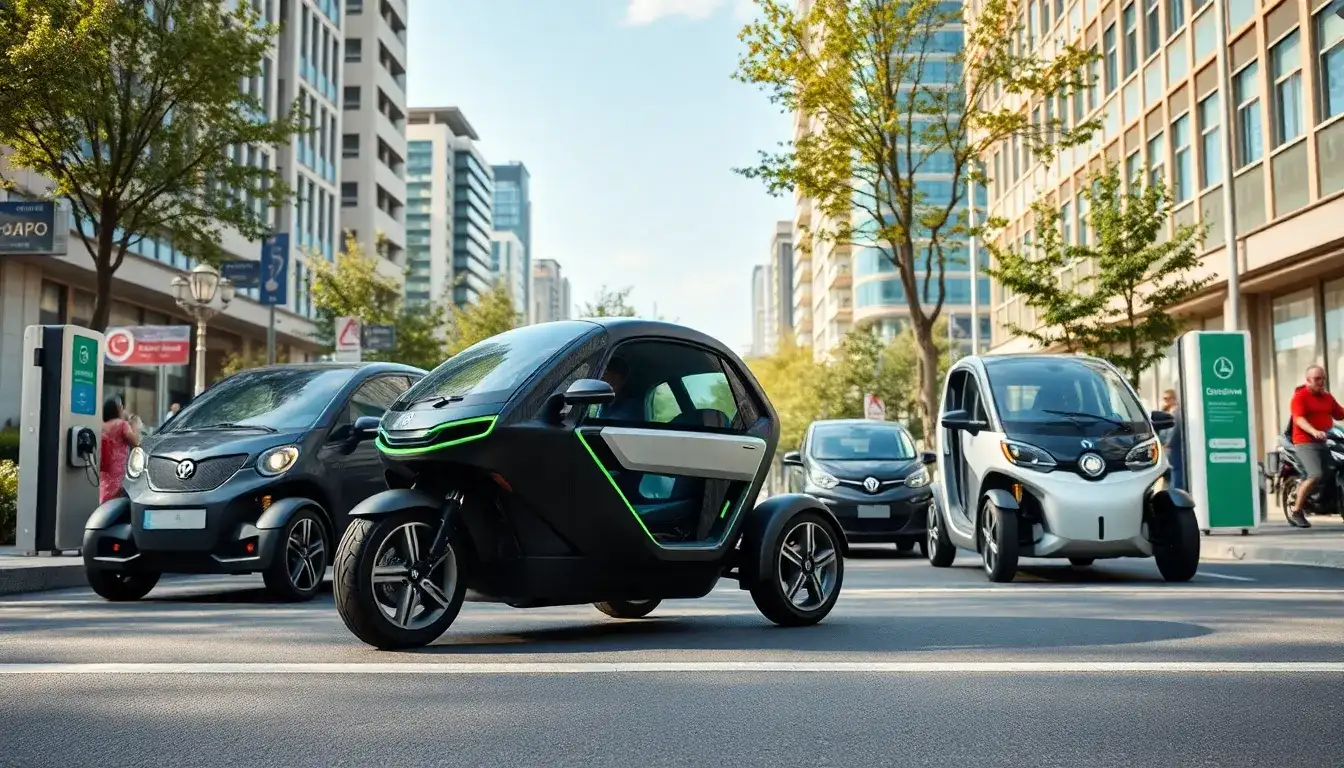
In October 2025, electric vehicles (EVs) and three-wheelers will benefit from four significant developments that include regulations on road usage, license acquisition, charging facilities, and purchasing incentives. These changes are expected to ease the travel pressures for vehicle owners and enhance their mobility. Here’s a closer look at these benefits.
Two Major Benefits for Non-Standard Electric Vehicles
The new national standards for electric vehicles came into effect in September 2025, mandating manufacturers to produce vehicles that comply with these standards. However, non-standard electric vehicles (e-bikes) are also receiving favorable news. These vehicles will not be banned from the roads; instead, they will enjoy a transitional period to ensure accessibility.
Many regions have established transitional periods for non-standard vehicles. For example, Inner Mongolia has introduced a five-year transition period that allows registered non-standard vehicles to remain operational until 2030. Similarly, owners in Lingchuan, Shanxi, who register their non-standard vehicles by September 30 will be legally permitted to use their vehicles for another year. It is important for owners to register on time to avoid missing out on obtaining temporary license plates.
Extended Transition Periods
To alleviate the urgency of replacing vehicles, some regions are extending the transition periods for non-standard vehicles. For instance, in Kaijiang, Sichuan, the transition period has been prolonged until June 1, 2028, while in Luohe, Henan, it has been extended to November 30, 2027. This means that even when the transition period concludes, owners in these areas can continue using their non-standard vehicles without the immediate need to switch to new standard-compliant models.
Incentives for Purchasing Electric Vehicles
If you plan to replace your electric vehicle in the second half of 2025, you’ll encounter some positive developments, including clearance sales for old standard models and subsidies for trading in old vehicles.
Clearance Sales for Old Standard Models
After the implementation of the new standards on September 1, 2025, old standard models can still be sold until November 30, 2025. This gives dealers a little over two months to clear their stock, prompting many to initiate sales campaigns. They are reducing prices to attract buyers and quickly deplete their inventory before the December 1 cutoff, when the sale of old standard models will no longer be permitted.
Subsidies for Trade-Ins
The government’s subsidies for trading in old vehicles will become available in October 2025. During this quarter, areas will continue to promote trade-in programs for electric bicycles. Owners who exchange their old standard vehicles for new standard models will be eligible for government subsidies, making the transition more affordable.
Improved Access to Motorcycle Licenses
Electric vehicles are categorized into motorized and non-motorized vehicles. To operate motorized vehicles, a valid license is required. Previously, obtaining a motorcycle license was challenging for those in rural areas due to the distance to licensing offices. Starting October 2025, several provinces and cities will offer motorcycle license testing services in rural areas, bringing testing venues closer to residents. For instance, in Guizhou, areas like Yuping and Shiqian have scheduled specific times in October for motorcycle testing in rural locations. Residents will be able to take the tests conveniently and can even receive their licenses on the same day if they pass quickly.
Enhanced Charging Facilities
Following the introduction of stricter regulations on electric vehicle charging, which prohibit charging in residential buildings and through unauthorized means, there are now positive developments in charging infrastructure. Many regions are initiating battery-swapping programs and building more battery-swapping stations.
Convenient Battery Swapping
To support delivery personnel and others who frequently use electric vehicles, several provinces and cities are promoting battery-swapping models. Companies such as Ti Tower Energy, e-Swap, and Hello Swap are rapidly establishing battery-swapping stations in communities, allowing users to replace their batteries in just three minutes, effectively eliminating range anxiety.
Reduced Charging Costs
On October 1, 2025, the Jinan Fire Safety Regulations for Electric Bicycles went into effect. These regulations specify that electric vehicles must not be parked haphazardly and require a reduction in charging fees. Charging stations must clearly display pricing, ensuring transparency and preventing hidden costs, which will ultimately lower the charging expenses for vehicle owners.
Conclusion
As we move into the latter half of 2025, electric vehicles and three-wheelers will enjoy four major benefits. Non-standard vehicles can continue to operate on the roads, purchasing incentives are available, obtaining motorcycle licenses has become more accessible, and charging options have improved with reduced costs. These developments promise to significantly enhance the convenience of travel for electric vehicle owners.
Original article by NenPower, If reposted, please credit the source: https://nenpower.com/blog/major-benefits-for-electric-and-three-wheeled-vehicles-coming-in-october-2025/

