

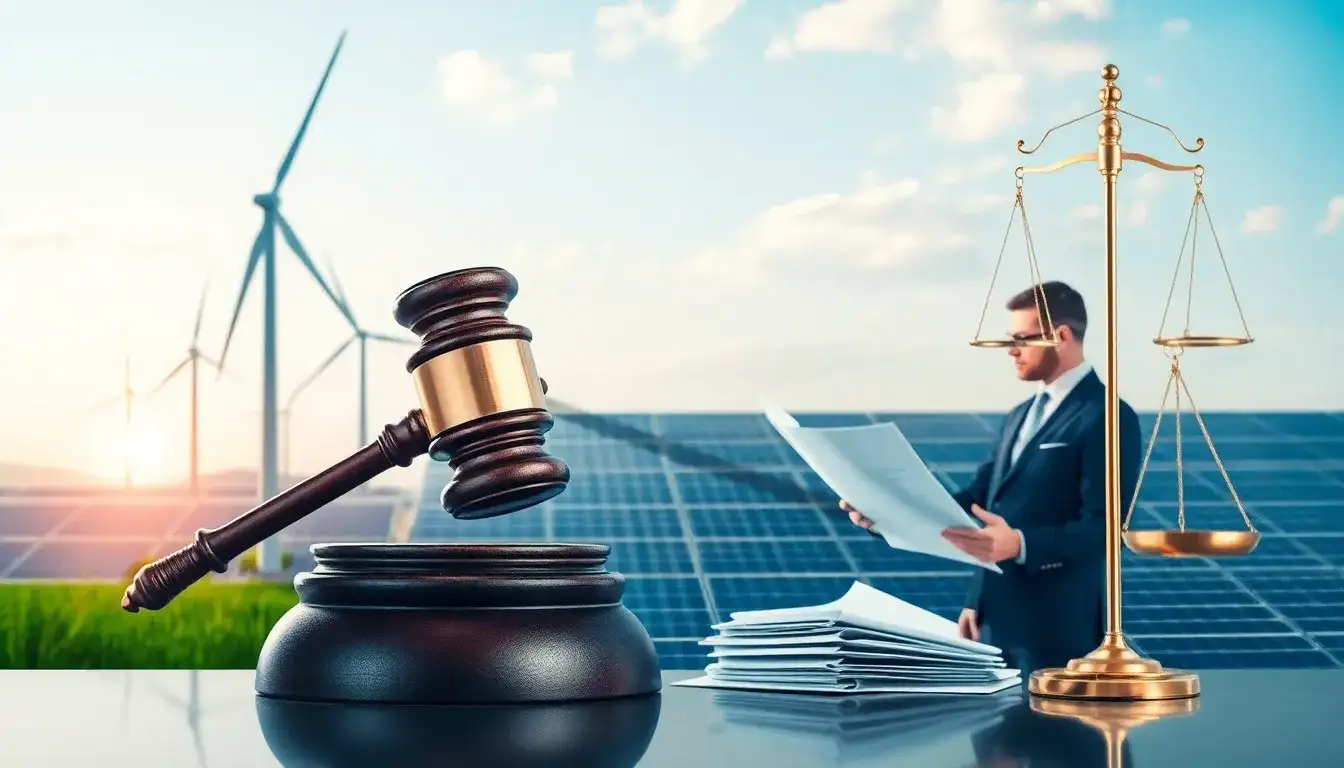
Legal Risks in the New Energy Sector White Paper: Compliance Challenges and Strategies
As the global new energy industry experiences rapid growth, factors such as policy uncertainty, accelerated technological iterations, and intensified international competition have led to frequent legal risks. In recent years, the new energy sector has witnessed explosive growth, but this rapid development hides multiple legal risks.
Table of Contents
- Industry Trends and Overview of Legal Risks
- Core Areas of Legal Risk
- Investment and M&A Risks
- Intellectual Property and Data Compliance Risks
- Cross-Border Trade and ESG Compliance Risks
- Safety and Labor Risks
- Typical Cases and Legal Analysis
- Corporate Compliance Recommendations and Strategies
- Future Outlook and Policy Trends
- Conclusion
1. Industry Background and Characteristics of Legal Risks
(1) Industry Background:
The global new energy industry is entering a period of rapid growth, yet legal risks are becoming increasingly prevalent due to factors such as policy uncertainty, accelerated technological change, and heightened international competition. The following issues have emerged:
- Policy Uncertainty: Frequent adjustments to new energy subsidy policies in various countries have led to significant fluctuations in the expected returns for Chinese companies involved in overseas projects. Additionally, carbon trading market rules have not been unified, and some emerging market countries have unclear grid connection policies.
- Accelerated Technological Change: Efficient battery technologies are rapidly replacing older technologies, but the relevant technical standards and product certification systems are not yet fully developed. Companies face risks of patent infringement and overcapacity due to incorrect technological choices. In the energy storage sector, solid-state and flow battery technologies are gradually being commercialized, but legal norms related to safety performance evaluation and battery recycling responsibilities are lagging. For instance, in 2023, a storage project experienced a fire due to battery thermal runaway, highlighting the gaps in safety regulation for new energy storage technologies.
- Intensified International Competition: The United States has implemented the IRA Act, which offers subsidies for clean energy but requires that key minerals for battery components be sourced from the U.S. or trade partner countries, directly impacting Chinese battery exports to the U.S. The European Union has initiated a “Green New Deal” with strict environmental standards, compelling Chinese companies to invest additional resources to meet carbon footprint tracing and supply chain due diligence requirements. Furthermore, India has launched production-linked incentive programs for domestic solar module production while raising import tariffs, presenting localization and labor compliance risks for Chinese companies investing in India.
(2) Increase in Legal Disputes: In 2023, there was a notable increase in litigation involving new energy companies, primarily focused on contract disputes, intellectual property infringements, and cross-border compliance. The types of cases displayed a diverse range, including:
- Contract Disputes: EPC general contracting disputes often arise from fluctuations in equipment prices, project delays (e.g., wind energy projects facing compensation claims due to environmental impact assessment approval delays), and vague quality clause agreements (e.g., disputes over the degradation rate of solar panels). Power purchase agreement disputes mainly revolve around electricity price adjustment mechanisms and delays in grid connection.
- Intellectual Property Disputes: There has been a rise in patent disputes in the solar sector, particularly concerning efficient battery technologies. For example, in 2023, a company faced an 80 million yuan claim for unauthorized use of a shingled module patent. In the energy storage sector, trade secret infringement cases have become commonplace, with one battery company suffering over 300 million yuan in losses due to a former employee leaking an electrolyte formula.
- Cross-Border Compliance Cases: Issues related to export controls have escalated, alongside increasing anti-dumping investigations and prominent data compliance risks. A company exporting solar monitoring data to Southeast Asia was fined 2 million dollars for failing to pass local data localization reviews. In another case, a Chinese company faced delays in approval for a wind power project in Australia due to undisclosed shareholder backgrounds.
2. Characteristics of Legal Risks:
- High Policy Dependency: Changes in policies such as subsidy reductions and carbon trading rule changes directly affect company revenues. The development of the new energy industry is heavily reliant on policy drivers throughout the project’s lifecycle.
- Rapid Technological Iteration: The legal regulation surrounding new technologies, such as hydrogen energy and energy storage, lags behind their application, leading to compliance blind spots.
- Prominent Cross-Border Risks: Geopolitical conflicts and international standard disparities make it challenging for companies to fulfill overseas project obligations.
3. Core Areas of Legal Risk
(1) Investment and M&A Risks:
Legal risks in this area often arise from issues such as land ownership disputes and unreported environmental penalties or debt disputes concerning target companies. Companies must conduct thorough due diligence to avoid pitfalls associated with land use changes, hidden debts, and incomplete project approval documentation.
In conclusion, navigating the legal landscape of the new energy sector requires a proactive approach to compliance and risk management. By understanding the complexities of legal challenges, companies can better position themselves for success in an increasingly competitive and regulated environment.
Original article by NenPower, If reposted, please credit the source: https://nenpower.com/blog/legal-risks-in-the-new-energy-sector-compliance-challenges-and-strategies-for-mitigation/

