

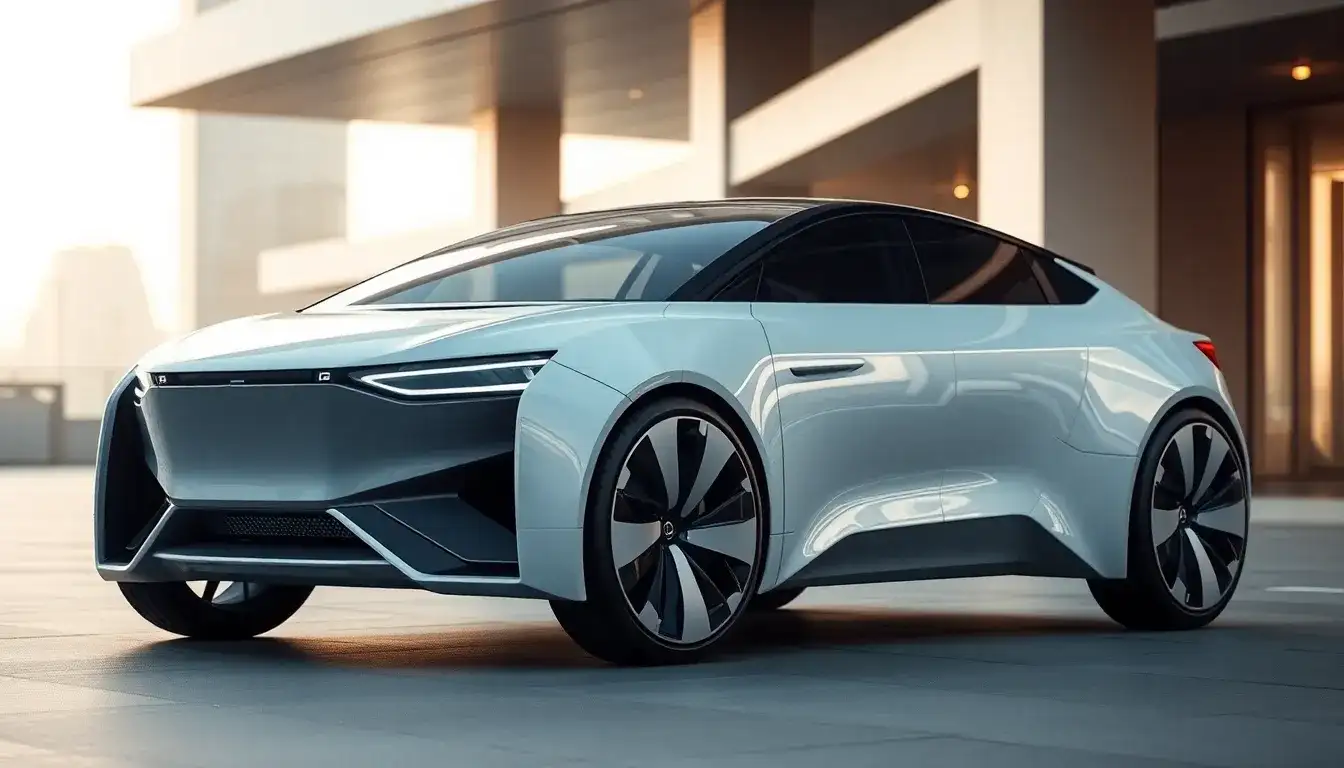
On April 16, Lantu unveiled its new electric vehicle architecture, named “Tianyuan Intelligent Framework.” This framework is equipped with two advanced technology clusters: the “Qingyun L3 Intelligent Safety Driving Platform” and the “Kunpeng L3 Intelligent Safety Driving System.”
The <b>Qingyun L3 Intelligent Safety Driving Platform</b> integrates several cutting-edge technologies including axial flux motors, distributed electric drive, fully active suspension, steer-by-wire, brake-by-wire, and rear wheel steering. This transition from an electric control architecture to an intelligent one enhances the safety of intelligent driving.

According to Lantu, the axial flux motor features a peak torque of <b>680 N·m</b>, weighs <b>28 kg</b>, occupies a volume of <b>9.9 L</b>, and boasts an efficiency of over <b>97.5%</b>. The new architecture employs a four-motor distributed drive, achieving a system torque of up to <b>2720 N·m</b>. The individual control of the four wheel-side motors allows for a torque response time of <b>50 milliseconds</b> or less, enabling real-time and precise vehicle power management, including capabilities for turning in place and executing circular turns.

The <b>Qingyun platform</b> also incorporates fully active suspension, which consists of dual-valve continuously adjustable dampers, air springs, an <b>800V</b> high-pressure electro-hydraulic pump, and proactive road preview functionality. This system offers a lift range of <b>200 mm</b> and can adjust its settings with a high-frequency of <b>10 times per second</b> to accommodate various road conditions. The maximum lifting force is <b>41000 N</b>, with the ability to complete adjustments in suspension travel within <b>0.5 seconds</b>. The dual stereo preview cameras can identify all objects within <b>40 m</b>, including those with height discrepancies of <b>±20 mm</b> or more, which aids in the active adjustment of the suspension to better mitigate impacts from road bumps.

Additionally, the <b>Qingyun platform</b> features steer-by-wire technology, eliminating the mechanical link between the steering wheel and the steering mechanism. Instead, it utilizes electrical signals for transmission and control, fulfilling the requirements for L3 autonomous driving, which enhances vehicle handling precision and flexibility, thereby improving the driving experience. The steer-by-wire system can also adapt the steering ratio based on driving scenarios, with a range from <b>4.5:1 to 15:1</b>. It includes a redundant design with heterogeneous dual coil motors, dual ECUs, dual communication channels, and dual power systems to ensure safety.

The platform further integrates rear-wheel steering technology, allowing for steering angles of <b>±5° or ±10°</b>. This feature significantly reduces the turning radius, enhancing convenience for urban driving and stability during high-speed lane changes.

Lantu's intelligent integrated chassis technology continuously monitors collision risks from the front, rear, bottom, and sides of the vehicle during regular driving. It can take proactive defensive measures and quickly adjust the vehicle's posture in response to different collision threats, minimizing potential damages.

The <b>Kunpeng L3 Intelligent Safety Driving System</b> consists of three core modules: the Kunpeng Perception Network, Kunpeng Large Model, and Kunpeng Wanxiang Platform. The vehicle's perception system includes <b>48 sensors</b>, which consist of <b>4 LiDARs</b>, <b>12 ultrasonic radars</b>, <b>16 elastic wave sensors</b>, <b>5 millimeter-wave radars</b>, and <b>11 cameras</b>. The LiDAR features <b>700 lines</b> and has a high resolution exceeding <b>220 meters</b>.

The intelligent driving platform is powered by dual flagship intelligent driving chips, with computing power exceeding <b>1000 TOPS</b>. It features a dual-chip, dual-backup redundancy for enhanced processing efficiency and reduced system latency. In terms of driving safety, the <b>Kunpeng L3 Intelligent Safety Driving System</b> provides superior recognition capabilities and a higher bandwidth for intelligent driving safety.

In case of special situations requiring human intervention, the vehicle will issue a progressive three-tier alert through interior lights, voice prompts, and seat vibrations. If there is no response for an extended period, the vehicle will safely pull over. In complex traffic environments with many pedestrians, the vehicle will use external speakers and lights to alert those outside to take caution.

Moreover, Lantu announced that the new Lantu FREE, equipped with Huawei's latest intelligent driving technology, will debut at the Shanghai Auto Show, featuring upgrades across various dimensions, including the cabin and chassis.

During the press conference, Lantu also revealed that its first full-sized six-seat SUV model is expected to launch within 2025. This new vehicle will be the first product built on the Tianyuan Intelligent Framework, integrating the <b>Qingyun L3 Intelligent Safety Driving Platform</b> and the <b>Kunpeng L3 Intelligent Safety Driving System</b>.
Original article by NenPower, If reposted, please credit the source: https://nenpower.com/blog/lantu-unveils-innovative-electric-vehicle-architecture-featuring-four-motors-and-advanced-technologies/

