

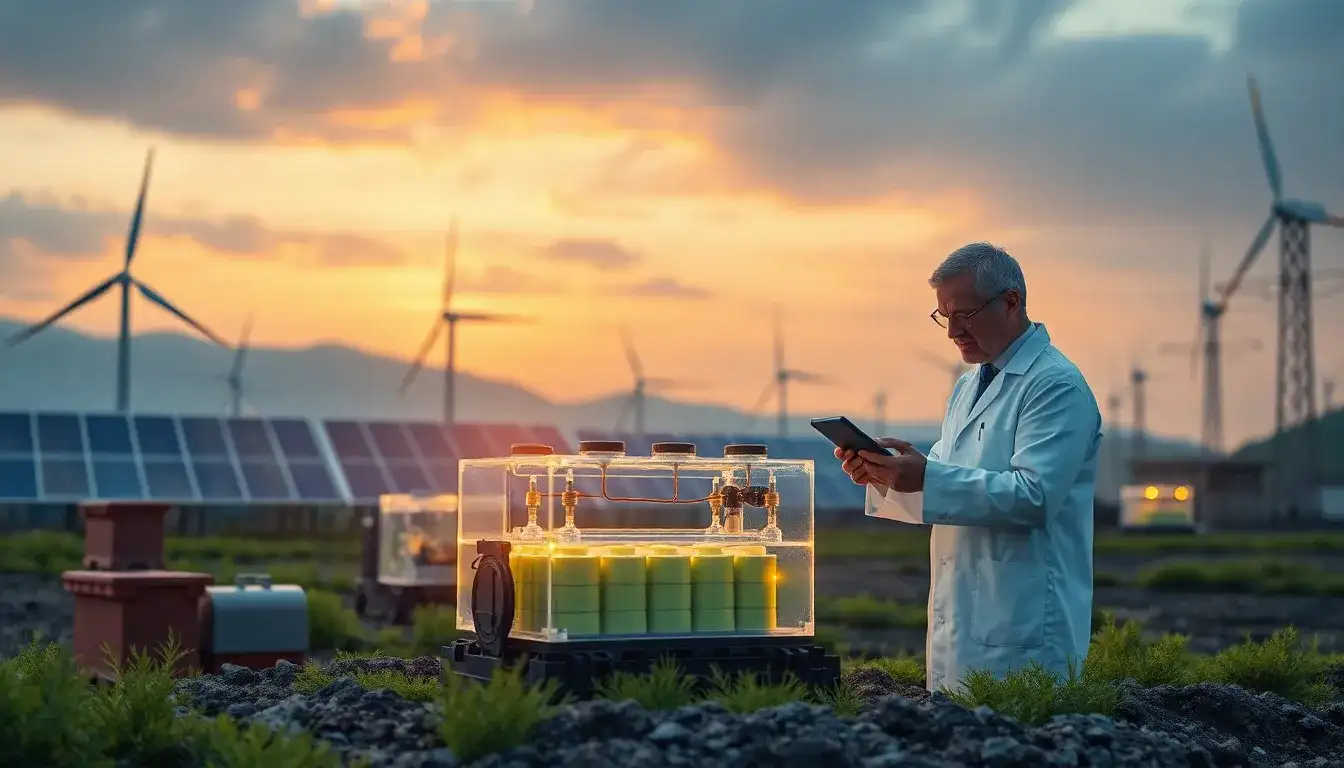
Top Ten Development Trends in New Energy Storage by 2025
1. Acceleration in R&D and Production of High-Capacity Storage Cells
Whether it involves high-capacity cells or large-scale systems, “larger” has become the primary focus of product iteration in the energy storage sector. In 2024, leading companies such as CATL, EVE Energy, and others are expected to introduce high-capacity storage cells exceeding 500Ah. Looking ahead to 2025, this trend will continue to deepen, with accelerated R&D and production of high-capacity storage cells resulting in more options, including 500Ah+, 600Ah+, and even 700Ah cells. This will enhance the integration efficiency of storage systems, increasing capacity to 6MWh and potentially exceeding 8MWh. Hai Cheng Energy plans to deliver its 6.25MWh all-scene high-capacity storage system globally in the second quarter of 2025, featuring a 2-hour system based on 587Ah cells and a 4-hour system based on 1175Ah cells. Additionally, Nandu Power’s 690Ah specialized storage battery is set for mass production by the end of 2025, compatible with capacities ranging from 650Ah to 750Ah, and boasting a volume energy density of 380-440Wh/L with a cycle life of up to 15,000 cycles.
2. Lithium Battery Companies Increasing Focus on Long-Duration Storage
The industry generally considers long-duration storage to be large-scale, low-cost technologies capable of sustained discharge for four hours or more, or even several days or months. As the share of renewable energy in the power system rises, demand for long-duration storage is significantly increasing. The market for long-duration storage is expected to see substantial growth by 2025. Recent procurement announcements from state-owned enterprises like China National Nuclear Corporation and others include 4-hour systems. As lithium battery technology matures, long-duration storage is becoming a key focus for various battery manufacturers, including Hai Cheng Energy and EVE Storage. Recently, Jiangxi Ganfeng Lithium expressed optimism about the future long-duration storage market and is planning to develop large-capacity battery cells.
3. Artificial Intelligence Enhancing Storage Safety
In 2025, the next generation of artificial intelligence (AI) technologies will see broader application in the new energy storage field, becoming a new engine for industrial development. In November 2024, the Ministry of Industry and Information Technology proposed in its draft plan to promote the widespread use of technologies such as blockchain, big data, AI, and 5G in the new energy storage manufacturing sector, supporting research on safety early warning technologies based on digital twin and AI technologies. In R&D, AI can provide more precise simulations and optimizations of storage material performance. In terms of safety operations and maintenance, technologies such as Battery Management Systems (BMS) and big data will be used to monitor battery operation states, enabling proactive safety measures to identify and warn of early faults. Moreover, in solar-storage site management, AI can accurately predict and configure strategies, optimizing the balance of energy sources and loads, thus enhancing overall economic efficiency.
4. Sodium-Ion Batteries Gaining Traction
In 2024, sodium-ion battery technology has advanced rapidly, achieving significant breakthroughs in energy density, cycle life, and safety, entering the commercialization phase. By 2025, energy storage will be a crucial breakthrough point for the sodium battery industry, potentially marking the “first year” of sodium-ion battery industrialization. However, the ongoing decline in lithium battery prices has somewhat delayed the industrialization process of sodium-ion batteries. Only when lithium battery production capacity is effectively cleared can sodium-ion batteries hope for true large-scale development. Hai Cheng Energy has introduced the world’s first sodium-ion battery designed specifically for power storage, expected to reach GWh-level production by the fourth quarter of 2025. BYD has launched a sodium-ion battery storage system featuring long blade cells, defining it as the world’s first high-performance sodium-ion battery storage system, with a capacity of 2.3MWh, set for delivery in the third quarter of 2025.
5. (Semi) Solid-State Batteries Advancing Toward Application
The application of solid-state batteries in the energy storage sector is rapidly expanding. In 2024, several solid-state and semi-solid-state battery storage projects in China became operational. For example, the solid-state battery storage project in Xiuzhou District, Jiaxing City, has been successfully completed, and other projects have adopted semi-solid-state lithium iron phosphate batteries. The North China Oilfield’s first solid-state battery storage plant has also commenced operations, demonstrating the technology’s potential. The industry generally believes that solid-state batteries, with their high safety and long lifespan characteristics, can better meet the stability and durability requirements of large-scale storage systems. By 2025, as global energy storage installations increase, the application of solid-state batteries is expected to further expand.
6. Increased Use of Silicon Carbide in Energy Storage
By 2025, as solar energy storage systems continue to evolve toward higher voltage, frequency, and efficiency, wide bandgap semiconductor materials, particularly silicon carbide (SiC), will become increasingly favored. SiC offers significant advantages in energy storage systems, including higher efficiency, smaller size, lighter weight, lower costs, and better high-temperature performance. This will greatly enhance the overall operational efficiency of switching devices, reducing losses and improving the quality and efficiency of solar energy storage systems. Industry predictions indicate that over the next three to five years, the power density of photovoltaic inverters and storage converters (PCS) will increase by over 30%.
7. Expanding Applications for New Energy Storage
According to the “14th Five-Year Plan” for new energy storage development, by 2025, new energy storage will transition from its initial commercialization phase to large-scale development. In November 2024, the Ministry of Industry and Information Technology outlined plans to expand demonstration application scenarios. Recently, the Anhui Province implementation plan for promoting new energy storage has initiated efforts to broaden applications in various fields. By 2025, as various new energy storage technologies are refined and a series of policies are implemented, applications will diversify into both grid-side and user-side storage. This will include offshore wind and solar energy storage applications, electric flying cars, and integrated charging stations.
8. Rapid Development of Solar-Storage Integration
Unlike traditional energy sources, renewable energy such as solar and wind faces intermittency and volatility challenges. As the need for grid stability increases, the integration of solar and storage will accelerate, achieving commercial viability across a wider range of scenarios. For instance, as electric vehicle adoption rises, integrated solar-charging stations are proliferating nationwide, leveraging new energy storage’s supportive role in vehicle-grid interaction. By 2025, the deployment of these integrated stations will expand significantly, not only in public areas but also within commercial and residential complexes, as well as industrial parks. Advances in technology will lead to more intelligent and flexible solar-storage systems, utilizing AI and IoT for real-time monitoring, data analysis, and intelligent scheduling.
9. Network-Type Energy Storage Accelerating Towards Industrial Implementation
Network-type energy storage systems maintain output voltage and frequency, operating with voltage source characteristics and actively supporting the grid during faults. They can stabilize voltage, frequency, and power angle, ensuring the long-term stability of new power systems. In 2024, network-type energy storage gained significant traction, with key technologies rapidly developing and new products emerging. A number of demonstrative applications have been implemented, with several setting national and global records. Companies such as Huawei, Sungrow, and others are investing in this sector. It is anticipated that by 2025, the penetration rate of network-type energy storage in China, especially in the northwest region, will increase. Industry forecasts suggest that domestic shipments of network-type energy storage will reach 7GW by 2025, potentially growing to 30GW by 2030.
10. Global Expansion of Energy Storage
In the context of the global green energy transition, expanding into international markets has become a consensus among energy storage companies. In 2024, Chinese energy storage enterprises have made significant strides in international markets, extending from traditional regions like Europe and the United States to emerging markets in Africa, the Middle East, and Southeast Asia. By 2025, global demand for energy storage is expected to maintain rapid growth. Forecasts indicate that global energy storage shipments (including communication storage) will reach 449GWh, marking a 31.5% year-on-year increase, with substantial growth potential in markets such as the United States, Europe, Australia, and the Middle East.
Original article by NenPower, If reposted, please credit the source: https://nenpower.com/blog/key-trends-shaping-the-future-of-energy-storage-by-2025/

