

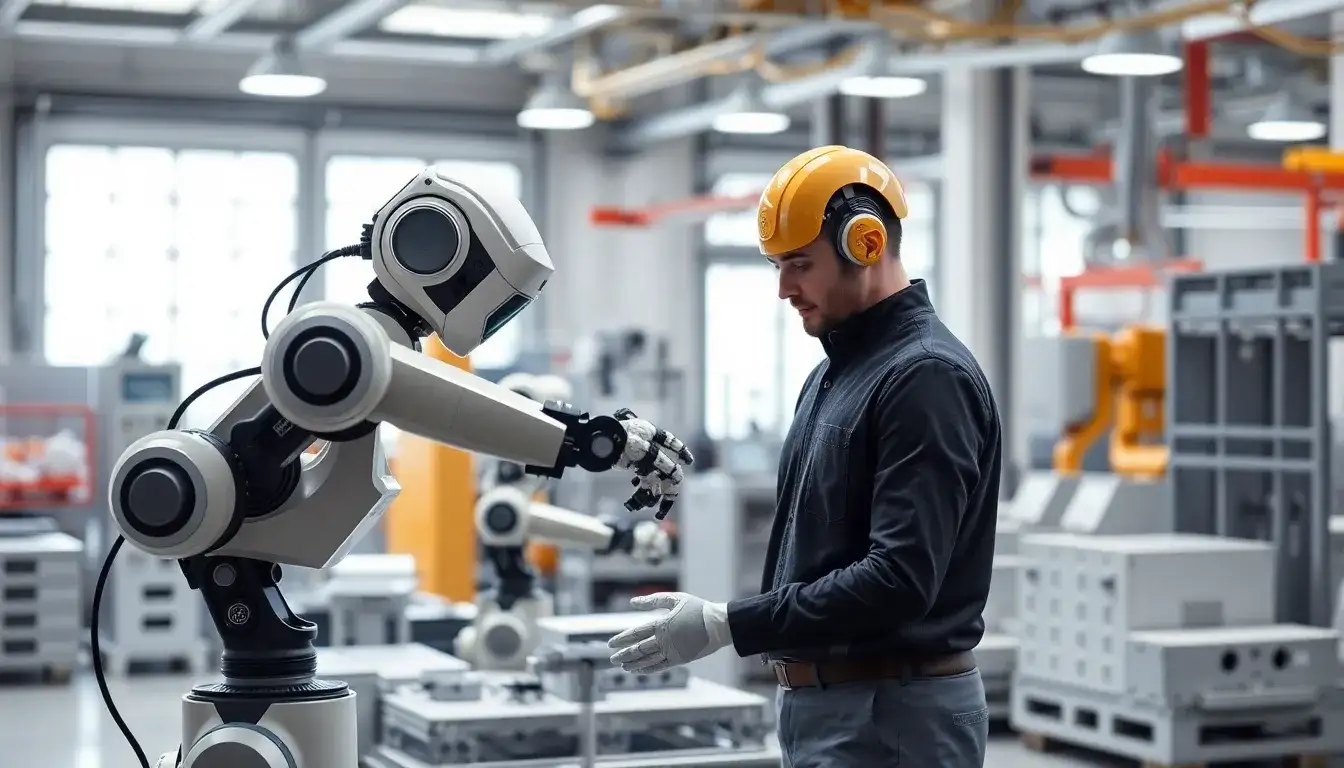
ABB Robotics has recently shared its insightful predictions for the trends in collaborative robots (cobots) by the year 2026. As technology rapidly evolves, robotic arms are stepping out of traditional manufacturing environments and into our everyday lives. The landscape of collaborative robots is expanding from industrial-grade performance to the integration of artificial intelligence, mobility, and even culinary applications.
Trend 1: Achieving True “Industrial-Grade” Performance
Historically, collaborative robots were often viewed as suitable only for light tasks. However, by 2026, this perception is set to change dramatically. The next generation of cobots is challenging complex manufacturing tasks traditionally reserved for conventional industrial robots, boasting unprecedented performance levels.
Key technological advancements include:
- Higher Load Capacity: Easily handling heavier workpieces
- Extended Reach: Covering larger work areas
- Faster Cycle Times: Consistent high-speed operation
- Increased Precision: Achieving micron-level accuracy
- Enhanced Safety: Incorporating advanced safety and compliance technologies
Manufacturers are now anticipating cobots equipped with industrial-grade durability, precise motion control, and long-term reliability. ABB’s cobot product line is merging exceptional performance, safety features, and durability. The latest PoWa series cobots can reach speeds of up to 5.8 meters per second with a repeatability of less than 0.1 millimeters, making them ideal for high-intensity, high-precision challenges in industries such as electronics and automotive manufacturing.
Trend 2: Entering New Fields
One of the most exciting developments in 2026 is the expansion of collaborative robots into unexpected locations such as clinical diagnostic laboratories, pharmaceutical processes, and commercial kitchens. Traditionally less automated industries are now embracing cobots due to their compact size, quiet operation, cleanliness, and intrinsic safety.
New application areas include:
- Clinical Diagnostic Laboratories: Precise handling of large volumes of samples
- Pharmaceutical Processes: Assisting with standardized operations
- Commercial Kitchens and Bakeries: Taking over repetitive food preparation tasks
- Research and Testing Institutions: Executing sensitive experimental procedures
- Hospitality Services: Providing innovative interactive experiences
- Small Craft Workshops: Supporting intricate creative designs
The precision, low noise, and ease of operation of collaborative robots are making them ideal partners for supporting repetitive or sensitive tasks.
Trend 3: Handling More Challenging Tasks
In manufacturing workshops, logistics centers, shipyards, and heavy industrial sites, an increasing number of dirty, tedious, and hazardous tasks are being assigned to collaborative robots. Whether it’s welding and surface preparation in shipyards or handling hazardous materials, these tasks require exceptional stability, safety, and precision, all of which are strengths of cobots.
A significant trend by 2026 is that collaborative robots are becoming more accessible even in factories without robotics experts. Through gesture teaching, drag-and-drop programming, hands-on guidance, and even natural language commands, today’s robots are achieving a level of interaction that is intuitive and responsive. This user-centered design allows operators to easily set up and operate cobots as if they were using regular tools. ABB’s focus on user-friendly design features, such as simple programming and guided workflows, aligns perfectly with this trend, empowering any team to confidently and efficiently embrace automation.
Trend 4: The Ideal Platform for AI Technology
As AI-driven automation takes hold globally, collaborative robots are quickly becoming the preferred platform for integrating intelligent machine capabilities. Their flexibility, safety, and ease of reconfiguration provide an ideal environment for deploying cutting-edge AI functionalities:
- Real-Time Machine Vision and Scene Understanding
- Adaptive Path Adjustment
- Intelligent Grasping and Handling
- Instant Task Learning
- Predictive Error Detection
- Automated Skill Configuration
- Hybrid Cloud/Edge/On-Premise AI Collaboration
ABB’s vision for autonomous multifunctional robots vividly illustrates this trend. With the introduction of generative AI, collaborative robots can transcend preset programming limitations, moving towards autonomous learning, adaptation, and multitasking. By integrating 3D AI vision, force sensing, natural language interaction, and cloud-edge collaborative intelligence, ABB is positioning collaborative robots as an intelligent and versatile platform for driving ongoing innovation in real industrial settings.
Trend 5: Mobile Collaborative Robots Entering the Mainstream
In 2026, autonomous mobile collaborative robots (AMMRs) that combine robotic arms with mobile platforms are set to see explosive growth in application. These robots liberate automation from fixed workstations, allowing free movement throughout facilities.
AMMRs are increasingly being deployed in various scenarios, including:
- Shuttling between workstations
- Supporting internal logistics
- Facilitating cross-regional automated processes
- Enhancing research efficiency
- Collaborating safely with humans
This perfect blend of mobility and operability marks a milestone in the evolution of industrial automation and lays the groundwork for more advanced robotic systems, including humanoid robots.
Trend 6: Regulatory Standards Racing to Keep Pace with Technology
In the past, the development of safety standards often lagged behind innovations in collaborative robots and AI technology. However, by 2026, this gap is rapidly closing. New global guidelines are being established, focusing on:
- AI-enabled robot behavior regulations
- Safety protocols for shared human-robot workspaces
- Sensor-based environmental awareness requirements
- Dedicated safety standards for mobile operational robots
- Dynamic risk assessment frameworks based on context
Clear regulatory frameworks are instilling greater confidence in companies to deploy collaborative robot fleets on a larger scale, particularly in complex applications involving AI or mobile platforms. This regulatory certainty is set to provide a significant boost to the global collaborative robot market.
For collaborative robots, 2026 is poised to be a landmark year. They are becoming more powerful, intelligent, versatile, and widespread, fundamentally transforming traditional industries while exploring new application horizons. With intuitive interaction methods, inherent AI compatibility, continually rising performance, and evolving safety standards, collaborative robots are ready to usher in the next golden age of automation.
Original article by NenPower, If reposted, please credit the source: https://nenpower.com/blog/key-trends-shaping-collaborative-robots-by-2026-insights-from-abb-robotics/

