

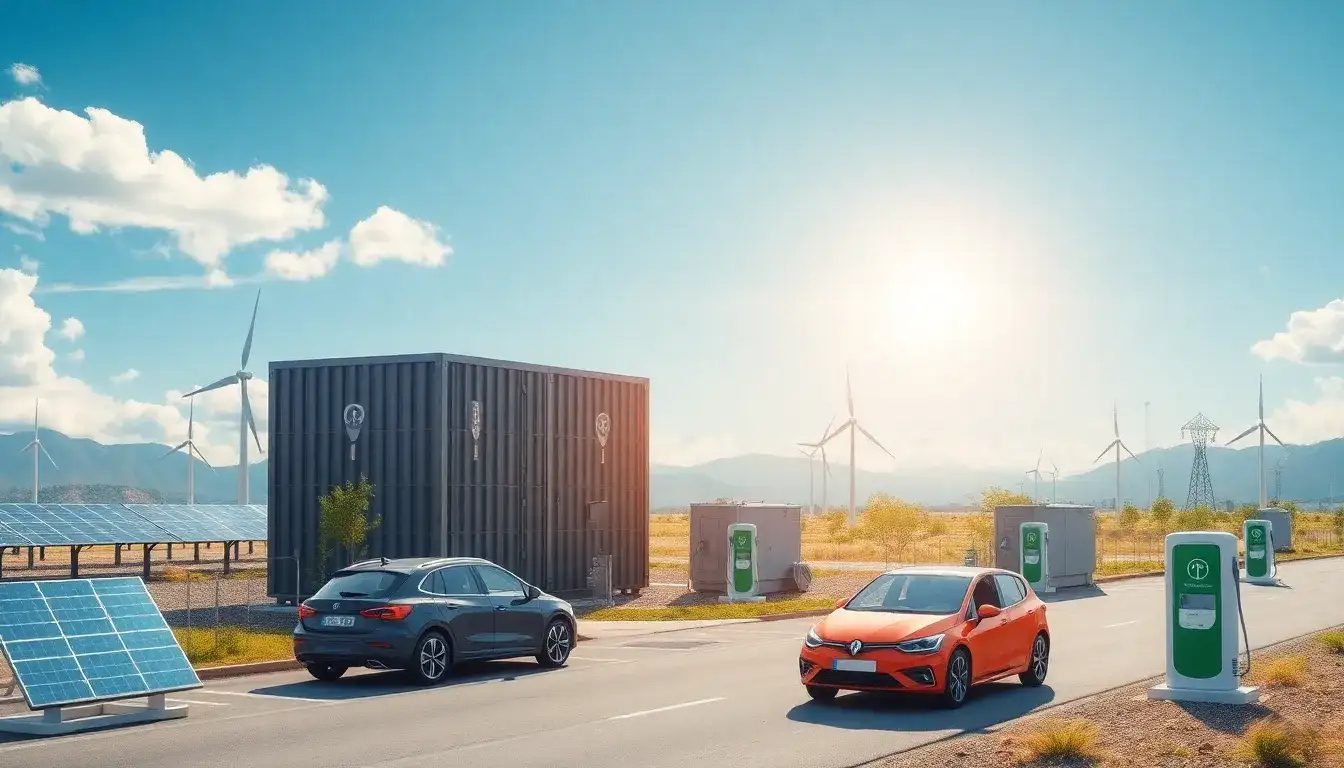
As the world works towards achieving dual carbon goals and transforming its energy structure, energy storage has evolved from being an optional component to a vital necessity. This shift is largely attributed to its role in addressing the volatility of renewable energy sources and enhancing the flexibility of power grids. By 2025, as the penetration rate of new energy surpasses a critical threshold (with global renewable energy generation exceeding 35%), alongside deeper reforms in the electricity market and technological advancements driving down costs, the energy storage industry is poised for a golden period of simultaneous growth in both scale and profitability.
According to various think tank reports and statistics from the International Energy Agency, the share of global renewable energy generation (including hydropower, wind energy, solar energy, and bioenergy) is expected to rise to 32% in 2024, up from 30% in 2023, marking a historic high. When including nuclear energy, which accounts for 9%, the total share of clean energy (renewable energy plus nuclear) will reach 40.9%, breaking the 40% barrier for the first time. China is projected to contribute over 50% of the global increase in renewable energy generation, with solar energy generation in China alone expected to rise by 250 TWh in 2024, representing 53% of the global increment, while wind energy will account for 58% of the increase.
As the share of renewable energy generation exceeds 15%, the pressure on power grid peak-shaving increases significantly, making energy storage an essential option once the share surpasses 30%. Solar energy generation is dependent on sunlight, and wind energy relies on wind speed; fluctuations in output can lead to instability in grid frequency. Therefore, integrating renewable energy sources like solar and wind into the grid has become a crucial aspect of global energy transition.
Currently, the primary methods for regulation are pumped storage and new energy storage technologies. The main goal of pumped storage is to ensure grid safety while supporting large-scale renewable energy bases, whereas new energy storage technologies aim to enhance the flexibility of power systems and support distributed energy generation. The government has also introduced supportive policies, such as the interim measures for the development and management of pumped storage power stations released by the National Development and Reform Commission and the Energy Administration in January 2025. These measures establish a two-part pricing system that combines capacity and energy prices, ensuring construction costs are covered and reasonable returns are guaranteed. The development goal for pumped storage is to exceed 120 million kW by 2030, positioning it as a key adjustment power source for new energy development, particularly in southwest hydropower bases and projects supporting “sand and barren” new energy bases.
In September 2025, the National Development and Reform Commission and the National Energy Administration announced the “Special Action Plan for Large-Scale Construction of New Energy Storage (2025-2027),” aiming for a national installed capacity of over 180 million kW by 2027, which is expected to drive direct investment of approximately 250 billion yuan. The focus will be on promoting large-scale applications of lithium-ion battery storage while simultaneously advancing technologies such as compressed air, flow batteries, and sodium-ion batteries.
Over the past five years, the cost of energy storage systems has decreased by more than 60%, with lithium battery storage systems dropping from 2.5 yuan/Wh to 1.5 yuan/Wh. Additionally, the revenue model has expanded from a single “peak-valley arbitrage” to include “ancillary services + capacity leasing + green electricity trading,” significantly boosting internal rates of return (IRR) for projects. China’s 14th Five-Year Plan for New Energy Storage Development targets a new energy storage installed capacity of over 30 GW by 2025, up from just 15 GW at the end of 2023, with a general increase in the renewable energy storage ratio to 20% (with a duration of 4 hours) across various provinces; some provinces, such as Gansu and Xinjiang, are expected to exceed 25%.
The revision of the “Power Auxiliary Services Management Measures” in 2025 will clarify the compensation standards for energy storage participating in peak shaving and frequency regulation, greatly enhancing project economics. In the United States, the Inflation Reduction Act (IRA) has extended the ITC tax credit for storage until 2032 (up to 30%) and allows independent storage projects to benefit from subsidies. The EU’s REPowerEU plan aims for an installed capacity of 60 GW of energy storage by 2030, up from just 15 GW in 2022. Countries like Germany and the UK are stimulating household storage demand through “fixed prices + storage subsidies.”
New energy storage can be categorized into large-scale storage, household storage, and commercial and industrial storage. Large-scale storage refers to large storage power stations (capacity ≥ 100 MWh) that support grid peak shaving and new energy integration, with an expected global installed capacity share exceeding 60% by 2025. In the first half of 2025, domestic large-scale storage tenders reached 80 GWh (compared to 60 GWh for all of 2023), with an expected total installation of 35 GWh for the year, a 100% year-on-year increase. The main driving forces are new energy integration (70%) and independent storage (30%). Leading companies like Sungrow (25% market share in system integration), CATL (30% market share in batteries), and BYD (lithium iron phosphate storage systems) benefit from substantial orders from state-owned enterprises.
In the overseas market, the U.S. is projected to reach 25 GWh of large-scale storage installations by 2025 (an 80% increase year-on-year), primarily driven by IRA subsidies. In Europe, large-scale storage demand is constrained by grid renovation progress, but countries like the UK and Spain are attracting investments through “capacity market” auctions (priced at £30-50/MWh). Household storage refers to small storage systems installed in homes (capacity 5-20 kWh), with an expected global installed capacity share of 25% by 2025. Europe, the U.S., and Japan are core markets, with Europe accounting for over 50%. Germany, Italy, and Spain are the main players, with a projected installation of 20 GWh in household storage in Europe by 2025 (a 50% increase year-on-year). Notable companies include Tesla (35% market share for Powerwall), Pylontech (15% global market share), and LG Chem (RESU series).
Commercial and industrial storage provides peak-valley arbitrage and demand management systems for factories and shopping malls (capacity 100 kWh-10 MWh), with an expected global installed capacity share of 15% by 2025. China, the U.S., and Southeast Asia are major markets, with an expected installation of 15 GWh in China by 2025 (a 100% increase year-on-year). Companies are reducing electricity costs through integrated “solar + storage” solutions, with representatives like Sungrow (commercial and industrial storage systems), GoodWe (inverters + storage), and Narada Power (lead-carbon batteries).
In terms of competitive landscape, Chinese companies are leading the trend. In the battery segment, CATL holds a 35% global market share, followed by BYD at 20% and Penghui Energy at 5%. In the overseas market, LG Chem has a 10% share, and Samsung SDI has 8%. For system integration, Sungrow has a 25% global market share, followed by BYD at 15% and Tesla at 10%. Overseas competitors include Fluence (12%) and NextEra (8%). In inverters, Sungrow is the global leader in storage inverters, with Deye and GoodWe also making significant strides.
The energy storage industry has now entered a phase of performance realization. For instance, CATL’s mid-2025 profit is projected at 30.5 billion yuan, a 33.3% year-on-year increase, with its market value briefly matching that of Kweichow Moutai. Sungrow is expected to report a net profit of 7.735 billion yuan in 2025, reflecting a 56% year-on-year growth, and its stock price has doubled in the last two months, with a price-to-earnings (PE) ratio still above 20. Deye is also projected to achieve a mid-2025 net profit of 1.52 billion yuan, a 23.2% year-on-year increase. Under the triple logic of policy support, explosive demand, and improved economics, the energy storage industry is shifting from “thematic investment” to “performance realization.”
As of June 2025, China’s new energy storage cumulative installed capacity reached 101.3 GW, surpassing the 100 GW threshold for the first time and accounting for over 45% of the global total. The global market is also expanding, with the U.S., Europe, and the Middle East emerging as new growth points. It is expected that 60 GWh of new energy storage installations will be added in the U.S. in 2025, with commercial and industrial storage in Europe growing at over 30%.
The energy storage industry represents a trillion-yuan market. The focus has shifted from policy-driven to market-driven dynamics. The industry is entering a golden era characterized by accelerated technological iterations, matured business models, and enhanced international competitiveness. In this expansive market, domestic companies have established significant competitive advantages, exemplified by CATL’s trillion-yuan market value and Sungrow’s 300 billion-level valuation, while Huawei also stands out in the inverter sector.
In the realm of new energy, the government’s anti-competitive policies favor industry leaders, creating further opportunities for increased profit margins.
Original article by NenPower, If reposted, please credit the source: https://nenpower.com/blog/key-milestones-in-energy-transition-energy-storage-industry-poised-for-major-growth/

