

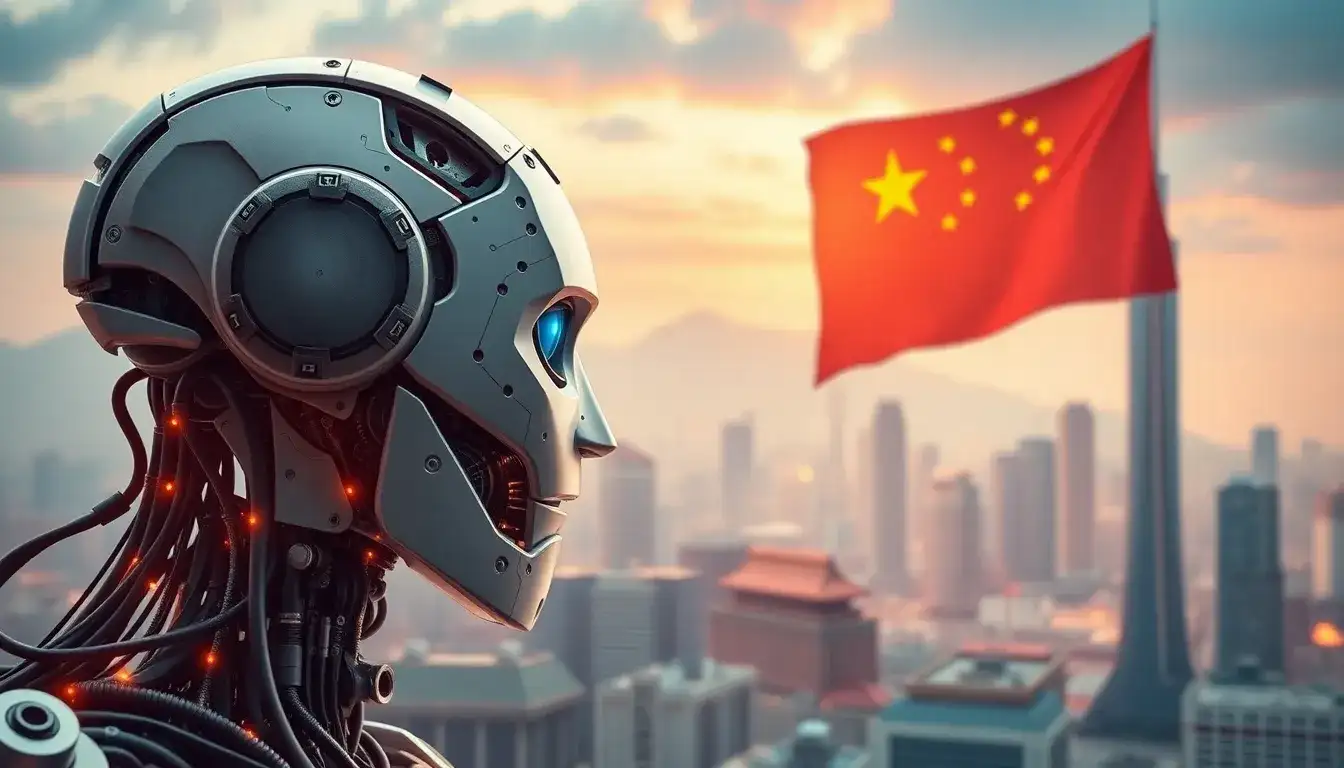
During the recent Two Sessions, several leaders and over ten experts highlighted key points regarding robotics and embodied intelligence. Here’s a comprehensive overview.
Robotics and Embodied Intelligence as a Central Theme for 2026
Robotics and embodied intelligence are set to remain the main focus of technological innovation and industrial development through 2026. General Secretary Xi Jinping emphasized the need for technology-driven innovation to foster emerging and future industries, ensuring that China secures a competitive edge in the international arena and establishes new momentum and advantages for economic growth. The Central Economic Work Conference identified “pursuing innovation-driven strategies and accelerating the cultivation of new momentum” as one of the eight key tasks for economic work in 2026.
During the opening session of the Fourth Session of the 14th National People’s Congress on the morning of March 5, Premier Li Qiang presented the government work report, stating that by 2025, China would lead globally in the R&D applications of robotics, quantum technology, and artificial intelligence. He outlined a dual approach: optimizing and upgrading traditional industries while also fostering emerging and future industries. This includes developing new energy, quantum technology, embodied intelligence, brain-computer interfaces, and 6G technologies, as well as establishing mechanisms to support the growth of specialized small and medium enterprises and nurturing unicorn companies.
Policy Benefits and New Opportunities for Future Industries
By 2025, the production of industrial robots is expected to increase by 28%, with over 300 humanoid robots launched by Chinese companies, accounting for more than half of the global market. The focus on nurturing emerging industries and optimizing traditional sectors is likely to be central to technological innovation and industrial development in 2026. Minister of Science and Technology Yin Hejun praised humanoid robots during a press briefing at the Two Sessions, highlighting their impressive performances at the Spring Festival Gala. He noted that during the “14th Five-Year Plan” period, technological innovation would target industrial needs, leading to a new quality of productive forces. This includes transforming traditional industries and creating new trillion-dollar industry clusters.
Minister of Industry and Information Technology Li Lecheng discussed advancing next-generation artificial intelligence products, including brain-computer interfaces, autonomous vehicles, and humanoid robots. He emphasized the need to deepen the integration of artificial intelligence with manufacturing, enhancing the potential of traditional industries while fostering innovation in emerging sectors. Lou Qinjian, head of the Foreign Affairs Committee, described 2025 as a pivotal year for breakthroughs in the domestic humanoid robot industry, integrating cutting-edge technologies from AI, advanced manufacturing, and materials science.
On March 5, IDC’s latest forecast indicated that by 2026, the global market for intelligent robotics hardware will approach $30 billion, with China leading the growth in the embodied intelligence robot market, expected to surpass $11 billion. Furthermore, Chinese service and consumer robot manufacturers will account for over 85% of global shipments, with related markets continuing to experience rapid growth of nearly 120%.
Insights from the Two Sessions
In the collaborative atmosphere of the Two Sessions, numerous representatives and entrepreneurs provided insights into the future development of robotics and embodied intelligence.
(1) Lei Jun (Founder and CEO of Xiaomi): Accelerating Engineering Implementation
Lei Jun noted that humanoid robotics technology, despite its initial advantages, is still in the “apprentice” phase due to issues like unstable processes, high hardware costs, and limited production capabilities. He advocated for accelerating the engineering realization of robotics to enable large-scale production and expand applications in intelligent manufacturing, while also enhancing safety standards.
(2) He Xiaopeng (Chairman and CEO of Xpeng Motors): Establishing an Intelligent Standards System
He Xiaopeng suggested that while humanoid robots exhibit significant capabilities in motion control, higher-level intelligence requires local deployment of “brains” for independent thinking and decision-making. He called for policies encouraging the development of large models at the edge to enhance robots’ generalization capabilities across various applications.
(3) Liu Yonghao (Chairman of New Hope Group): Building Data Collection Centers
Liu Yonghao highlighted the importance of data in supporting the development of intelligent systems. He suggested establishing data collection centers focused on industrial manufacturing, agriculture, and healthcare to gather high-dimensional data for training.
(4) Qi Xiangdong (Chairman of Qihoo 360): Addressing Security Challenges
Qi Xiangdong pointed out three major security challenges facing embodied intelligence: data poisoning, model hallucinations, and the complexities of the hardware supply chain. He advocated for dedicated security measures to protect data assets.
(5) Zhou Yunjie (Chairman and CEO of Haier Group): Establishing National R&D Projects
Zhou Yunjie recommended creating national-level R&D projects to tackle key algorithms and support the development of precision sensors and smart joints.
(6) Wu Fengli (Chairman and President of Tuosida): Promoting AI Innovation in the Greater Bay Area
Wu Fengli emphasized the need for high-quality industry data sets to support the self-evolution of embodied intelligence and suggested accelerating the development of industrial data infrastructure.
(7) Jia Shaoqian (Chairman of Hisense Group): Scaling Up Companion and Elderly Care Robots
Jia Shaoqian noted that 2026 marks a critical point for the robot industry, suggesting that resources should focus on high-value vertical applications such as family service and elderly care to avoid homogenization in humanoid robots.
(8) He Han (Chairman of Tianyu Data Science): Initiating a National “Embodied Data Elements Project”
He Han proposed starting a national-level project to collect and pre-train data for typical tasks in embodied intelligence, addressing the severe data shortage in the industry.
(9) Han Fengtong (Founder and CEO of Qianxun Intelligent): Accelerating Integration with Industry
Han Fengtong suggested establishing a national center for integrating embodied intelligence production lines to facilitate large-scale applications.
(10) Xu Lijin (Chairman and General Manager of Wuhu Robot Industry Development Group): Strengthening Core Technology Innovation
Xu Lijin stressed that embodied intelligence must possess comprehensive spatial perception and independent decision-making capabilities, advocating for increased R&D investment and talent development in key technological areas.
(11) Zhao Xiaoguang (Researcher at the Chinese Academy of Sciences): Designing Data Trading Mechanisms
Zhao Xiaoguang noted that China is a leader in humanoid robotics but faces challenges in perception, drive systems, and other areas. She emphasized the importance of practical solutions to enhance cost efficiency.
(12) Tang Dongsheng (Vice Chairman of Guangdong Provincial Committee of the Chinese People’s Political Consultative Conference): Promoting Household Embodied Intelligence
Tang Dongsheng argued that embodied intelligence should move from industrial applications to consumer markets and suggested creating smart home appliances targeting emotional value.
(13) Li Lianzhu (Chairman of Shangpin Home): Developing Companion Robots for the Elderly
Li Lianzhu highlighted the growing need for companion robots that integrate emotional support and health monitoring, proposing policies to promote their development.
Original article by NenPower, If reposted, please credit the source: https://nenpower.com/blog/key-insights-on-robotics-and-embodied-intelligence-from-chinas-national-congress-a-comprehensive-overview/

