

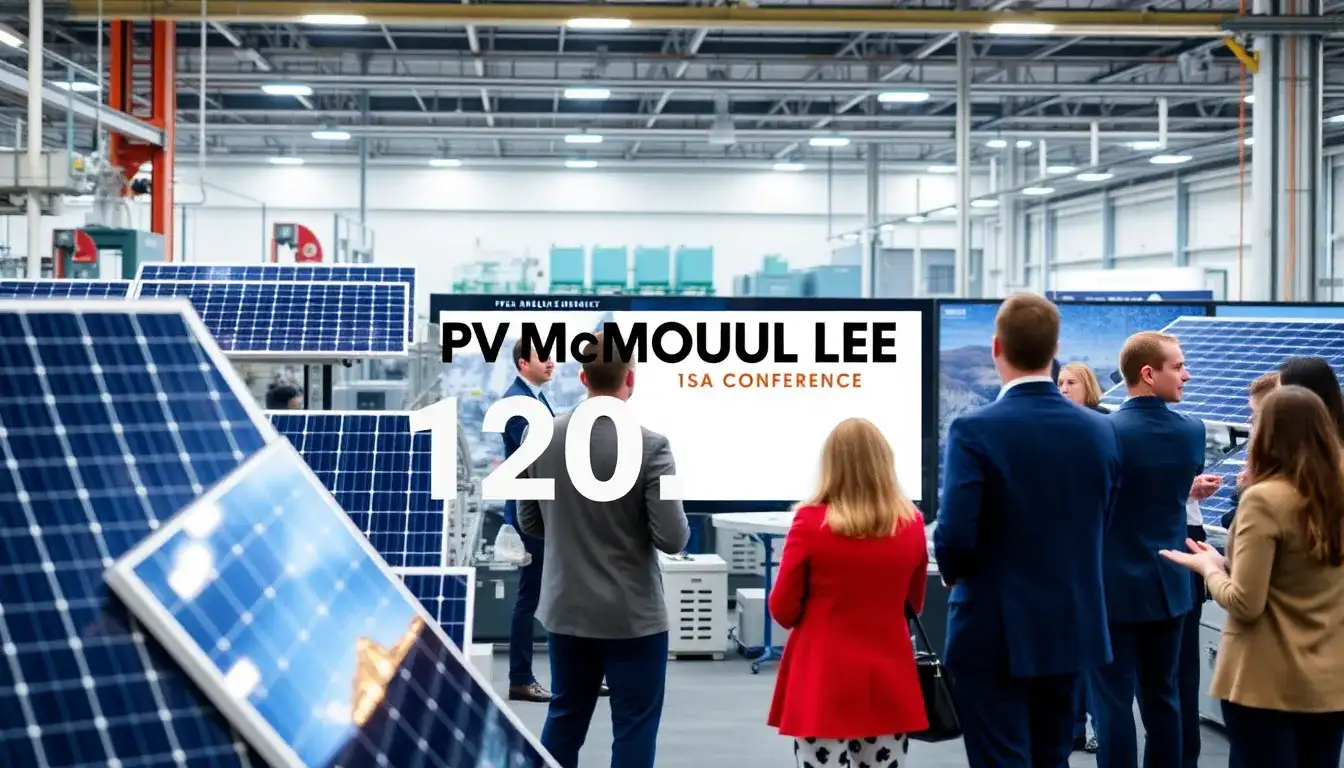
PV Module Tech USA 2025: Key Takeaways
—
The U.S. solar manufacturing and module purchasing community convened in Napa, California, for the PV Module Tech USA 2025 conference, attracting nearly 350 participants. The conference aimed to address critical issues in the U.S. module supply chain and explore future directions for PV module supply in these uncertain times.
### Main Themes and Discussions
Discussions centered on module durability and supplier qualification, which have been ongoing concerns since last year. This year, however, the focus shifted toward sourcing strategies, purchasing methods, and how buyers can mitigate risks related to tariffs, sourcing practices, domestic content, and evolving legislation.
#### Federal Policy and Its Impact
A significant amount of discourse during the conference revolved around the influence of federal policy on the solar manufacturing sector. Just before the conference commenced, the Senate unveiled details of its amendments to the ‘Big Beautiful Bill.’
A panel featuring experts including John Smirnow, Tom Beline, Nathan Picarsic, and Angela Santos addressed key changes in the Senate Finance Committee reconciliation bill:
– **Investment Tax Credit (ITC)**: The phase-out period for the ITC has been extended, now set at 100% for 2025, tapering to 60% in 2026 and reaching 0 by 2028. Developers will have four years from project initiation to completion to qualify, provided 5% of the investment is made at the start. The transferability of credits has also been reinstated.
– **45x Advanced Manufacturing Tax Credits**: These credits have been revised and are no longer stackable, meaning manufacturers must select either the wafer, cell, or module for tax credit application.
John Smirnow emphasized the significance of the stacking issue and called for increased advocacy efforts to amend this change, as it contradicts the administration’s goals for boosting domestic manufacturing.
### Quality Concerns and Trends
Tristan Erion-Lorico from Kiwa PVEL highlighted that cost-cutting measures have led to increased breakage rates in the field. Teresa Barnes from NREL remarked that modules are becoming “thinner and floppier,” leading to growing durability concerns as suppliers reduce material costs in pursuit of thin margins. The trend of fragility was underscored with discussions on hail damage, which has become a recurring theme among speakers.
Efforts over the past five years to minimize Light-Induced Degradation (LID) are now shifting focus to Ultraviolet-Induced Degradation (UVID). Paul Wormser from Clean Energy Associates pointed out that many avoidable defects are resurfacing in cell and module production due to increased throughput and pressure on material costs.
### Tariff Mitigation Strategies
Angela Santos provided insights on tariff mitigation options that her U.S. clients have utilized. She shared several legal strategies that module buyers can leverage to reduce tariff impacts by 10-30%. Throughout the conference, there was an ongoing dialogue regarding the complexities surrounding the application of tariffs to various components in the solar supply chain, which has created challenges in accurately measuring their effects.
### Strengthening U.S. Manufacturing
This year’s event featured a larger representation of U.S.-based module manufacturers, including leaders from Trina Solar, Waaree, SEG Solar, Imperial Star Solar, Heliene, and Emvee. They collectively discussed the necessity for collaboration to enhance the supply chain for components and materials within the U.S. and increase module production with a high level of domestic content. A common concern was the significant bottleneck in sourcing glass, which is currently challenging to procure exclusively from U.S. suppliers.
### Developer Insights
Companies ordering large quantities of panels for projects under the recent moratorium expressed concerns about future project viability. Many developers noted the rise of co-located solar and storage projects across the U.S. and the substantial energy demand stemming from the growth of data centers supporting AI and cryptocurrency industries.
Over the two-day gathering in Napa, the solar community addressed issues such as product quality degradation in a low-cost environment, profit margins, product differentiation, and the importance of staying informed about the industry’s evolving policy landscape.
Despite the challenges posed by current political headwinds, the consensus among participants was that the future of solar technology in the U.S. remains promising. The businesses represented at the conference, from developers to manufacturers, are committed to continuing their efforts in building and deploying solar solutions, ready to navigate the short-term uncertainties.
### Upcoming Events
– **PV CellTech USA 2025**: Scheduled for October 7-8, 2025, in the San Francisco Bay Area, this event aims to gather key stakeholders to map out the future of U.S. PV manufacturing through 2030 and beyond.
– **Solar & Storage Finance USA 2025**: Taking place on October 21, 2025, in New York, this summit will bring together decision-makers in solar and storage projects for networking and deal-making.
—
This rewrite maintains the original facts and data while enhancing clarity and flow for better readability.
Original article by NenPower, If reposted, please credit the source: https://nenpower.com/blog/key-insights-from-pv-module-tech-usa-2025-conference-on-solar-manufacturing-and-policy-challenges/

