

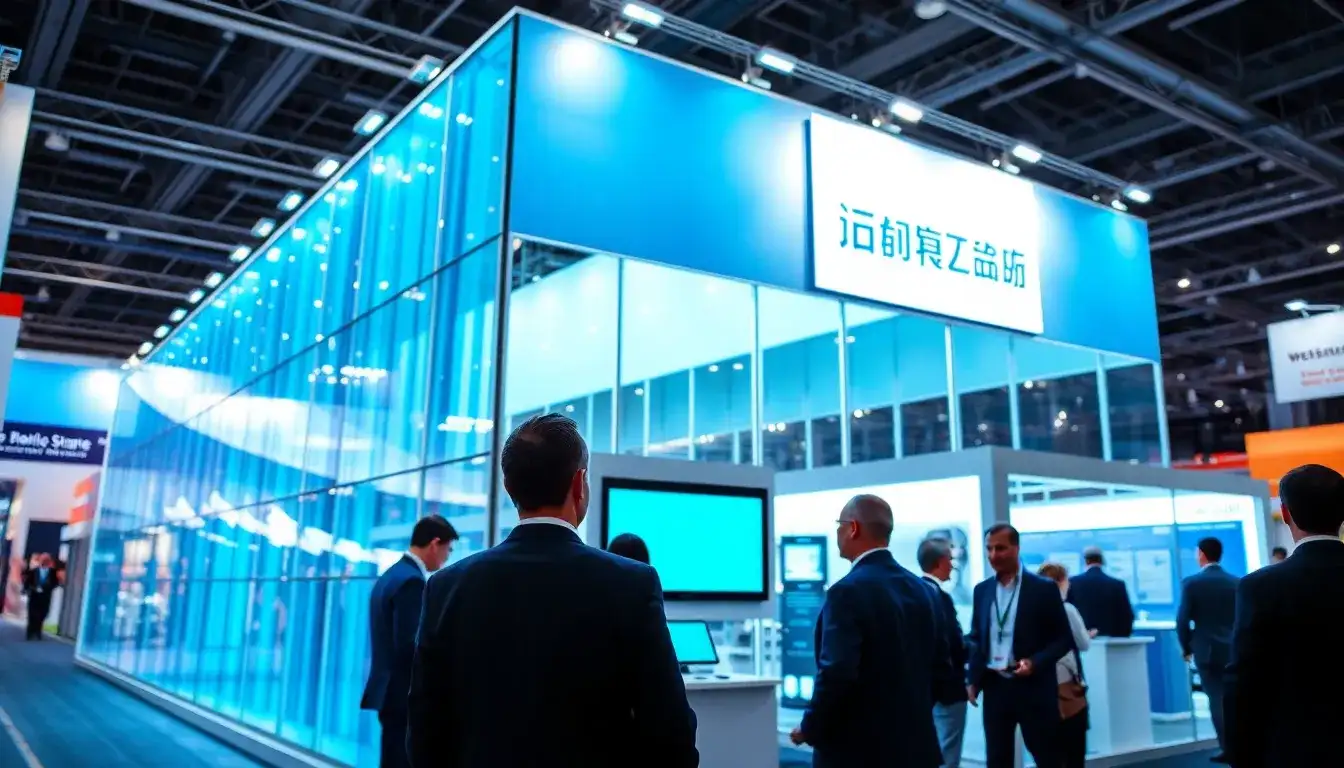
The largest energy storage exhibition in the country recently concluded amidst strong winds in Beijing. The theme of this year’s event was “Digital Intelligence Empowering Industrial Transformation, Energy Storage Reshaping the Energy Landscape.” According to the organizers, the Zhongguancun Energy Storage Industry Technology Alliance, nearly 800 exhibitors from across the energy storage supply chain participated, attracting around 100,000 domestic and international professional attendees. The official online livestream garnered over 2.3 million viewers.
Compared to last year's figures, this year saw an increase of over 300 exhibitors, while the number of participants remained stable. The venue also shifted from Shijingshan District in western Beijing to Shunyi. However, several other changes were noted compared to previous years. Observations indicated that the overall excitement at the exhibition was lower than last year, with the most popular booths occupied by major players such as CATL, Sungrow Power Supply, BYD, Envision Energy, and Trina Storage. Their brand influence and leadership were particularly evident during this downturn in the industry.

Several industry professionals expressed to reporters that the attention towards this year's exhibition seemed to have diminished, likely due to the severe competition and oversupply currently facing the industry. Additionally, there was a noticeable lack of innovative products showcased this year.

"The enthusiasm for energy storage needs to cool down; the industry has been overheated previously," said a representative from an energy storage company. In past exhibitions, companies typically emphasized larger capacity cells and storage systems, while this year there was less focus on that aspect. Instead, enterprises highlighted features such as safety, reliability, and longevity.

According to incomplete statistics from reporters, the proportion of new products related to commercial and industrial energy storage increased at this year's exhibition. Companies are placing greater emphasis on solutions and scenarios, particularly among leading firms who are keen on promoting the concept of intelligence.

On the flip side, the industry's sensitivity and focus on energy storage product pricing have decreased. Many leading energy storage companies shared similar sentiments during discussions with reporters. In reality, the price wars within the industry continue unabated. Both companies and other industry insiders expressed fatigue over this phenomenon.

Data released by the Zhongguancun Energy Storage Industry Technology Alliance indicated that, for a 2-hour storage system, the average bid price for the entire year of 2024 was 628.25 yuan/KWh, a 43% decrease year-on-year. The 4-hour storage system recorded the lowest bid at 0.398 yuan/Wh, marking a historic low by falling below 0.4 yuan/Wh.

The new policy on renewable energy pricing introduced at the beginning of the year is gradually shifting the competitive landscape away from solely price-based competition. On February 9, the National Development and Reform Commission and the Energy Administration issued a notice aimed at deepening the marketization of renewable energy prices, referred to in the industry as Document 136. This document clarifies that renewable energy generation will fully participate in competition and has halted mandatory energy storage requirements.

The removal of mandatory energy storage means that starting in June, renewable wind and solar projects will no longer be required to pair with energy storage systems, leading to a sudden drop in policy-backed storage demand.

From a demand perspective, future energy storage sales must genuinely consider actual operational efficiency and conditions. Energy storage stations will need to connect to the grid and participate in electricity market transactions, significantly reducing previous occurrences of "built but unused" systems.

The introduction of Document 136 signifies a transition for the energy storage industry from being policy-driven to market-driven. As a result, it was evident at this year's exhibition that companies, particularly leading ones, are beginning to focus on the actual monetary value energy storage can generate for owners and the tangible benefits it can provide.

"In the past two years, the industry overheated, leading to the emergence of many makeshift manufacturers selling at continuously lower prices. After Document 136, the industry has shifted from 'I have to build' to 'I want to build' and 'I will build,'" said Wang Kai, product director of Midea Group's Kelu Energy Storage, during an interview. The essence of energy storage business is to earn dynamic revenue, and a company's core competitiveness will hinge on its understanding of the grid and its one-stop solutions.

According to the energy analysis firm InfoLink Consulting, during the era of strong energy storage requirements, many projects were constructed "blindly" to meet policy demands, revealing significant structural issues such as serious technology homogenization and rapid system efficiency degradation. In the future, economic viability and the ability to generate returns over the entire lifecycle will become the primary criteria for assessing a company's core competitiveness.

Due to this trend, domestic energy storage manufacturers are increasingly recognizing the importance of intelligence and AI software in enhancing hardware products, rather than merely competing on superficial aspects like "PPT products." Almost all leading companies prominently featured smart platforms or terms like "AI-empowered energy storage" in their promotional materials. While some critics suggest that certain companies might be "riding the wave," it is undeniable that this represents the future direction of the industry.

For instance, Envision Energy unveiled the world's first smart body energy storage system, the EN 8 Pro, which is based on an AI large model and incorporates specialized AI agents for trading and grid networking. The company claims that the embedded AI models automatically integrate meteorological data, market information, electricity price curves, and load forecasts to achieve precise peak and valley electricity price predictions.

"The predecessor of intelligence is automation, and behind intelligence lies artificial intelligence and AI, which is an evolving process. Not every company possesses such development capabilities; the market will ultimately validate what companies present," stated Tian Qingjun, Senior Vice President of Envision, during discussions with media. He emphasized that as energy storage returns to market value, its business model will heavily rely on trading capabilities.

Tian further indicated that Envision's future energy storage products will focus on two aspects: networking and trading. In his view, when considering the global positioning and core value creation of energy storage, networking is the most crucial element in large-scale off-grid projects. Moreover, with the elimination of strong energy storage requirements, the commercial logic of energy storage will increasingly depend on trading, supported by high intelligence that connects software and hardware through big data and large models, while human input will become more auxiliary, with product innovation serving cost-efficiency and competitiveness.

Networking technology is a key innovation that supports the stable operation of new power systems by simulating the inertial characteristics of traditional synchronous generators to address grid stability issues arising from high proportions of renewable energy integration.

At the CATL booth, reporters also observed the display of intelligent products, including the launch of their smart energy management platform, "Tianheng·Smart Storage." CATL stated that the energy storage industry is currently transitioning from "scale expansion" to "value deepening." The Tianheng·Smart Storage platform offers a comprehensive set of standardized capabilities for energy storage stations, including intelligent early warning, operational analysis, facility inspections, and smart maintenance.

Having promoted "AI + Energy Storage" for nearly three years, Haibosichuang highlighted the concept of intelligence at this year's exhibition. Co-founder Shu Peng believes that the relationship between AI and energy storage is a "mutual pursuit." As the domestic energy storage industry shifts from stringent renewable energy requirements to independent energy storage, efficiency, safety, and stability will become the key factors for product success.

According to Cao Wei, General Manager of Sungrow Power Supply's commercial energy storage product line, the integration of AI and energy storage is driving the industry from an "experience-driven" paradigm to an "intelligence-driven" one. Sungrow believes that AI technology will reshape the value of energy storage products across three dimensions: precise energy management, real-time scheduling decisions, and optimization of electricity trading strategies, potentially creating a trillion-dollar market space.

The timing of this energy storage exhibition coincided with the U.S. proposal for so-called "reciprocal tariffs." Many industry insiders expressed that companies are currently taking a wait-and-see approach. Compared to the photovoltaic and other renewable energy sectors, domestic energy storage companies are entering international markets later and with varying levels of sophistication. In the long run, companies may choose to diversify their international market strategies and cautiously expand overseas production capacities.

According to Yu Zhenhua, Executive Vice Chairman of the Zhongguancun Energy Storage Industry Technology Alliance, the energy storage industry will face significant challenges by 2025 due to geopolitical conflicts, green trade barriers, and the maturation of technological competition. However, new technologies will reshape cost advantages, emerging markets will open up growth opportunities, and the acceleration of the internationalization of Chinese standards will also present development prospects for the energy storage sector.

Regarding emerging markets, Yu Zhenhua noted that by 2025, investments in renewable energy in Gulf countries will accelerate, increasing local collaboration opportunities and intensifying competition. Resource-rich countries like Indonesia and Chile may shift from export restrictions to requiring foreign companies to integrate with local processing industries, compelling Chinese enterprises to adjust their overseas investment strategies.

The Zhongguancun Energy Storage Industry Technology Alliance estimates that during the first four years of the 14th Five-Year Plan, the annual compound growth rate for new energy storage will be 121%. By 2025, it is projected that over 30 GW of new installations will be added. Throughout the entire 14th Five-Year period, the annual compound growth rate of new energy storage is expected to exceed 100%.

According to the agency's data, under conservative scenarios, it is estimated that by 2030, the cumulative scale of new energy storage will reach 236.1 GW, with a compound annual growth rate of 20.2% from 2025 to 2030. In an ideal scenario, the cumulative scale is projected to reach 291.2 GW, with a compound annual growth rate of 24.5% during the same period.

During the opening ceremony of the exhibition, Bian Guangqi, Deputy Director of the Energy Conservation and Technology Equipment Department at the National Energy Administration, stated that the agency will continue to promote the development of new energy storage technologies and industries, focusing on strengthening forward-looking planning, supporting technological innovation, guiding rational utilization, and promoting healthy industry development.

Bian Guangqi introduced that the National Energy Administration will accelerate the construction of the electricity spot market, improve the trading varieties of auxiliary service markets, work with relevant departments to research and refine the pricing mechanisms for new energy storage, and promote the high-quality development of the new energy storage industry.
Original article by NenPower, If reposted, please credit the source: https://nenpower.com/blog/key-industry-insights-from-chinas-largest-energy-storage-exhibition/

