China’s First VTLA Adaptive Force Touch Data Collection Solution Unveiled: Kepler Enables Robots to “Touch” the Real World
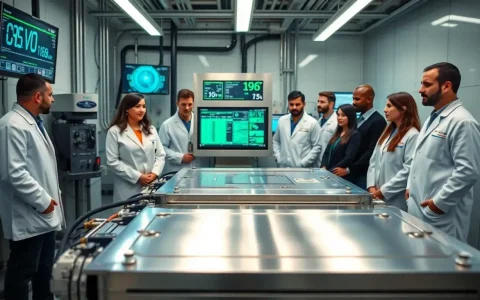
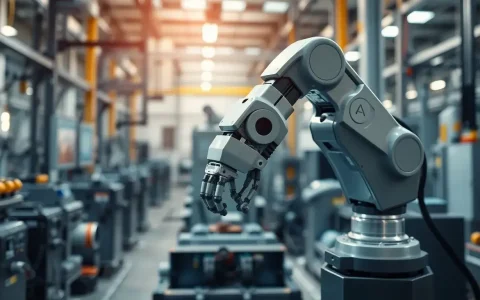
For industrial robots, relying solely on visual perception is no longer sufficient to meet the demands of complex scenarios such as precise assembly and flexible gripping. Key information that determines operational accuracy—such as contact force, friction direction, and torque—cannot be captured through vision alone. Recently, Kepler Robotics, which has completed a significant A++ financing round led by Sequoia Capital and includes strategic investments from Noli Intelligent (603611) and Min Explosive Optoelectronics (301362), officially launched the country’s first native VTLA adaptive comprehensive perception model for force touch data collection. This solution integrates hardware and software technologies to address the long-standing lack of physical interaction capabilities in robots.
As a core technological achievement of Kepler’s strategic transformation, this solution consists of the nation’s first native comprehensive perception force touch data collection system and the KEPLER VTLA comprehensive perception model. Together, they create a complete data collection system that merges collection and training. The core advantages can be summarized in three major breakthroughs:
- Comprehensive Perception Capability: The traditional purely visual approach allows robots to “see” objects but cannot assess contact force, stability, and other hidden information; this results in poor accuracy in scenarios involving occlusion, reflection, or flexible objects. Standard tactile data collection methods only capture normal pressure at a single fingertip point, lacking crucial shear and torque dimension information and failing to distinguish between delicate actions like “pressing, pushing, and twisting.” The Kepler solution employs force feedback exoskeletons and tactile feedback gloves as core data collection hardware, utilizing “tactile + six-dimensional force” multimodal data to cover all-dimensional interaction information, including pressure, friction, force direction, and torque, enabling the model to learn the interaction rules of the real world.
- Real-time Adaptive Contact-level Intelligence: Tactile and force feedback information is integrated throughout the contact process. Human operators can adjust demonstration actions based on real-time tactile data, allowing robots to achieve adaptive capabilities where they can “execute while correcting,” creating an interaction that closely resembles human operations.
- Native Adaptation to Comprehensive Perception Models: The solution’s native adaptation to the VTLA comprehensive perception model facilitates a leap in imitation learning from “copying actions” to “understanding interactions,” marking the transition to the 2.0 era of imitation learning.
Test data indicates that in contact-intensive tasks such as insertion and assembly, the success rate for medium-difficulty tasks using pure visual imitation learning is only 50%–60%. By integrating Kepler’s force-touch data, the success rate increases to nearly 86%, while the failure rate in industrial assembly scenarios drops from 33% to below 20%. The solution has already undergone proof of concept (POC) validation in industries including automotive, 3C, and intelligent logistics, outperforming traditional VLA models. In a particular automotive factory’s precision assembly line, the success rate for 1,000 consecutive assemblies reached 98%, boosting productivity by 30%.
Kepler CEO Song Hua stated that the launch of this solution signifies a transition for robots from “only seeing” to “being able to touch” and then to “understanding interactions.” This represents a critical step for embodied intelligence moving from laboratory concepts to industrial application. This round of financing will continue to support solution iterations, enhancing industrial adaptability and delivering more efficient force-touch data collection capabilities to the industry.
Original article by NenPower, If reposted, please credit the source: https://nenpower.com/blog/kepler-unveils-chinas-first-vtla-compatible-force-and-tactile-data-acquisition-solution-for-robotics/