

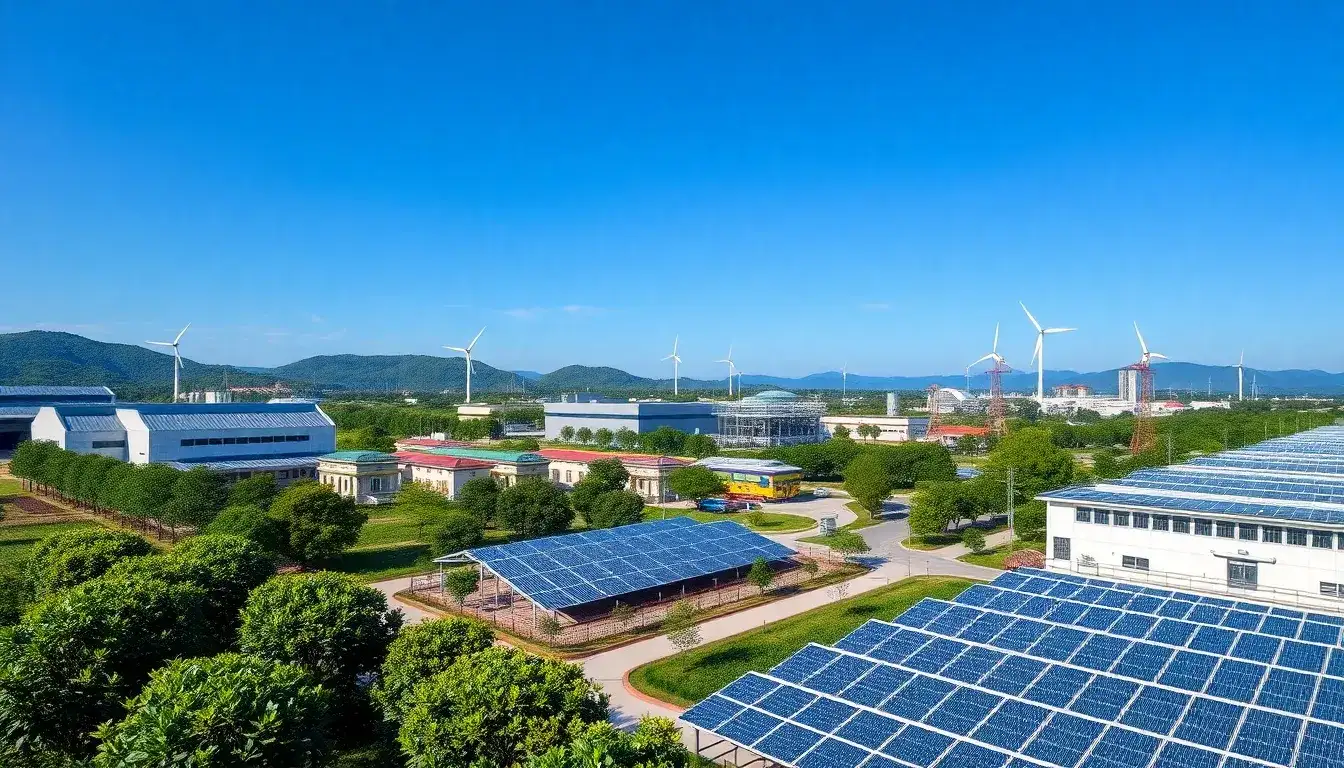
Jinko Technology’s Shangrao Source Network Integrated Microgrid Project: A “Jiangxi Model” for a Zero-Carbon Industrial Park
A silent revolution in energy transformation is currently underway, marked by the low-frequency hum of smart energy storage cabinets and the shimmering blue light from rooftop photovoltaic panels. With the integration of a 5.99MW rooftop solar array and nine energy storage cabinets, Jinko Technology has officially launched its first distributed source network integrated microgrid project in Shangrao City, Jiangxi Province.
This intelligent microgrid is projected to generate an annual electricity output of 6.48 million kilowatt-hours. Since its grid connection on March 21, it has already supplied over 600,000 kilowatt-hours of green electricity and has discharged more than 40,000 kilowatt-hours from its energy storage system. This system deeply integrates photovoltaic generation, peak-shaving energy storage, and 5G intelligent management technology, creating a dual demonstration model of “zero-carbon energy supply + intelligent manufacturing” for the Jinko Shangrao Sixth Factory Industrial Park. Moreover, the project aims to serve as a provincial benchmark for integrated source network load storage, injecting robust green energy into Shangrao’s initiative to become a demonstration city for photovoltaic renewable energy applications.
Collaborative Efforts to Build a “Green Electricity Ecosystem”
On the rooftop of Jinko’s Shangrao manufacturing base, the 40,000 square meters of deep blue photovoltaic modules shine brightly under the sun, continuously supplying power to the entire park. “We utilize advanced technologies such as virtual power plants, achieving ‘integrated source network load storage’ based on Jinko’s intelligent factory industrial load,” explained project leader Guo Qizheng. This model employs a digital platform to manage energy supply and demand in real-time, effectively creating a “mini power market” within the park, ensuring efficient cooperation among generation, storage, and consumption processes.
The accompanying 0.9MW/1.8MWh energy storage system utilizes nine smart temperature-controlled storage cabinets to achieve peak shaving and valley filling. Guo further emphasized that within the microgrid project, the energy storage system plays a critical role by storing excess energy during surplus supply and releasing it during shortages. This helps to balance power supply and demand, stabilize grid voltage, enhance the reliability and flexibility of the power system, and addresses the intermittency and volatility issues associated with distributed power sources, ensuring stable power supply within the park.
In the slicing workshop, 228 slicing machines operate systematically. Staff members highlighted that the Jinko smart factory features an intelligent central control platform, which has improved employee efficiency by over 60%—allowing one operator to monitor four machines instead of just one. Continuous intelligent monitoring from the backend avoids potential risks, such as equipment temperature alarms being consolidated for effective management, thereby improving equipment usage efficiency and safety, and ensuring stable production processes.
“Through SAP and MES data platforms, we achieve comprehensive monitoring of all operational parameters and equipment yield,” staff explained. “These data are displayed through a cloud connection and can be viewed in real-time on both PC and mobile devices.” Data integration and intelligent management are equally vital at the microgrid end. Guo stated, “Our intelligent management system allows us to integrate and process data from all sectors of ‘source network load storage’ and enables minute-level load forecasting and scheduling within the management system.” On-site operational personnel, Yin Li, added that the intelligent system can monitor the operational status and parameters of all devices in real-time, allowing for immediate troubleshooting in case of disruptions to ensure efficient system operation.
In the microgrid control center, a digital screen displays real-time data for the four components of “source network load storage”: photovoltaic real-time generation power, energy storage charge and discharge status, workshop load curves, and grid interaction parameters.
According to research reports, by the end of 2024, China’s cumulative installed capacity of distributed photovoltaic generation is expected to reach 370 million kilowatts, accounting for 42% of all installed photovoltaic capacity. However, traditional distributed power stations face challenges such as significant supply volatility and low adaptability to the grid. In contrast, Jinko Technology’s source network load storage microgrid project effectively addresses these issues through the extensive integration of distributed power sources and scientifically configured energy storage devices, optimizing energy supply structures and significantly reducing waste of solar energy.
The project is planned to connect distributed power sources from three industrial parks, with a maximum expected capacity of up to 70MW. Additionally, the facility is equipped with multiple energy storage devices and charging stations to further enhance energy utilization efficiency.
The Replicable “Jinko Model” from Jiangxi to Nationwide
Under the strategic guidance of the “dual carbon” goals, the successful implementation of Jinko Technology’s Shangrao source network load storage microgrid project not only establishes a “Jiangxi model” for energy transformation in industrial parks but also offers a replicable, systematic solution for promoting green manufacturing across the nation through policy innovation and model replication. In terms of policy, the “2025 Energy Work Guidance” highlights system-friendly new energy power stations and intelligent microgrids as key directions for promoting self-reliance and strength in energy technology.
The Shangrao government places great emphasis on the development of the new energy industry, positioning Jinko Technology’s microgrid project as a demonstration site and providing strong policy support. The Shangrao Economic and Technological Development Zone Management Committee has designated this project as a provincial demonstration point, efficiently coordinating with various local departments, enterprises, and State Grid to form a task force that expands cooperation models and creates favorable conditions for project construction.
Currently, Jinko Technology’s microgrid model has been successfully replicated in multiple locations, demonstrating its feasibility and sustainability, and providing invaluable experience and replicable demonstration plans for the green transformation of Chinese manufacturing enterprises. As a leading enterprise in the green electricity operation sector, Jinko Technology has successfully operated multiple park microgrids and large-scale source network load storage projects. Its commercial and industrial distributed photovoltaic installed capacity is nearing 1.4GW, and it has established stable long-term partnerships with industry giants such as Alibaba Cloud, Tencent Cloud, JD.com, and SF Express.
In the green electricity and green certificate business, Jinko Technology leverages its professional electricity sales company to market green electricity at the most competitive prices based on customer electricity needs and the actual conditions of renewable energy consumption in various provinces, helping clients maximize their green profits.
As the sunset casts its glow over the photovoltaic array on the park’s rooftop, the golden light reflects beautifully off the blue panels, painting a harmonious scene. At this moment, the energy storage station’s indicator lights blink rhythmically, symbolizing the efficient operation and steadfast commitment of this microgrid system. This microgrid, which reduces emissions by 5,132 tons of carbon dioxide annually, is not just an energy supply facility but a milestone on the path to green transformation for Chinese manufacturing enterprises. It offers tangible results and a replicable green development path for many businesses, leading the industry towards a greener and more sustainable future.
Original article by NenPower, If reposted, please credit the source: https://nenpower.com/blog/jinko-solar-launches-integrated-microgrid-project-in-jiangxi-a-model-for-zero-carbon-industrial-parks/

