

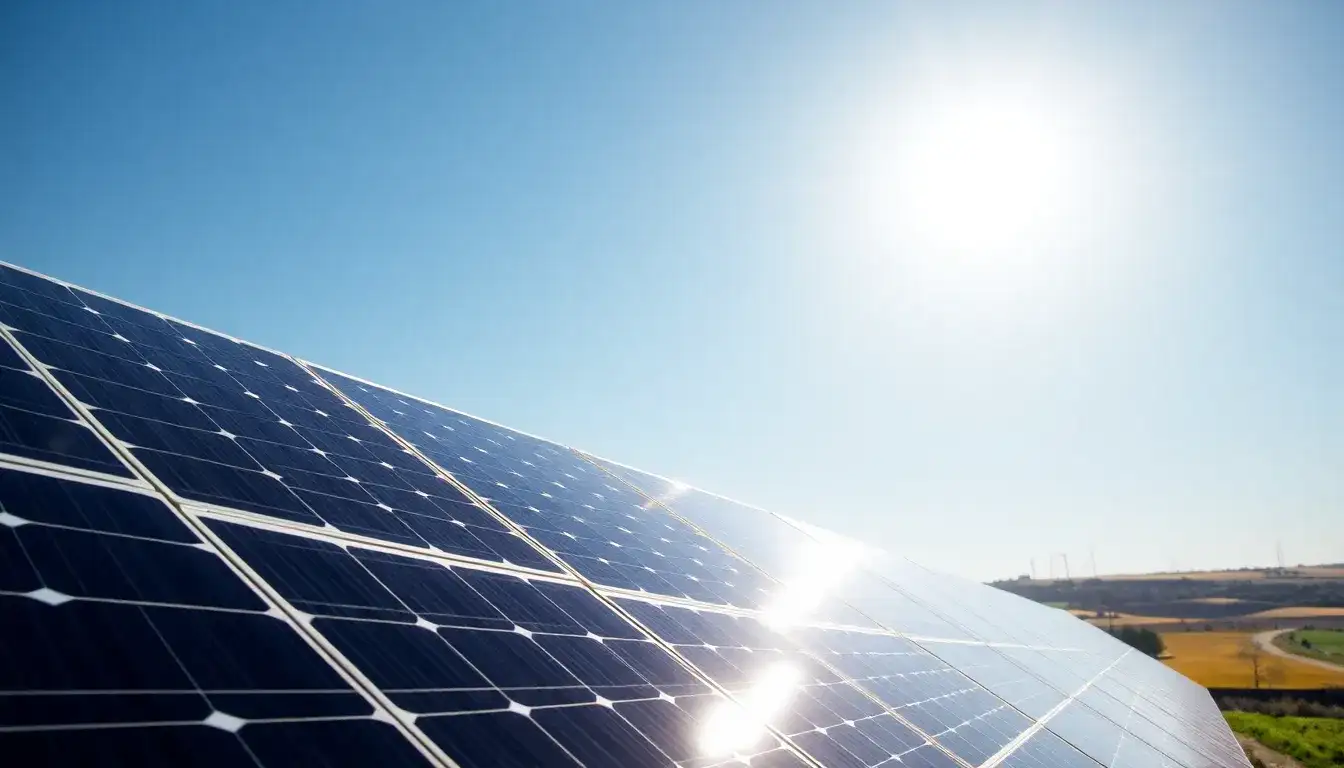
JinkoSolar, the world’s largest solar module supplier, recently held a roadshow where it shared insights with investors regarding the current state of the solar market. The company noted that due to a surge in demand driven by policy changes in the first half of the year, the overall domestic installation expectations have significantly decreased in the latter half. Uncertainties surrounding terminal yields have caused some projects to be delayed. With the announcement of the bidding results for the feed-in tariff mechanism in various provinces, there may be a potential increase in year-end demand for solar energy.
The new energy pricing reform has created a fog of uncertainty regarding returns, which has been a major factor in dampening investment enthusiasm among downstream developers in recent months. As reported, the initial rush for installations in April and May led to a sharp increase in new solar capacity. In fact, May saw a record-breaking 92.92 GW of newly installed capacity—an astonishing year-on-year increase of 388.03%. However, following this peak, there was a notable decline in new installations: June witnessed only 14.36 GW, a year-on-year decrease of 38.45% and a month-on-month drop of 84.55%; July saw approximately 11 GW, down 47.7%, marking a new low since 2025; and August recorded 7.36 GW, down 55.29% year-on-year and 33.33% month-on-month.
Before the release of the bidding rules for feed-in tariffs, new energy investments were stagnating at a low point. Chint New Energy Chairman Lu Chuan previously expressed that for investors, the predictability of returns is more critical than fluctuations in industry chain prices. He emphasized that relying solely on capacity clearing is insufficient to resolve the challenges facing the solar industry; clearer pricing policies are needed. Lu stated that if the feed-in tariff is clearly defined—regardless of how low it may be—it could help determine acceptable investment levels for systems, modules, inverters, and non-technical costs, guiding investment decisions.
What concerns developers most is whether the pricing mechanism can support the targeted returns, rather than minor reductions in module costs. The recent results from two provinces regarding the feed-in tariff bidding have elicited mixed reactions within the solar industry. On September 11, the results for Shandong Province’s 2025 feed-in tariff bidding were announced, marking it as the first province to release such results. The data revealed that the mechanism prices for solar and wind energy had decreased by 43% and 19.2%, respectively, compared to the coal power benchmark price of 0.3949 RMB/kWh. Specifically, the solar mechanism price was set at 0.225 RMB/kWh, with an approved capacity of 1.248 billion kWh, which fell short of industry expectations.
On September 30, Yunnan Province announced its 2025 incremental new energy project bidding results, revealing a solar project mechanism price of 0.33 RMB/kWh, which is 46.7% higher than the competitive rates in Shandong. This has provided a boost of confidence to the solar sector. According to JinkoSolar‘s investor communication notes, in addition to the anticipated recovery in domestic year-end demand, emerging markets like India, the Middle East, and Africa continue to show robust demand, while the European market remains stable with moderate growth due to policy influences. The company plans to maintain stable production rates in the fourth quarter, with its annual shipment target unchanged. Current module prices are stable, and as the industry gradually clears outdated production capacity, overall supply chain prices are expected to stabilize and recover.
Regarding the capacity reduction plans in the polysilicon sector, JinkoSolar indicated that if the proposed upstream capacity consolidation is successfully implemented, it could help balance supply and demand for silicon materials by phasing out outdated capacity, thus gradually restoring prices within a reasonable range. The specifics of the plan are still being finalized, and its successful progression will depend on the strength of policy enforcement and acceptance within the downstream market. Similarly, the downstream sector is also undergoing a market-driven clearance, with long-term prices expected to gradually recover following technological advancements and improvements in supply-demand dynamics.
In the first half of the year, JinkoSolar maintained its position as the leading solar module supplier in terms of shipments despite facing losses. The integration of solar and storage solutions, particularly in the energy storage sector, has become crucial for solar companies to navigate challenges and establish a second growth trajectory. Bloomberg New Energy Finance predicts that by 2025, the global solar-plus-storage market will exceed 250 billion RMB. In the first half of this year, JinkoSolar shipped 1.5 GWh of storage products, surpassing its total shipment volume for 2024, with an annual target of approximately 6 GWh for this year.
During discussions with investors, JinkoSolar noted that the cancellation of mandatory storage requirements in the domestic market could broaden the arbitrage opportunities between peak and off-peak prices. Coupled with capacity pricing and discharge compensation, the returns for independent storage projects appear promising. The demand for electricity driven by AI computing centers in markets like the United States has made integrated solar and storage solutions mainstream. In the European market, after reaching a bottom in short-term Power Purchase Agreement (PPA) prices, project development activity has increased, leading to optimistic growth expectations. Emerging markets are experiencing a rotational surge, driven strongly by policy measures.
The company plans to leverage its global sales and distribution network in the solar business to offer localized, one-stop solutions for solar-plus-storage to customers. With a localized operations team, JinkoSolar maintains strong customer loyalty among module clients, facilitating the cross-selling of storage products. Product designs can be customized to provide tailored solutions, giving the company a relative advantage in overseas solar channels and customer relationships. Currently, the storage order situation is quite favorable, and the focus on high-margin overseas markets throughout the year is expected to contribute positively to the company’s operating profit margins.
Original article by NenPower, If reposted, please credit the source: https://nenpower.com/blog/jinko-solar-anticipates-year-end-demand-boost-following-provincial-electricity-pricing-results/

