

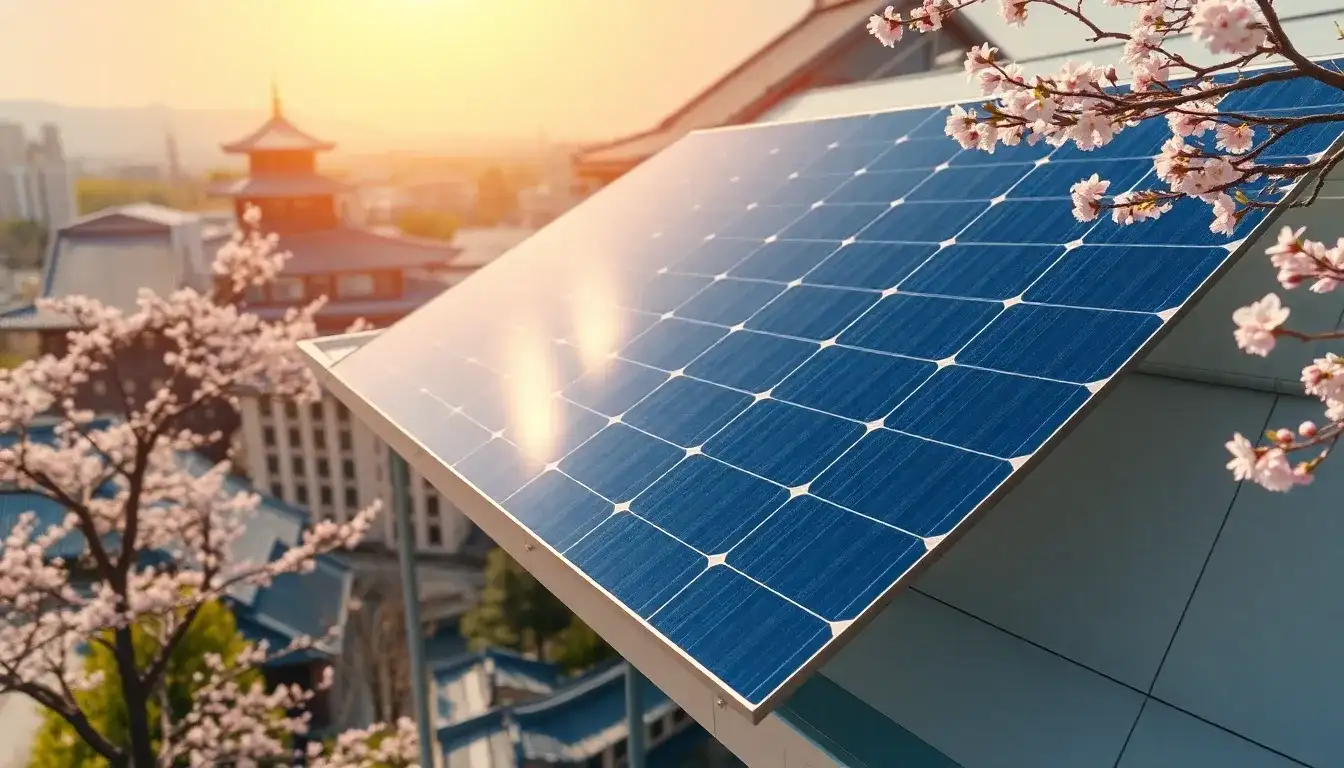
Japanese scientists have made a significant breakthrough in solar energy technology with the development of ultra-thin, flexible solar panels made from perovskite. These innovative panels have the potential to generate electricity equivalent to that produced by 20 nuclear reactors, signaling a remarkable advancement in renewable energy solutions.
### Key Highlights
– **Innovative Material**: The panels are crafted from perovskite, a material that is gaining recognition as the future of solar energy.
– **Potential Output**: According to a Japanese Ministry of Industry energy plan, these panels could produce 20 gigawatts of electricity by 2040, a substantial increase compared to traditional silicon-based cells.
– **Efficiency**: Perovskite cells have a theoretical efficiency limit of 43%, significantly higher than the 29% limit of standard silicon cells. This enhanced efficiency could lead to a more effective harnessing of solar energy, thereby reducing our reliance on fossil fuels.
– **Real-World Application**: Research has shown that perovskite panels can outperform conventional solar cells, making them a promising avenue for renewable energy technologies.
### Advantages of Perovskite Panels
One of the standout features of perovskite solar panels is their flexibility and resilience. This adaptability allows them to be integrated into various surfaces, from car roofs to the curved windows of skyscrapers. This versatility makes them an ideal choice for urban environments where space is limited.
Moreover, the ability of these panels to capture up to 90% of light, even on cloudy days, enhances their appeal. This capability ensures a consistent energy supply, which is crucial for regions that experience less sunlight. By outfitting buildings and vehicles with these flexible panels, cities can significantly increase their renewable energy output, paving the way for a more sustainable future.
### Comparing Efficiency: Perovskite vs. Silicon
To understand the potential of perovskite better, consider the following comparison:
| Material | Theoretical Efficiency Limit | Real-World Application |
|————-|——————————|——————————————————-|
| Perovskite | 43% | Ultra-thin, flexible panels adaptable to various surfaces |
| Silicon | 29% | Rigid panels primarily used in large solar farms |
This comparison illustrates how perovskite’s efficiency far exceeds that of silicon, offering a more versatile and higher-performing alternative. The ability to create flexible solar panels means that perovskite can be deployed in locations where traditional panels would not be feasible, thereby expanding the reach and impact of solar energy.
### Commercialization and Future Prospects
The commercialization of perovskite solar technology is already in progress, with numerous companies exploring its vast potential. As research continues to advance, production costs are expected to decrease, making these panels more accessible to a wider market. This combination of affordability, superior efficiency, and adaptability positions perovskite panels as a leading contender in the renewable energy sector.
Looking ahead, integrating perovskite panels into everyday infrastructure could significantly reshape the energy landscape. As more industries and consumers adopt this technology, the cumulative effect on global energy consumption could be profound. By reducing dependency on non-renewable resources, perovskite panels could play a pivotal role in addressing climate change and achieving energy sustainability.
In conclusion, the advent of perovskite solar panels signifies a major leap forward in renewable energy technology. Their unprecedented efficiency coupled with flexibility and adaptability presents exciting opportunities for innovation in energy generation. As we continue to explore the potential of this groundbreaking material, the question remains: how will the widespread adoption of perovskite panels transform our approach to energy consumption and sustainability in the coming decades?
Original article by NenPower, If reposted, please credit the source: https://nenpower.com/blog/japans-breakthrough-in-solar-technology-ultra-thin-flexible-panels-set-to-transform-global-energy-markets/

