

“`markdown
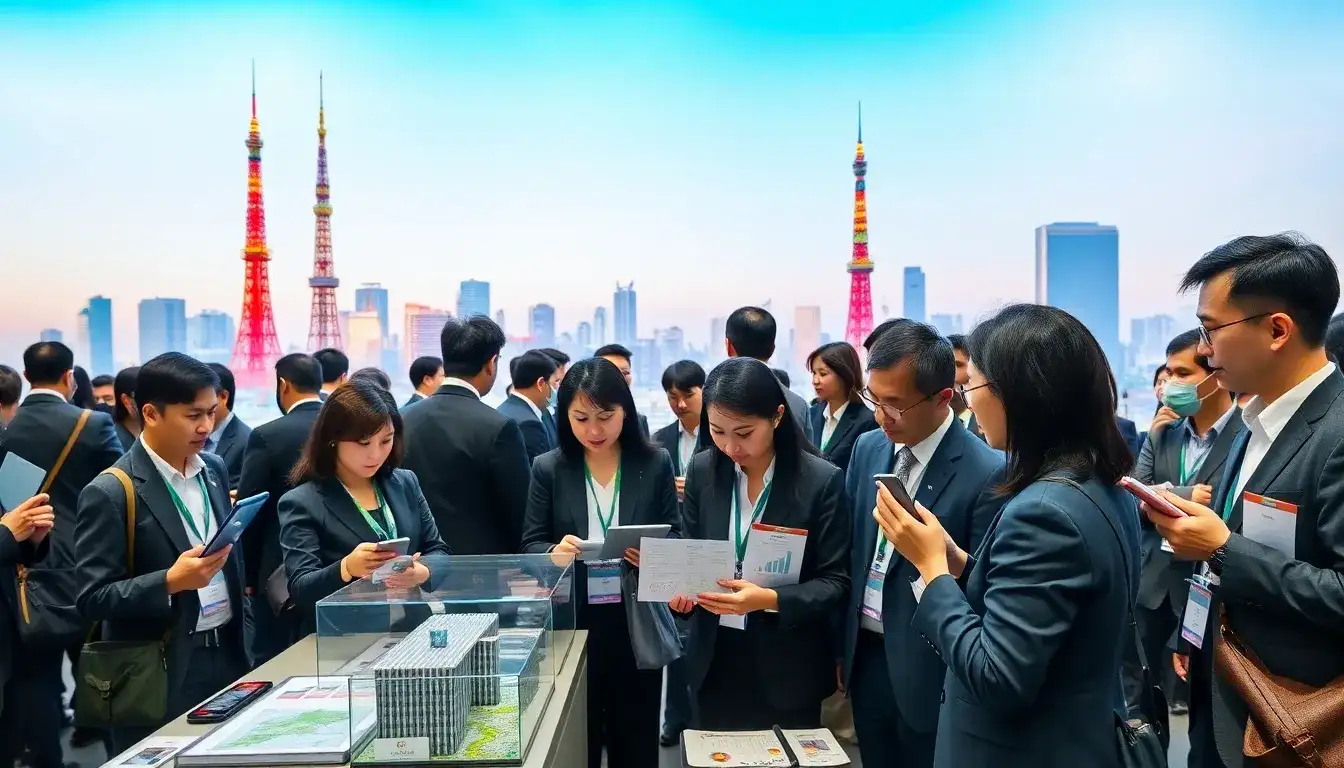
The Japan Energy Summit and Exhibition 2025 officially commenced on Wednesday at Tokyo Big Sight, featuring representation from over 50 countries. Global energy leaders emphasized the need for immediate action regarding supply security, decarbonisation, and long-term investment strategies. As geopolitical instability continues to challenge energy systems worldwide, this year’s summit highlights a transition towards practical collaboration and innovation, particularly for energy-demanding economies in Asia.
During the Opening Ceremony, Yoshifumi Murase, the commissioner of Japan’s Agency for Natural Resources and Energy (METI), reaffirmed Japan’s dedication to balancing climate ambitions with industrial resilience. “The structure of energy demand and supply is entering a period of profound transformation,” he stated, underlining the importance of renewable integration and economic stability.
The summit arrives at a crucial juncture for Asia-Pacific nations, which are intensifying efforts to develop circular, low-carbon energy systems. As liquefied natural gas (LNG) remains a transitional fuel in Southeast Asia, regional stakeholders are closely monitoring Japan’s policy adjustments. In a prominent Global CEO Panel moderated by Bloomberg anchor Shery Ahn, Yukio Kani, the global CEO and chair of JERA Co., Inc., pointed out Tokyo Bay’s limited LNG inventory capacity, which can sustain only 10 days of supply. “Diversification is not optional,” Yukio emphasized, highlighting JERA’s recent commitment to securing 5.5 million tonnes per annum of LNG from the US Gulf as a buffer before 2030. His comments resonated with ASEAN countries experiencing similar vulnerabilities in their energy mix.
Patrick Pouyanné, chairman and CEO of TotalEnergies, remarked that the company has secured over 30 percent of new LNG capacity since the onset of the Russia-Ukraine conflict by diversifying investments across the US, Mozambique, and Oman. “Security of supply depends on trust and resilience—and affordability is key,” he noted, a sentiment that resonates with developing economies in the region. Meg O’Neill, CEO of Woodside Energy, also stressed the significance of LNG in fostering digital and industrial growth, stating, “24/7 power is non-negotiable, and LNG remains the most practical near-term solution to replace higher-emitting fuels.” As data center demands surge in Malaysia, Indonesia, and Thailand, O’Neill’s remarks highlight the necessity of decarbonisation without compromising service continuity.
Beyond fuel security, the summit’s broader narrative focuses on how circular economy principles can be integrated into energy systems. The Climatetech Zone and Energy Innovators Challenge are showcasing solutions ranging from clean hydrogen and carbon capture to AI-driven optimization—technologies increasingly relevant for ASEAN economies aiming to extend asset life cycles and reduce emissions.
Sessions at the Strategic Summit and Technical Conference will explore carbon management, digitalization, and infrastructure investment. With over 300 speakers from government, finance, and industry participating, the event fosters new partnerships, especially as regional governments prepare to implement carbon pricing, smart grid systems, and climate finance mechanisms.
The Japan Energy Summit and Exhibition 2025 will continue through today (June 20) and is co-hosted by Tokyo Gas and JERA. For ASEAN stakeholders, the summit serves not only as a learning platform but also as a launching pad for regional resilience. From Malaysia’s hydrogen initiatives to Vietnam’s LNG infrastructure expansion, developments in Tokyo this week could influence policies, technologies, and trade flows across the Asia-Pacific for years to come.
For more information and the latest program updates, visit: www.japanenergyevent.com.
“`
Original article by NenPower, If reposted, please credit the source: https://nenpower.com/blog/japan-energy-summit-2025-in-tokyo-highlights-global-commitment-to-resilience-diversification-and-decarbonization/

