

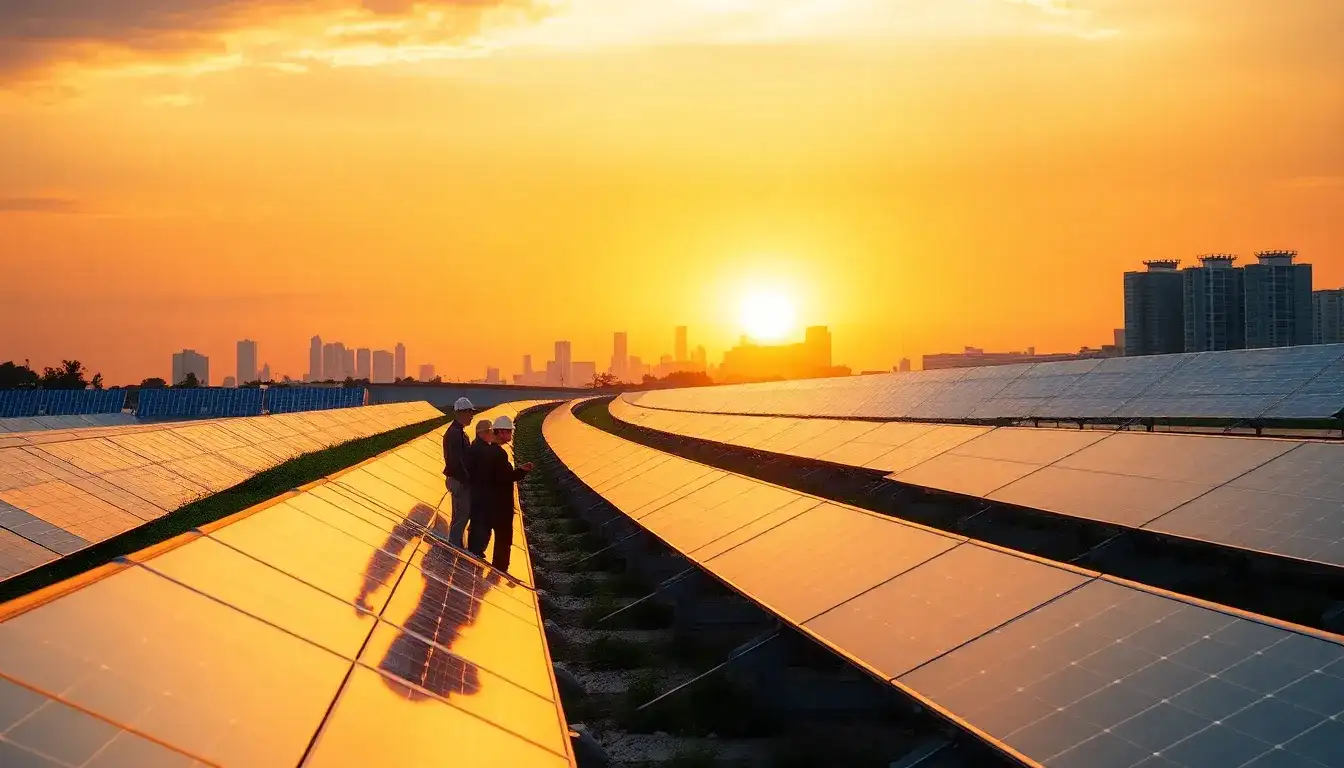
Important Signals Emerge: Will 2026 Be the Year of Reversal for the Photovoltaic Industry?
On December 25, reports indicated that several silicon wafer companies had collectively raised their prices. This marks a significant moment as it is not the first price increase since the industry’s recent struggles, but it has garnered considerable attention and discussion. What makes this increase particularly noteworthy? More importantly, how far is the photovoltaic industry from achieving a true “reversal”?
1. A Clear Signal of Transition from “Price Wars” to “Rational Collaboration”?
It is crucial to note that this price adjustment is not a minor fluctuation from individual companies but rather a substantial increase led by major industry players. For instance, representatives from Longi Green Energy confirmed on December 25 that prices had indeed been raised, aligning with the reported average increase of 12%. This serves as an important signal of self-regulation within the photovoltaic sector.
This price hike is also driven by broader industry changes:
- Cost Transmission: The price of upstream polysilicon has been rising steadily since the second half of 2025, placing direct cost pressure on silicon wafer companies. The price increase is a reflection of this cost transmission.
- Supply Contraction: Under policy guidance and pressure from losses, silicon material and wafer manufacturers have implemented significant production cuts, leading to tighter market supply and a strong willingness to maintain prices.
- Demand Recovery: There has been an uptick in procurement orders from downstream battery manufacturers, who are more tolerant of higher-priced silicon wafers, providing a foundation for the price increase.
2. Is the Photovoltaic Industry’s “Anti-Competition” Progressing Smoothly?
While this price adjustment has fostered optimism about changes within the industry, it is important to recognize that the challenges faced over the past two years represent an extremely painful phase of “self-purification” for the photovoltaic sector. The heightened focus on “anti-competition” this year indicates that the progress made in the past two years has not been sufficient.
After significant efforts from both policy and industry sides this year, has the situation improved? Some institutions previously highlighted that “component pricing” will be crucial for the success of future anti-competition initiatives.
What does this mean? From an industrial chain perspective, the photovoltaic industry can be divided into upstream, midstream, and downstream segments:
- Upstream: Typically refers to polysilicon and silicon wafers, which are the foundational materials for electricity generation. The process involves purifying quartz sand into high-purity polysilicon, melting it into ingots, and slicing it into ultra-thin wafers.
- Midstream: Refers to the solar cells, which undergo precise processing such as cleaning, diffusion, and coating to achieve photovoltaic conversion capability, producing solar cells—this is the core technology segment of the industrial chain.
- Downstream: Primarily pertains to photovoltaic modules (commonly known as solar panels), which involve stringing together and packaging solar cells for installation in power plants.
When assessing the industrial chain as a whole, “component pricing” refers to the ability of photovoltaic modules—the final product—to successfully increase prices and transfer rising costs from upstream producers to downstream power plant buyers. This will be the ultimate test of the success of the anti-competition campaign.
Looking at the current recovery progress along the industrial chain: Upstream polysilicon and silicon wafers have experienced the first stage of profit recovery; some polysilicon companies reported profitability in the third quarter of 2025. Midstream solar cells have seen some price increases which have alleviated pressure; however, downstream photovoltaic modules remain in a difficult position, with terminal power plants being sensitive to prices, resulting in only a modest increase of 1.91% from late June to mid-December.
3. Will 2026 Be the Year of Reversal?
Despite the ongoing challenges, the recent collective price increase by leading silicon wafer companies has revealed a shift in competitive dynamics. The crucial factor for determining the success of this anti-competition campaign will be how effectively the terminal market accepts reasonable price increases. The A-share photovoltaic sector is gradually entering the second phase of “fundamental validation,” which will require more time and data to verify, such as the financial reports for the fourth quarter, to confirm ongoing profit improvements.
In summary, the worst period for the industry appears to be over, indicating that there are indeed investment opportunities and strategic value in the sector. However, risks remain regarding the pace and strength of fundamental recovery, which could lead to market volatility. Investors may consider a strategy of phased buying during market adjustments to smooth out costs and position for mid to long-term opportunities.
Risk Disclaimer: This information is provided for informational purposes only and does not constitute stock recommendations, nor does it offer substantial advice or promises to investors. It should not be construed as a legal document. Investors should read the fund’s legal documents carefully and assess their risk tolerance before making investment decisions.
Original article by NenPower, If reposted, please credit the source: https://nenpower.com/blog/is-2026-set-to-be-a-turning-point-for-the-solar-industry/

