

Recent Exposures in the New Energy Vehicle Sector
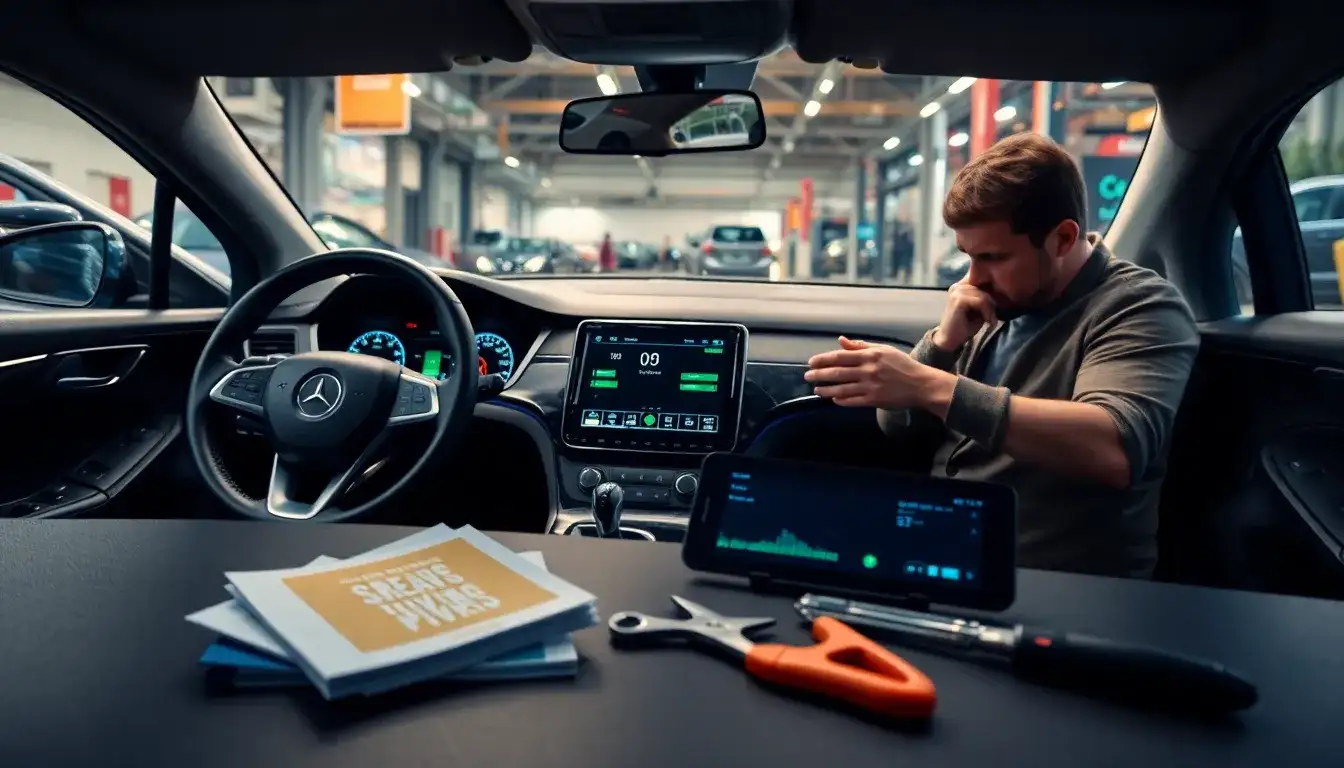
On April 14, 2025, CCTV reported a series of consumer disputes emerging within the new energy vehicle industry. As the popularity of these vehicles increases, so do the related service conflicts. Key issues highlighted include the conversion of originally free features into paid services, exaggerated claims regarding smart driving capabilities, and difficulties in after-sales maintenance.
For instance, Mr. Fang from Hangzhou, Zhejiang, discovered that the promised free features in his new energy vehicle had become chargeable. Meanwhile, Ms. Lin’s vehicle, while using the “Level 3 autonomous driving” feature, failed to recognize construction obstacles, nearly leading to an accident. Initially advertised as allowing users to “free their hands,” the incident was later clarified as “assisted driving.” Additionally, Mr. Zheng from Shanghai faced a significant drop in battery range but was unable to get a free replacement. Some new energy vehicle owners are also struggling with high repair costs and challenges in finding service centers. For example, Ms. Liu in Guangdong cannot find a manufacturer to service her vehicle after the company went bankrupt. CCTV emphasized that while the new energy vehicle sector is rapidly developing, it still faces numerous “growing pains.” Relevant authorities and companies need to enhance regulatory oversight, improve after-sales service systems, and protect consumer rights.
<h2>Industry Updates</h2>
<h3>Polestar Ends Joint Venture Operations</h3>
Recently, Polestar announced the termination of its joint venture with Xingji Meizu, deciding to cease operations of their joint venture, Polestar Technology. Distribution rights will be transferred to Polestar. The agreement mandates that the joint venture settle all outstanding financial obligations before halting operations. This decision aligns with strategic adjustments due to poor sales performance in the Chinese market, where Polestar's sales from 2021 to 2023 were 2,048, 1,717, and 1,100 units, respectively. In the first half of 2024, Polestar sold 1,612 units in China. Polestar's Q3 2024 financial report indicated revenues of $551 million, a 10% year-on-year decline, and further widened net losses. The company plans to continue focusing on the Chinese market while maintaining its premium brand positioning and pursuing long-term growth and innovation strategies.

<h3>Li Auto Offers Lifetime Warranty Transfer</h3>
On April 15, 2025, Li Auto celebrated the sixth anniversary of the Li ONE's price announcement and booking by launching the "Li ONE Lifetime Warranty Relay Program." This initiative allows the first vehicle owner to transfer the lifetime warranty to a new car, thanking early users for their trust. Benefits include the ability for the first owner to transfer warranty rights when purchasing a new vehicle and all Li ONE users to enjoy lifetime warranty rights on the range extender system when buying extended-range models. The policy is valid from April 15, 2025, to December 31, 2026, with an extension until December 31, 2027, for those who complete purchases before the policy announcement. The original vehicle will revert to standard warranty terms after the transfer.

<h3>Rising Insurance Costs for Tesla Vehicles</h3>
Recently, Tesla's vehicle insurance costs have surged, far exceeding the average growth in the U.S. auto insurance market. Research by Insurify reveals that insurance costs for the Tesla Model Y have nearly tripled compared to the market average, with the Model 3 and Model X also ranking among the top ten vehicles with the highest insurance cost increases. Between 2024 and 2025, full insurance costs for the Model Y rose by 29%, the Model 3 by 24%, and the Model X by 22%. This increase is primarily due to high repair costs for Tesla vehicles and a rise in vandalism incidents. Overall, auto insurance costs in the U.S. increased by 10% year-on-year, from $2,102 to $2,302. Tesla is attempting to mitigate this issue by offering its own insurance products, but many owners still prefer third-party insurers.

<h3>Nezha Auto Faces Dealer Disputes</h3>
Recently, a video circulated online showing representatives from over 20 Nezha Auto authorized dealerships protesting outside the company's factory in Tongxiang, demanding a response from Chairman Fang Yunzhu regarding several issues they raised. On April 14, a reporter reached out to Nezha Auto for clarification, to which they responded that they are currently in discussions with the dealer representatives.

<h3>BMW X5 Achieves Significant Sales Milestone</h3>
On April 14, 2025, BMW China's official Weibo account announced that the cumulative sales of the BMW X5 in China have approached 700,000 units, with over 250,000 units of the locally produced long-wheelbase model sold. This data demonstrates the strong performance of the BMW X5 in the Chinese market and reflects high consumer recognition. BMW Group plans to continue advancing its electric mobility business, with a goal to deliver 1.5 million pure electric vehicles by 2025, showcasing its ambition and commitment to electrification.

<h3>New National Standards for Electric Vehicle Batteries</h3>
On April 15, 2025, the Ministry of Industry and Information Technology announced that the newly revised mandatory national standard GB38031—2025 for "Safety Requirements for Power Batteries for Electric Vehicles" will take effect on July 1, 2026. The new standard raises technical requirements, particularly in thermal diffusion testing, changing the criteria from "providing thermal event warning signals five minutes before fire or explosion" to "no fire or explosion (still requires a warning), and no harmful smoke to occupants." It also introduces bottom impact testing to ensure no leakage, shell rupture, fire, or explosion occurs upon impact, along with safety tests after 300 fast charge cycles. The new standards will be implemented in phases, with new model approvals from July 1, 2026, and existing approved models from July 1, 2027.

<h3>CATL Accelerates Battery Swap Network Construction</h3>
On April 15, 2025, CATL announced significant progress in building its battery swap network. The company plans to establish 1,000 battery swap stations this year and has signed a cooperation framework agreement with Sinopec Group to jointly develop a nationwide battery swap ecosystem. Additionally, CATL has partnered with NIO to create the largest and technologically advanced battery swap service network for passenger vehicles globally. The company is also collaborating with Didi to expand the battery swap market. More battery swap models are expected to be released this year, and CATL reports that its U.S. operations are minimally affected by tariff policies due to proactive planning based on environmental shifts.
Original article by NenPower, If reposted, please credit the source: https://nenpower.com/blog/investigation-reveals-consumer-disputes-in-the-new-energy-vehicle-sector-free-services-turned-paid-overstated-smart-driving-features-and-repair-challenges/

