

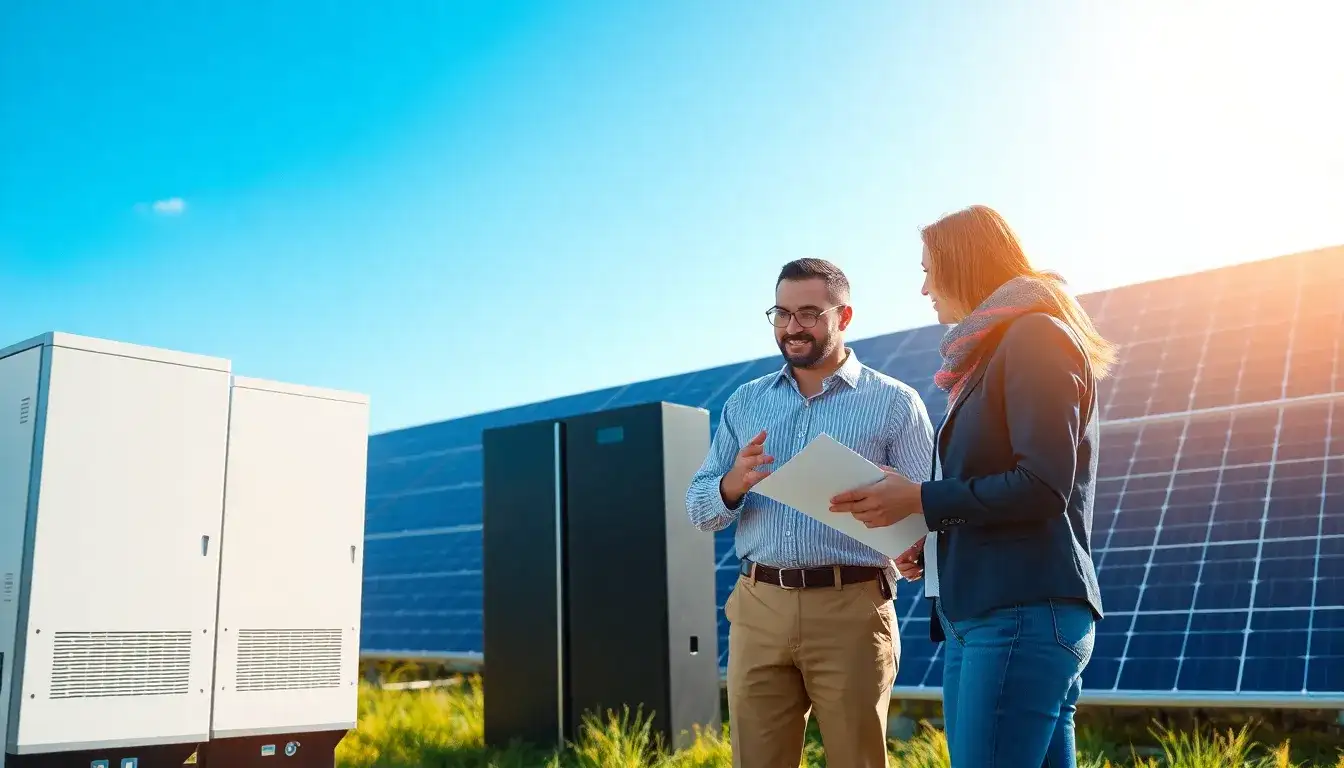
The inverter sector in the photovoltaic industry has shown remarkable resilience, with sales rising against the odds in the first quarter of 2025. The year 2024 was a tumultuous one for the photovoltaic industry, marked by calls to limit production capacity and prices. As the reporting season for annual results concluded, the performance of inverter companies emerged as a refreshing contrast within the industry. Unlike the major players in the main photovoltaic supply chain, most inverter enterprises, with the exception of Sungrow Power Supply Co., Ltd., operate on a smaller revenue scale. While the industry overall faced challenges, these companies revealed their robust performance as conditions shifted.
Recently, reports from nine inverter companies detailing their 2024 annual reports and 2025 first-quarter results were analyzed. In 2024, all but one company, GoodWe Power Supply Technology Co., Ltd. (688390.SH), reported profits. In the first quarter of 2025, aside from Hemei Co., Ltd. (688032.SH) and GoodWe, which experienced minor losses, seven firms including Sungrow (300274.SZ), Deye Technology Co., Ltd. (605117.SH), Jinlang Technology Co., Ltd. (300763.SZ), and Shangneng Electric Co., Ltd. (300827.SZ) all reported profits. Notably, Sungrow, Deye, Shangneng, and Airo Energy Co., Ltd. (688717.SH) achieved double-digit growth in both revenue and net profit. Jinlang Technology topped the charts with a net profit increase of over eight times compared to the previous year.
What accounts for the impressive growth of inverter companies despite intensified competition in the photovoltaic sector? Inverters, which convert direct current (from batteries or storage) into alternating current, are vital components of photovoltaic systems. They include core components such as inverter bridges, control logic, and filtering circuits, presenting significant technical barriers to entry. The growth of photovoltaic inverters is primarily driven by the global demand for new installations as well as the need to replace inverters in existing solar power plants.
Data from the first quarter of this year indicates that Sungrow recorded a revenue of ¥19.036 billion, representing a year-on-year increase of 50.92%, with a net profit of ¥3.826 billion, up 82.52%, far surpassing its competitors. Shangneng Electric reported total revenue of ¥831 million, a growth of 16.78%, with a net profit reaching ¥88 million, an increase of 71.56%. During an investor communication session on April 26, Sungrow attributed its quarterly performance growth to healthy year-on-year increases in inverter sales and rapid growth in energy storage, although revenue from new energy investment and development has declined due to a higher proportion of lower-margin residential photovoltaic business.
Deye primarily produces and sells energy storage inverters, string inverters, and micro inverters. The company noted that first-quarter sales of its inverter and energy storage battery pack products continued to rise, while it managed to control costs and maintain profit margins. In the first quarter, Deye achieved revenue of ¥2.566 billion, an increase of 36.24%, and a net profit of ¥706 million, up 62.98%. On May 7, a representative from Deye’s securities department mentioned that both the inverter and energy storage battery pack businesses saw substantial growth, with the latter growing even faster. The company has been focused on the Asia-Pacific, Africa, and Latin America regions for many years, distributing products to over 100 countries and regions worldwide.
Three key factors drive the performance growth of inverter companies. First, the increase in orders for inverters has been primarily driven by the European market and emerging markets. Shangneng Electric’s 2024 annual report highlighted its completion of a layout across major global photovoltaic storage markets such as Europe, India, the Middle East, Africa, South America, Southeast Asia, Central Asia, and the United States, with a focus on the Middle East and the supply chain and after-sales service in countries participating in the “Belt and Road” initiative. Airo Energy, which focuses on residential energy storage, primarily serves customers in Europe, including countries like the Czech Republic, Germany, the UK, Italy, and Poland. The company noted in its 2024 report that residential storage applications are beginning to spread to other regions, including emerging markets like Pakistan, South Africa, and the Middle East, where significant market potential exists despite currently small scales.
Sungrow has also been actively expanding its overseas market presence, increasing its global marketing efforts, with sales expenses reaching ¥3.761 billion in 2024, a more than 30% increase. By the end of 2024, Sungrow’s inventory balance increased by ¥7.6 billion compared to the beginning of the year, primarily due to several large-scale wind projects still under construction, expected to be delivered this year. Additionally, inventory levels in the photovoltaic storage business rose due to delivery demands for energy storage projects in the first quarter, which were reflected in this quarter’s report.
On May 7, Airo Energy’s securities department shared via email that the company is consolidating its existing advantages in the European market while intensifying efforts to expand into emerging markets. In 2024, the company successfully established partnerships with internationally renowned firms like Panasonic and Sharp Energy, achieving product sales in new markets, including Pakistan, Ukraine, and South Africa, covering over 110 countries and regions globally.
Second, the demand for new installations overseas is proving to be highly beneficial. Many inverter companies view international markets as critical sources of revenue, with higher profit margins compared to domestic markets. For instance, Shangneng Electric reported a gross margin of 32.74% for its overseas business in 2024, up 11.57 percentage points from the previous year, which is nearly 13 percentage points higher than its domestic gross margin. Sungrow’s overseas gross margin was 40.29%, exceeding its domestic margin by 19.38 percentage points, and Airo Energy reported an overseas gross margin of 38.51%, while its domestic margin was negative. Similarly, Shihang New Energy recorded an overseas gross margin of 39.36%, surpassing its domestic margin by 19.78 percentage points.
Third, the replacement cycle for inverter products is driving demand for replacements. Inverters typically have a lifespan of about 10 years, significantly shorter than the 25-year lifespan of photovoltaic modules. Additionally, the production cycle for inverters is shorter. Wood Mackenzie has projected that by 2024, there will be 176 GW of photovoltaic systems with inverters exceeding a 10-year lifespan, leading to substantial replacement market demands. Shangneng Electric’s 2024 annual report pointed out that as the cumulative installed photovoltaic capacity continues to expand, the demand for replacing existing inverters is increasing year by year.
Moreover, the core raw materials for inverters, such as IGBT (Insulated Gate Bipolar Transistor) and IC (Integrated Circuit), are semiconductor devices, which tend to have more lightweight asset characteristics compared to the production of silicon wafers and modules. A Deye securities representative informed that the price of IGBT has not fluctuated much recently and is expected to stabilize this year. Overall, the company’s assets are relatively lightweight. According to Wind data, the average debt-to-asset ratio of the nine inverter companies is about 45.86%, which is lower than that of companies in the main supply chain.
Original article by NenPower, If reposted, please credit the source: https://nenpower.com/blog/inverter-companies-defy-trends-with-strong-sales-growth-in-q1-2025-amidst-challenges-in-the-solar-industry/

