

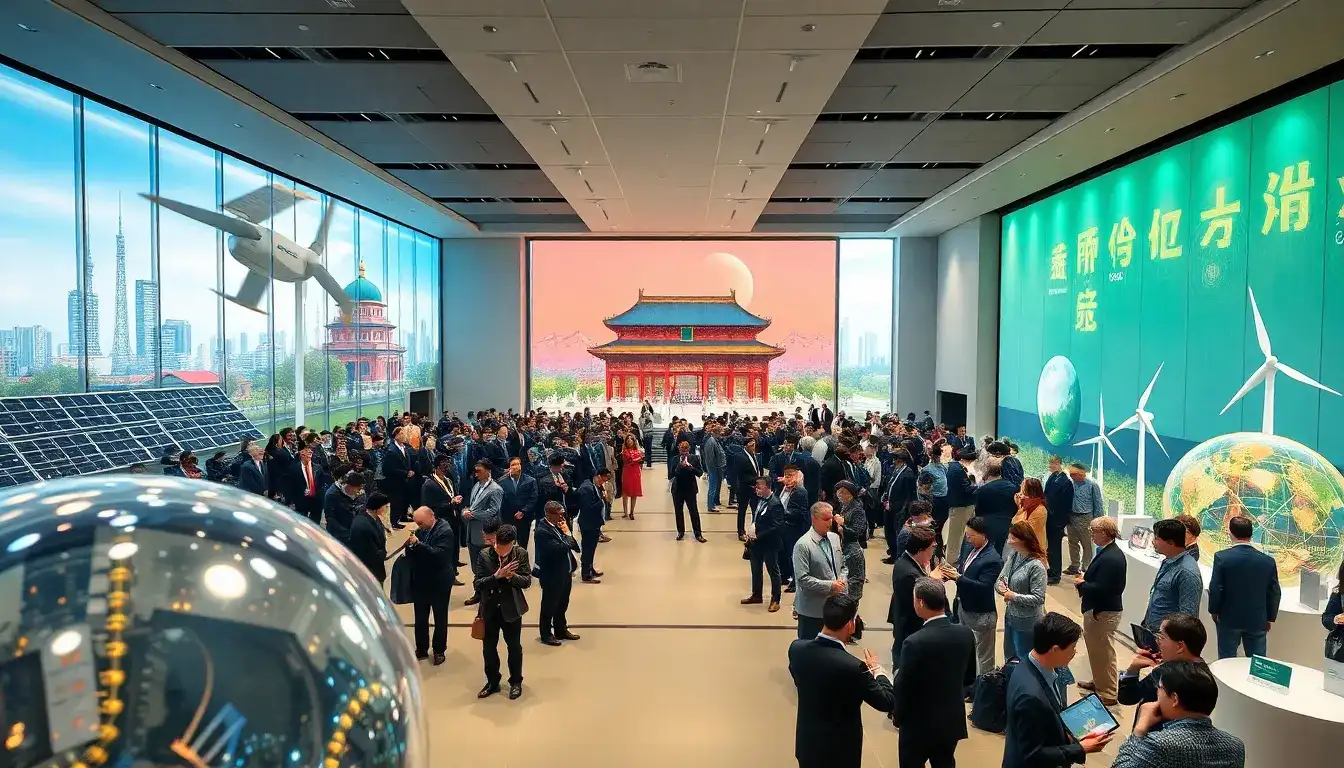
The 2025 International Forum on Energy and Power Transformation was held in Beijing from May 19 to 20, 2025. This forum, organized by the State Grid Corporation of China in collaboration with the International Renewable Energy Agency, the World Energy Council, and the World Economic Forum, was co-hosted by ten globally renowned power companies. The theme of the forum was “Accelerating Energy Transformation through New Power Systems”, aimed at fostering communication, sharing practical outcomes, exploring new developments, and strengthening international cooperation to jointly promote the green transformation and sustainable development of energy and power.
Representatives from 30 countries and regions across five continents attended the forum. Zhang Zhigang, Chairman of the State Grid Corporation, delivered a keynote speech, alongside leaders from the National Energy Administration, Camila, Director-General of the International Renewable Energy Agency, Wilkinson, Secretary-General and CEO of the World Energy Council, Liang Jinhui, Executive Director of the World Economic Forum, and Kopas, Chairman of the International Electrotechnical Commission.
In his address, Zhang emphasized that actively addressing the challenges posed by climate change and accelerating the transition to clean, low-carbon energy has become a widely accepted consensus in the international community. He noted that the State Grid Corporation is committed to implementing the directives of the Chinese government, enhancing system stability management, ensuring the reliability of the power grid, and accelerating grid upgrades to support the high-quality development of new energy. The company is also focused on driving technological innovation, deepening digital empowerment, and elevating the digital and intelligent levels of the power grid to establish a clean, low-carbon, secure, abundant, economically efficient, and flexible new power system.
Building a new power system presents greater challenges and complexities compared to traditional systems, requiring a careful balance between development and safety, a reconfiguration of the technological innovation mechanism, and the acceleration of economic mechanism improvements. Zhang expressed the hope that, in collaboration with various stakeholders, they can work together to expedite the establishment of the new power system and strive for a brighter future in energy transformation, contributing to a clean, beautiful, and sustainable world.
Leaders from the National Energy Administration echoed this sentiment, stating that actively combating climate change and advancing energy transformation has become a global consensus. In recent years, China has aligned itself with the global energy development trends, grounded in its national circumstances and development stage, and has unwaveringly implemented the new energy security strategy of “Four Revolutions and One Cooperation.” This includes systematic planning for a new energy system and the construction of a new power system, carving out a path for energy transformation that is appropriate for China’s context and meets the demands of the times.
Energy transformation is a complex, long-term process that requires mutual respect among countries, the pursuit of common ground while reserving differences, expanding consensus, and collaborative action. China continues to uphold the concept of a shared future for mankind and is willing to work with other nations to enhance communication and coordination on energy policies, engage in cooperative energy technology innovation, and achieve mutually beneficial and practical results.
Camila, the Director-General of the International Renewable Energy Agency, noted that global renewable energy generation capacity has significantly increased, with much of the growth attributed to China. She highlighted China’s substantial efforts in advancing the clean energy transition, improving infrastructure, and integrating large-scale renewable energy. Over the past decade, China has constructed over 500,000 kilometers of transmission lines, accounting for more than a third of the world’s newly added transmission lines. The ultra-high voltage transmission lines effectively connect the resource-rich western and northern provinces with the eastern load centers. To achieve the renewable energy installation target by 2030, she urged all parties to accelerate the deployment of grid infrastructure, develop policy and regulatory frameworks, and strengthen capacity building.
Wilkinson, Secretary-General and CEO of the World Energy Council, remarked that the world is currently at a critical juncture in energy transformation, with China’s journey in energy shaping the global energy landscape. The State Grid Corporation possesses vision, capability, and historical legacy, positioning it to become a foundational player in the next stage of the global energy governance system. He expressed the hope of inviting Chinese energy and power companies, including the State Grid Corporation, to share experiences and learning outcomes, collaboratively establishing a new paradigm guided by circularity to ensure abundant energy supply while respecting ecological limits for the well-being of humanity.
Liang Jinhui, Executive Director of the World Economic Forum, stated that China has played a crucial role in developing and utilizing renewable energy, promoting green energy transformation, and fostering the growth of the electricity sector. He commended the State Grid Corporation for its innovative approaches, particularly in large-scale ultra-high voltage projects and superconducting cable demonstration initiatives, which make power transmission safer and more efficient, supporting the integration of large-scale renewable energy and facilitating inter-regional energy flow. Looking ahead, promoting energy transformation requires increasing energy efficiency, encouraging material recycling, establishing local partnerships, enhancing energy infrastructure resilience to extreme weather, and fostering trust and communication globally.
Kopas, Chairman of the International Electrotechnical Commission, emphasized the urgent need for a resilient, digitalized, and renewable energy-driven new power system in the face of the dual challenges of climate change and energy security. The International Electrotechnical Commission is dedicated to achieving equipment digitalization and electrification, promoting sustainable development, and establishing trust through global cooperation. Throughout the transformation process, the Commission continues to provide a technical foundation for energy transition through standardization work in smart grids, distributed energy, and electric vehicle charging, promoting international collaboration.
The forum also featured dialogues with renowned scholars and a CEO roundtable, where participants engaged in in-depth discussions on the construction of new power systems and energy transformation, exploring theoretical innovations, practical explorations, and mechanism development. They shared cutting-edge technologies, innovative achievements, and best practices, outlining a blueprint for the development of new power systems and providing innovative solutions and guidance for overcoming energy transformation challenges. The forum’s significance for promoting sustainable development in the global energy sector is profound.
Significant technological achievements were announced, including flexible DC equipment for offshore wind power, operational control of large grids with high proportions of new energy, the State Grid Corporation’s bright power model, and standardized outcomes for the “Double 800” ultra-high voltage DC projects. Additionally, three specialized technical seminars were organized on new energy and power markets, technological innovation in new power systems, and zero-carbon development of urban power grids. Technical visits were arranged to sites such as the Zhangbei National Wind-Photovoltaic-Storage Transmission Demonstration Base and the Beijing Sub-Center Green Heart Zero-Carbon Operation Demonstration Park, complemented by exhibitions showcasing products and technologies from domestic and international companies, vividly displaying the innovative practices of Chinese enterprises in the field of new power systems.
This forum is a significant event held at a crucial stage of global energy transformation and represents a premier gathering in the global energy and power industry. Attendees noted that the scale, influence, and fruitful outcomes of the International Forum on Energy and Power Transformation are impressive, bringing together distinguished experts, scholars, and corporate executives to discuss cutting-edge topics such as new power systems and renewable energy technologies, providing forward-looking, constructive, and feasible insights. It serves as a platform for exchanging ideas on global energy transformation and green low-carbon development, as well as an academic and practical sharing platform for innovation in power systems, fostering high-level dialogue among world energy leaders and innovators.
The forum showcased China’s solutions and actions for energy and power transformation, facilitating the sharing of international experiences and technological cooperation, playing an essential role in building a community of shared future in the energy sector and promoting global sustainable energy development.
Original article by NenPower, If reposted, please credit the source: https://nenpower.com/blog/international-forum-on-energy-and-power-transformation-2025-held-in-beijing/

