Robots Also Need “Accident Insurance”
As robots increasingly integrate into various aspects of daily life—performing on stage, assisting the elderly and children at home, and executing precise tasks on factory production lines—the demand for risk protection has grown. Recently, several insurance companies have begun offering specialized insurance products aimed at covering the risks associated with the research, production, and application of embodied intelligent robots. What situations do these insurance products cover, and how do they facilitate the promotion of robot products and the development of the industry? A recent interview sheds light on this topic.
Insurance Services for the Entire Embodied Intelligence Industry
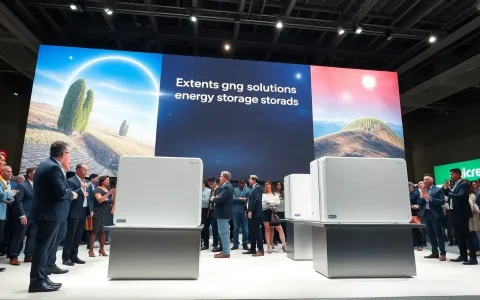
Not long ago, a robot showroom in Shenzhen, Guangdong, expanded its offerings, presenting an immersive experience that attracted numerous customers. The store showcased a range of robots, from massage and acupuncture devices to innovative brain-controlled experiences, human-robot chess games, and even robot boxing competitions. “This store integrates robot sales, accessories, after-sales service, rental, and personalized customization, allowing users to directly experience the robots’ movement and interaction capabilities,” said store manager Lin Feng. However, as robots are utilized in more diverse scenarios, certain risks have emerged: during demonstrations, robots can potentially cause personal injury or property damage to bystanders, and staff members may encounter accidental injuries during setup, debugging, and operation. Who bears these risks?
“We have customized insurance solutions that provide coverage for damages caused to third parties by robots within the venue. We can also offer additional coverage based on the unique risk protection needs of different stores, ensuring that new business models can provide open experiences while keeping risks manageable,” explained Shi Hequn, director of the Group Business Division at Ping An Property & Casualty Insurance.
From exhibitions and experiences to usage, and even during research and pilot testing, insurance is providing diverse support for the development of the embodied intelligence industry. Zhang Hao, the financial director of a robotics company, mentioned that their new elderly care robot project faced a risk of losing approximately 2 million yuan in initial investment due to project interruption, but insurance provided some economic compensation. A representative from a company utilizing power inspection robots stated that the purchase cost for each robot is around 300,000 yuan, and they have insured the robots under property insurance, ensuring that funds for repairs are secured.
Industry experts assert that for users, having insurance coverage for robots serves as a “health check report” on their reliability. In fields such as medical care, logistics, and public services, robots with insurance coverage have higher market acceptance and shorter procurement decision cycles. From international market experience, it is often necessary for robotic products to be insured before they can be practically applied.
Insurance Supports Innovation in Enterprises
The Development Research Center of the State Council recently released the “China Development Report 2025,” which indicates that the embodied intelligence industry in China is in its early stages, with a market size projected to reach 400 billion yuan by 2030 and exceed 1 trillion yuan by 2035. This growth will also drive advancements in applications such as transportation, logistics, industrial manufacturing, and commercial services. As robots enter more open and complex scenarios, the insurance industry faces new challenges. “As robots evolve from experimental validation to testing lines and eventually to mass production and commercial operation, companies urgently need to prioritize risk management,” Shi emphasized. Insurance institutions should assist companies in refining operational protocols, site management, safety inspections, and emergency response mechanisms.
Insurance has begun to play a role in supporting enterprise research and innovation. In Guangdong, PICC Property and Casualty’s “Smart Research Insurance” includes coverage for technical solutions and material defects, providing companies with a risk barrier that spans the entire cycle of research, small-scale trials, and pilot tests, thereby reducing direct losses from research failures. “Insurance for research expense losses and failed outcomes can minimize the economic losses caused by unexpected project halts or interruptions, enabling companies to focus more on research and innovation while providing them with the confidence and capability to succeed,” said Wei Li, director of the China Insurance Research Institute at Renmin University of China.
Experts indicate that with the promotion of remote operation and cloud control technologies, cybersecurity, data security, and system stability have become essential prerequisites for the large-scale application of robots. In response, PICC Property and Casualty plans to enhance its digital security insurance product system. The company has also introduced comprehensive insurance for embodied intelligent robots, which covers cybersecurity and system crashes. Given the intricacies of hardware malfunctions, algorithm flaws, operational errors, and cyberattacks, several insurance providers have committed to continually improving their comprehensive one-stop insurance solutions.
Innovation and Challenges in Technology Insurance
The rapidly evolving nature of the embodied intelligence industry and its novel scenarios presents challenges for insurance innovation, including a lack of data and difficulties in pricing. “We should focus on collaborative platform building and data sharing to create a favorable ecosystem for insurance innovation,” Wei suggested. Potential avenues include exploring dynamic data supplementation, flexible rate adjustment products, and utilizing reinsurance, co-insurance, and risk securitization to disperse underwriting risks and enhance underwriting capacity.
Providing insurance for robots is a reflection of the insurance industry’s role in supporting high-level technological independence and facilitating the development of new productive forces. As intelligent assisted driving accelerates, many insurance companies have begun to offer coverage services for such technologies. With the rise of low-altitude economies and commercial aerospace, new insurance products for aviation liability and equipment loss compensation have emerged. The “14th Five-Year Plan” proposes establishing a technological insurance policy system and enriching technological insurance products. “Technological insurance continues to expand its coverage, forming a multi-layered insurance product system that encompasses the entire innovation cycle, from project initiation to research and development, to outcome transformation and industrial promotion,” said Zhao Yulong, president of the China Insurance Industry Association. During the “14th Five-Year Plan” period, technological insurance provided risk protection exceeding 10 trillion yuan.
Emerging and future industries face complex and varied risk structures, compounded by insufficient risk data accumulation, which poses challenges for the high-quality development of technology insurance. How can we continue to break through these obstacles? Wei believes that insurance institutions should accelerate the exploration of applications for technologies like artificial intelligence, focusing on cultivating professional talent and establishing specialized organizations. “Financial institutions, technology companies, and research institutions can collaborate to build labs focused on risk and insurance, enhancing their capabilities in accident mechanism analysis, scenario assessment, and model validation.” Researcher Wang Xiangnan from the Chinese Academy of Social Sciences suggested that in the claims process, for scenarios that meet insurance conditions, mechanisms for automatic triggering, verification, and advance payment based on IoT data and rule engines could be implemented to improve service efficiency.
Enhancing the quality and efficiency of technology insurance also relies on a favorable policy environment. “To alleviate the financial burden on enterprises and enhance their willingness to insure, subsidies could be provided for premiums on technology insurance products, or relevant tax incentive policies could be explored. Through the collaboration of fiscal, tax, and financial efforts, the effectiveness of fiscal funds could be amplified, better supporting technological innovation,” Wei proposed.
Original article by NenPower, If reposted, please credit the source: https://nenpower.com/blog/insurance-for-robots-addressing-risks-in-the-era-of-intelligent-automation/