

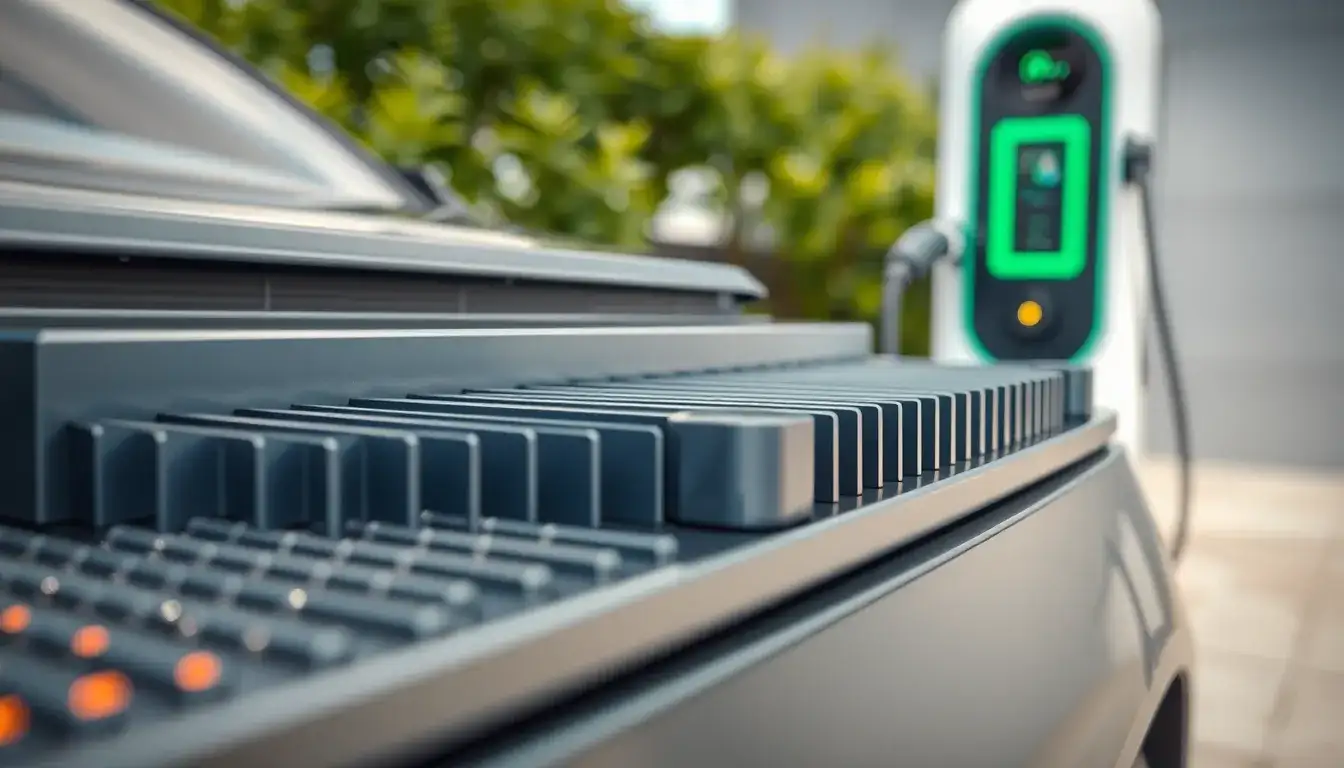
Electric vehicles (EVs) have become increasingly popular, yet concerns about battery life and charging times remain significant for consumers. Long waits for charging can be frustrating, especially during road trips, where even a 30-minute charge feels excessive. While most new EV batteries come with a warranty of 100,000 miles, the prospect of a million-mile warranty would undoubtedly bring peace of mind to many drivers. A UK-based company, Flint Engineering, is working on a thermal transfer innovation that could revolutionize both charging times and battery longevity.
Flint Engineering has developed a multi-channel flat heat pipe known as IsoMat. This innovative technology employs isothermal principles to maintain a consistent temperature throughout the material. Unlike traditional heat pipe technology, which transfers heat linearly, IsoMat manages heat in two dimensions—both horizontally and vertically. Its sealed structure contains an internal network of interconnected cavities filled with a precisely calculated amount of saturated fluid. When exposed to a heat source, the liquid within IsoMat quickly vaporizes, absorbing energy and redistributing it effectively.
Mark Robinson, Chief Executive of Flint Engineering, emphasizes the vast potential applications of IsoMat, stating, “If you take this into situations where heat is a problem or could be used elsewhere, you have thousands of potential applications.”
Over the past decade, Flint Engineering has explored various applications for IsoMat, including building materials and commercial refrigeration. The next focus is on EV batteries, where IsoMat could maintain battery cells at a stable temperature—approximately 25 degrees Celsius. Robinson explains, “We’ve done a lot of development on EVs, from small cars to big trucks,” demonstrating the versatility of the technology across different battery system sizes.
In this context, IsoMat serves as a platform for battery cells, ensuring all cells are kept at the same temperature. Cooling manifolds at the ends of the plate allow for precise thermal management of each individual cell, enabling them to operate more efficiently and discharge faster. This advancement leads to faster charging times and prolongs the lifespan of the batteries, as it prevents ‘rogue’ cells from failing, which is a common cause of battery pack degradation.
In contrast to traditional battery cooling systems, which utilize a serpentine pipe and coolant between aluminum plates, IsoMat provides consistent cooling across all cells. Robinson asserts, “We were able to fix that. There is no other way to maintain every cell at the same temperature, depending on the application.”
While IsoMat is not intended to replace existing thermal management systems, it enhances them, especially in extreme conditions. For instance, in cold climates where EV range can significantly drop, IsoMat can also provide heating, allowing for rapid temperature equalization among the cells. Conversely, in hot environments, such as those faced by heavy autonomous mining trucks in Australia, IsoMat’s thermal management capabilities can help extend battery life, which is critical as some trucks currently deplete their batteries in just two years due to inadequate temperature regulation.
Flint Engineering is based at Brunel University in the UK and previously partnered with US company Allison Transmission to conduct a four-year development project focused on drivetrains for trucks. Following this collaboration, Flint has continued to refine IsoMat and aims to quantify its benefits in the coming years. Robinson notes, “The IsoMat is almost unlimited in the amount of energy it can shift,” highlighting the innovation’s potential to dramatically enhance battery performance.
In commercial refrigeration, IsoMat has been shown to reduce energy consumption by nearly one-third, with even greater potential benefits anticipated for EV batteries. Although precise metrics for battery longevity and performance are still being determined, initial findings suggest that IsoMat can extract two to three times more heat from a battery pack compared to traditional methods.
While the IsoMat system may be slightly heavier and more costly than existing aluminum plates, it promises enhanced durability and superior performance. Ultimately, EV owners are seeking improved range, safety, reduced charging times, and extended battery life. Robinson is optimistic that IsoMat will find applications across a range of vehicles, from mining trucks to family cars, driven by consumer demand for better performance.
Flint Engineering plans to commence commercial production for non-automotive applications later in 2025, with automotive development progressing rapidly. With strong interest from markets in the UK, North America, and the Middle East, this thermal management breakthrough could significantly impact the future of electric transportation.
Original article by NenPower, If reposted, please credit the source: https://nenpower.com/blog/innovative-thermal-transfer-technology-promises-to-enhance-ev-battery-life-and-charging-efficiency/

