

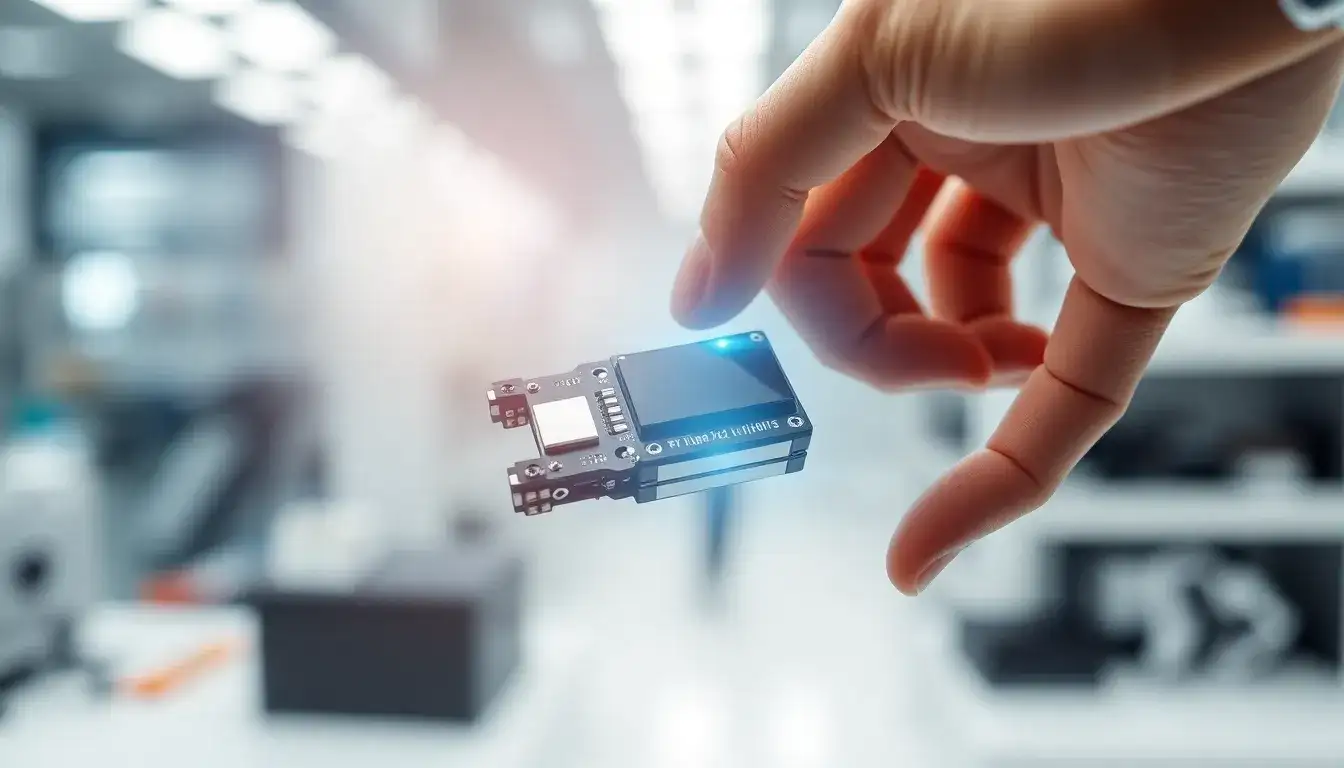
Biomimetic tactile technology has made a significant impact as Vita Robotics enters the realm of embodied intelligence. In recent years, the rapid advancements in deep learning and computer vision have enabled robots to “see” their environment and plan their paths. However, as embodied intelligence attempts to transition from virtual training environments to the complexities of the physical world, the industry faces a substantial bottleneck: robots relying solely on vision operate in a fundamentally “blind” manner. This “perceptual gap” leads to numerous real-world challenges, such as:
- Lack of fine motor skills: Everyday actions like plugging and unplugging USB devices or assembling precision components can fail due to slight positional deviations that visual input alone cannot correct, potentially resulting in connection failures or damage.
- Absence of force feedback: When robots handle heavy liquid containers, fragile strawberries, or soft fabrics, their inability to perceive the magnitude and distribution of contact forces often results in damage from excessive force or slipping due to insufficient grip.
Recently, at a product launch event themed “Tactile Awakening, Agile Evolution,” Vita Robotics introduced four new products, encompassing perception units, execution units, and data collection systems. The most notable among them is the GF515 biomimetic tactile fingertip, designed specifically for dexterous hands. This fingertip measures just 15×27mm, comparable to a human fingertip, and can be made even smaller, weighing less than 15 grams. It integrates an impressive density of tactile information—over ten thousand points per square centimeter—potentially hundreds of times more than the human hand, capable of detecting texture details down to 10 microns while simultaneously sensing normal and tangential forces, torque, and slip states.
In such a compact form, the GF515 can perceive not only “whether contact is made” but also “how contact occurs”—including surface texture, the distribution of normal and tangential forces, whether slipping is happening, and the direction and speed of that slipping. This information is captured in real-time with millisecond-level latency and a resolution of 10 microns. The challenge in creating dexterous hands lies not in applying greater force but in accurately understanding complex contact details within tight spaces. The GF515 allows robotic hands to move beyond mere “touch” to genuine “sensation.”
With a sensitivity as low as 0.01N, it can detect contact changes lighter than a feather. A maximum refresh rate of 120Hz enables real-time closed-loop control during rapid actions like grasping, pinching, flicking, turning, and inserting. This advancement does not merely enhance the robot’s reaction speed; it gives the robot a rhythm akin to human neurological reflexes.
If the GF515 supplements dexterous hands with “fingertip nerves,” then the VT-UMI85 tactile data collection system addresses another crucial aspect of embodied intelligence: the long-standing absence of genuine contact data. Previously, gathering real-world data was costly due to cumbersome equipment, complex operations, and reliance on custom environments. Traditional UMI data collection devices captured only visual data, resulting in the critical “contact” dimension being absent from AI training systems. The VT-UMI85 overcomes this challenge, weighing only 500 grams, making it lightweight and portable for natural data collection in real scenarios. It combines multi-modal information, including tactile data, RGB-D, IMU, encoders, posture trajectories, and gripping states, achieving millisecond-level time synchronization to ensure 100% reproducible data.
Moreover, the VT-UMI85 is not just an isolated collection device; it serves as a complete data workflow entry point. From collection to playback, training to evaluation, it establishes a comprehensive closed-loop process that allows universities, algorithm teams, and industry clients to seamlessly engage with effective embodied intelligence data workflows without needing to piece together their own toolchains from scratch.
According to reports, Vita Robotics has formed partnerships with several major companies in sectors including 3C, automotive, home appliances, and renewable energy. Founder Li Rui revealed that Vita Robotics has established deep collaborations with Fortune 500 companies such as Xiaomi, international automotive giants, and leading logistics firms, with applications covering typical scenarios like chaotic adaptive grasping, precise placement and assembly, and flexible object manipulation.
Original article by NenPower, If reposted, please credit the source: https://nenpower.com/blog/innovative-tactile-sensing-technology-advances-embodied-intelligence-with-viti-robotics-gf515-finger-module/

