

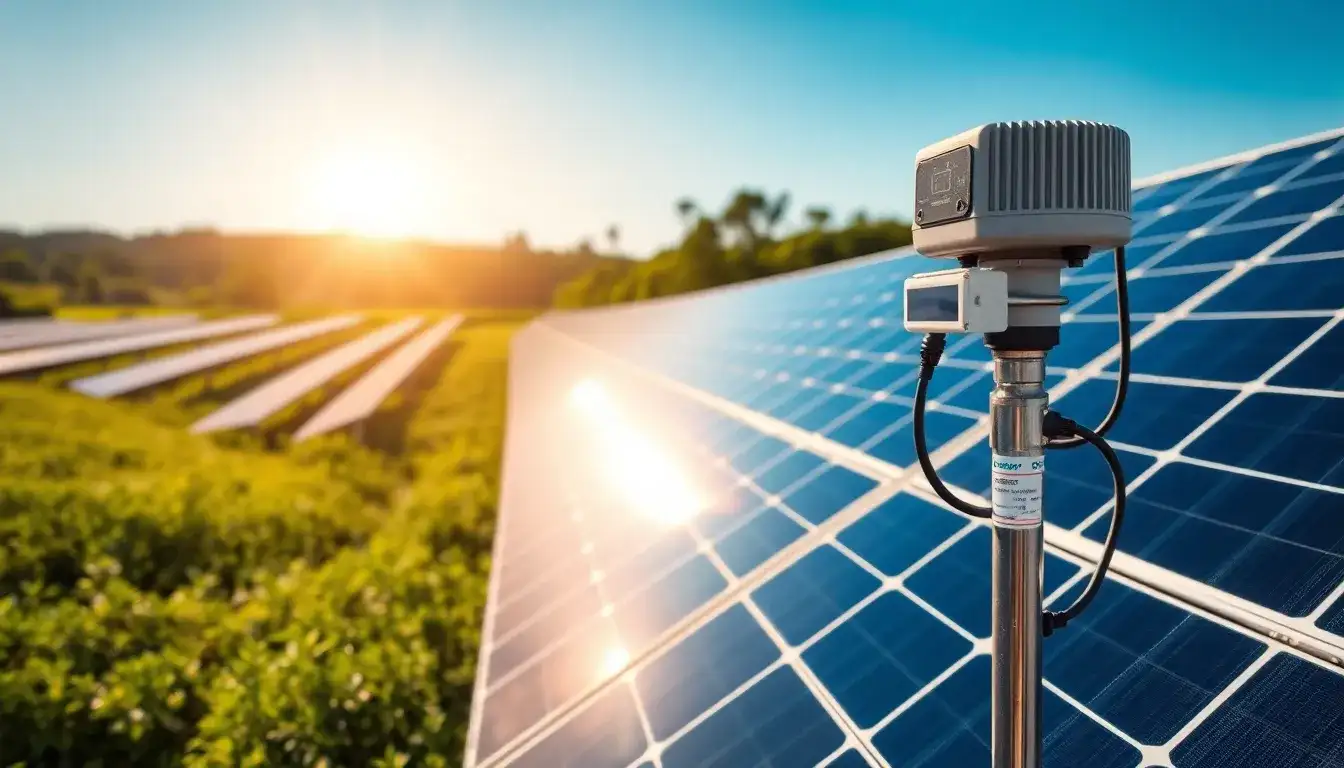
Photovoltaic Meteorological Instrument: Comprehensive Capture of Environmental Variables to Optimize Photovoltaic Power Plant Efficiency
The TW-WQX8B model, an integrated Internet of Things device by Tianwei Environmental, is designed specifically for photovoltaic power plants. It incorporates the monitoring functionalities of crucial environmental parameters such as solar radiation, temperature, humidity, wind speed, wind direction, and atmospheric pressure. Utilizing high-precision sensors and advanced data processing technology, this instrument can capture environmental variables in real-time with great accuracy, providing a scientific basis for optimizing the power generation efficiency of photovoltaic systems.
1. Accurate Monitoring of Key Environmental Variables
- Solar Radiation Monitoring: Equipped with sensors for total, direct, and diffuse radiation, it can monitor changes in light intensity with an accuracy of ±2%. For instance, by measuring the total solar radiation, it is possible to accurately calculate the theoretical power generation potential of a photovoltaic power plant, supplying essential data for system design.
- Temperature and Humidity Monitoring: This instrument simultaneously tracks environmental temperature and the temperature of photovoltaic modules. By combining this with humidity data, it can analyze how high-temperature and high-humidity environments impact module performance. For example, elevated temperatures may reduce the efficiency of photovoltaic panels, while excessive humidity might increase the risk of dust accumulation, necessitating timely adjustments to maintenance strategies.
- Wind Speed and Direction Monitoring: It continuously monitors wind speed and direction to assess the threat posed by strong winds to the stability of photovoltaic panels. When wind speeds exceed a safe threshold, the system can automatically trigger warnings, alerting maintenance personnel to take reinforcing measures to prevent damage to the modules.
2. Data-Driven Optimization of Power Generation Efficiency
- Dynamic Adjustment of Photovoltaic Panel Angles: Based on real-time solar radiation and meteorological data, algorithmic models calculate the optimal installation angle, dynamically adjusting the orientation of photovoltaic panels to maximize solar energy reception efficiency. For example, during the summer when the sun’s altitude is higher, the panels can automatically adjust their tilt to increase exposure time to sunlight.
- Inverter Parameter Optimization: By integrating module temperature data, inverter working parameters can be adjusted in real-time to match the best power generation status. For instance, in high-temperature conditions, the inverter’s output power can be lowered to prevent overheating and associated efficiency losses.
3. Flexible Deployment and Environmentally Friendly Energy Saving
- Modular Design: The device features a modular design that supports sensor expansion and functional upgrades, catering to the varying needs of different scales and types of photovoltaic power plants. For example, small distributed power plants may opt for basic configurations, while large ground-mounted plants can add radiation monitoring modules.
- Solar Power Supply: It is equipped with built-in solar panels and energy storage systems, allowing for self-powered operation without requiring an external power source. This design not only reduces maintenance costs but also embodies green and environmentally friendly principles.
- High Protection Level: With a protection rating of IP65 or higher, the device is suitable for outdoor environments, ensuring stable long-term operation even in harsh conditions such as deserts or coastal areas, while maintaining data collection accuracy.
Special Notice: The content above (including any images or videos) is uploaded and published by a user of the NetEase Hao platform, which only provides information storage services.
Original article by NenPower, If reposted, please credit the source: https://nenpower.com/blog/innovative-solar-meteorological-instruments-enhance-efficiency-of-photovoltaic-power-plants/

