

On April 23, 2025, the “2025 Second Green Hydrogen Industry Innovation Development Conference” was grandly held in Nanjing, co-hosted by the Polar Star Power Network and the Beijing Carbon Neutrality Society. During the conference, Qi Kui from Hubei Yingli Electric Co., Ltd. delivered a keynote speech titled “Integrated Smart Platform for Wind, Solar, Hydrogen Storage, and Hydrogen Production Power Solutions“. He provided an in-depth analysis of the pain points in the development of the green hydrogen industry and shared Yingli’s innovative practices and results.
In his speech, Qi Kui noted that current hydrogen production projects are primarily advancing along two paths: centralized and distributed systems. Centralized projects typically feature wind and solar power generation capacities of hundreds of megawatts or more, supported by dozens or even hundreds of electrolyzers to form a large-scale hydrogen production system. In contrast, distributed projects are rooted in urban areas and industrial parks, creating an integrated hydrogen production and refueling station model, which can be categorized into off-grid and grid-connected types. The distributed projects have become a focal point in the industry due to their balance of economic viability and stable hydrogen production.
Currently, the pace of green hydrogen industry development has slowed, not due to a change in the willingness to develop the industry, but rather because of several specific key technical challenges that need to be addressed. Looking back at the energy industry’s development history, sectors such as wind and solar energy storage have rapidly matured in design, manufacturing, and on-site technology. However, practitioners in the green hydrogen field still rely on traditional experiences and methods, encountering numerous issues in multidisciplinary scenarios. Although the green hydrogen industry is centered around renewable energy, the inherent volatility, randomness, and intermittency of wind and solar resources pose unprecedented challenges to the safe, stable, and economical operation of systems.
For instance, an analysis of wind power generation data from Inner Mongolia and Northeast China shows that the power fluctuations of typical wind turbines can exceed 10% and 5% per second, with low load conditions frequently occurring each month. Equipment can experience intermittent shutdowns lasting from a few minutes to several days, directly challenging the stable operation and efficient management of electrolyzers.
Qi Kui emphasized that the core issue hindering industry development lies in the inability of existing equipment and systems to quickly adapt to the characteristics of renewable energy. Whether in large-scale renewable hydrogen production scenarios or in distributed, integrated off-grid hydrogen production situations, traditional energy dispatch technologies struggle to effectively coordinate the fluctuations of renewable energy with hydrogen production demands. Furthermore, the requirements for energy balance and system stability in clustered large-scale production conflict significantly with the adaptability of existing equipment and systems, creating a critical bottleneck that restricts industry growth.
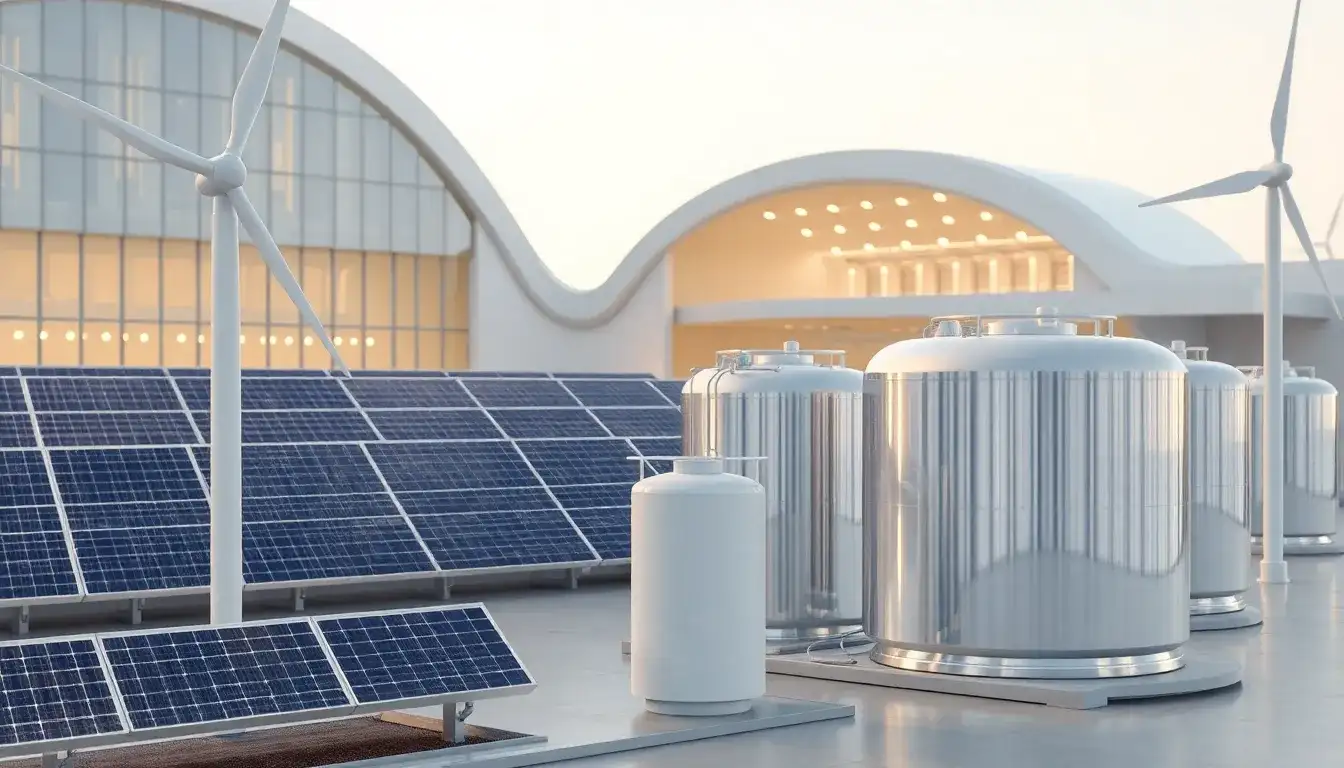
As a leading enterprise in the rectifier power supply sector for hydrogen production, Hubei Yingli Electric has leveraged its robust technical foundation to launch the InGreen Ecs Integrated Energy System for Wind, Solar, and Hydrogen Storage, addressing key industry pain points. This system focuses on three core functionalities: off-grid stability, energy balance, and centralized production control. Utilizing a multi-objective strategy with a full-time model characteristic, the production control strategy enables deep global coupling of the system.
In terms of off-grid stability, advanced intelligent monitoring and control technologies are employed to sense renewable energy fluctuations in real-time and precisely control the operating status of electrolyzers, ensuring stable operation of off-grid systems. The energy balance function optimizes energy distribution by maximizing the utilization efficiency of renewable energy. The production control module facilitates centralized and intelligent management of the entire hydrogen production process, thereby significantly enhancing production efficiency and management effectiveness. Currently, the Yingli InGreen Ecs integrated smart platform has been successfully implemented in multiple off-grid hydrogen production projects using wind and solar energy, as well as integrated photovoltaic hydrogen production projects, receiving high recognition from customers. The successful implementation of these projects not only validates the system’s reliability and advancement but also provides replicable and scalable success examples for the development of the green hydrogen industry.
Despite the numerous challenges currently faced by the green hydrogen industry, the future remains promising as innovative companies like Yingli continue to invest in research and development and overcome technical bottlenecks. With technological upgrades and system optimization, the green hydrogen industry is expected to achieve large-scale, efficient, and stable development, providing strong momentum for global energy transition and the achievement of carbon neutrality goals.
Original article by NenPower, If reposted, please credit the source: https://nenpower.com/blog/innovative-integrated-wind-solar-hydrogen-storage-solutions-unveiled-by-hubei-yingli-electric-at-2025-green-hydrogen-industry-conference/

