

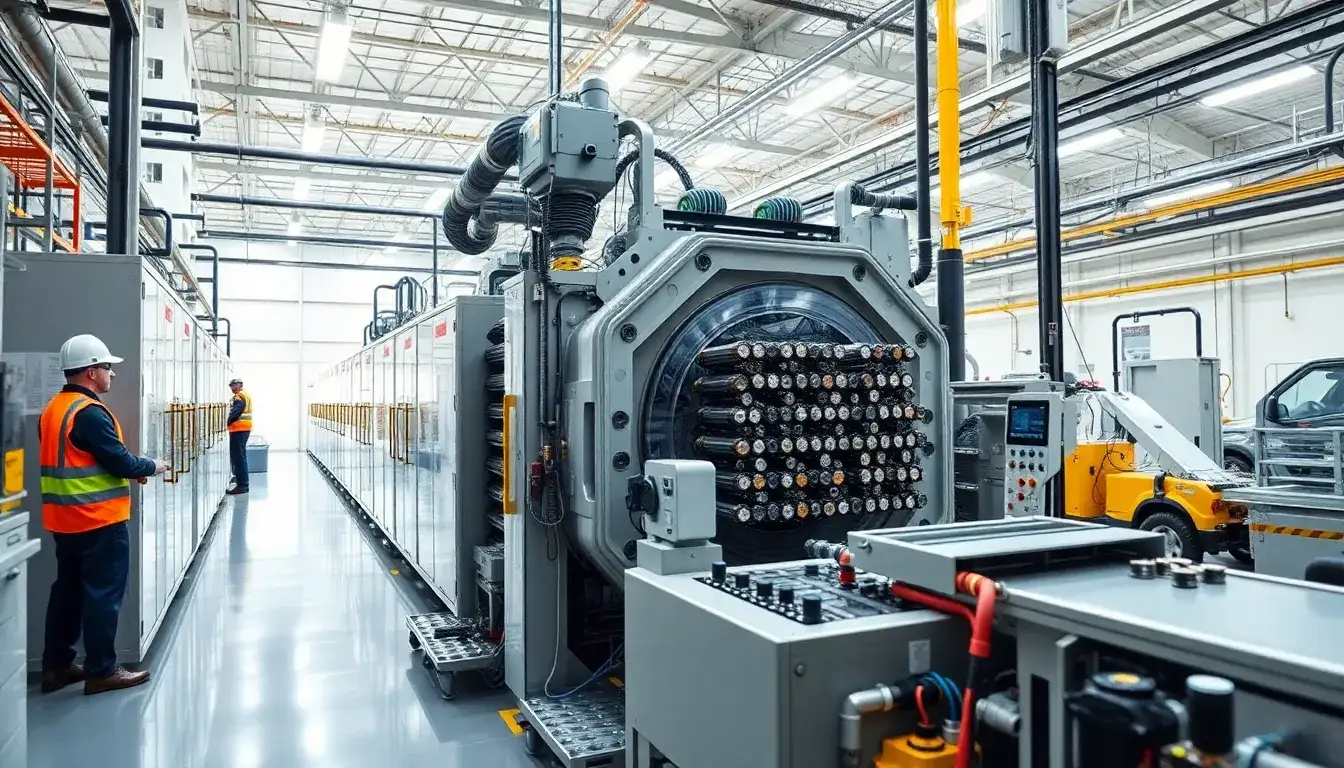
With the rapid development of new energy vehicles, the usage of lithium-ion batteries has surged, leading to a geometric increase in the number of retired lithium-ion batteries. It is projected that in the next 3 to 5 years, the quantity of decommissioned lithium-ion batteries will experience explosive growth. Efficient and environmentally friendly methods for processing these retired batteries have become a global focal point.
Traditional lithium battery recycling equipment faces numerous challenges, including low system integration, significant processing losses, high labor intensity, and serious environmental pollution. To address these issues, the Greeji Environmental Protection’s integrated intelligent equipment for processing charged lithium batteries has emerged, bringing new hope to the lithium battery recycling industry.
Innovations and Advantages of Greeji Environmental Equipment
The Greeji Environmental Protection lithium battery recycling equipment features a unique design and advanced technology, setting a new benchmark for the industry. This integrated equipment combines multiple processes, including discharging, crushing, pyrolysis, and sorting, significantly enhancing system integration. It employs an intelligent control system for automated operation, which reduces labor intensity and minimizes errors and risks associated with manual handling.
Environmentally, this equipment uses advanced gas-protected crushing technology, along with low-temperature pyrolysis and high-temperature pyrolysis processes, effectively reducing the generation of waste gases, wastewater, and residues and mitigating environmental pollution.
Case Study: Processing of 10 Tons of Retired Lithium Iron Phosphate Battery
Taking a case of processing 10 tons of retired lithium iron phosphate rectangular aluminum shell batteries, the Greeji Environmental Protection equipment achieved remarkable results. The overall recovery rate during the charged crushing process reached an impressive 98.5%, indicating that nearly all battery materials can be effectively recovered. Among the recovered metal materials, the purity of copper was (99.4±0.2)% and aluminum purity was (99.16±0.3)%. These high-purity metals hold substantial market value.
Another significant byproduct from the recovery process is black powder, primarily composed of lithium iron phosphate and graphite. The lithium content in the black powder was (2.4±0.4)%, carbon content was (20±5)%, with copper impurities at (0.32±0.13)% and aluminum at (0.18±0.05)%. The composition indicates that the black powder still contains valuable lithium and carbon, which can be further processed for recovery.
Process Flow of the Equipment
The process flow of the Greeji Environmental Protection lithium battery charged crushing integrated intelligent equipment includes several key steps:
- Discharging: The discharged old lithium batteries are processed in a nitrogen atmosphere, providing a safe and efficient discharge method. Nitrogen, an inert gas, effectively prevents chemical reactions during the discharge process, avoiding potential hazards like combustion or explosions.
- Crushing and Low-Temperature Pyrolysis: The discharged batteries are sent to a four-shaft shredder for crushing. The crushed mixture undergoes low-temperature pyrolysis to remove the electrolyte, avoiding energy waste and environmental issues associated with high-temperature pyrolysis.
- High-Temperature Pyrolysis: The material from low-temperature pyrolysis is then transferred to a pyrolysis furnace under an ammonia atmosphere at 450°C. Under these conditions, PVDF (polyvinylidene fluoride) and organic materials are removed. PVDF, commonly used as a binder in lithium batteries, is critical to subsequent recovery processes.
- Screening and Subsequent Processing: The pyrolyzed material is sorted to obtain black powder containing valuable components like lithium iron phosphate and graphite. The material is further processed through hammer crushing, density separation, and grinding to produce copper and aluminum granules, along with fine black powder. Magnetic separation is used to isolate magnetic shells, achieving efficient separation and recovery of various materials from retired lithium batteries.
- Environmental Processing: Waste materials, such as separators, electrolytes, and adhesive tapes generated during the recovery process, are pyrolyzed into organic compounds. These organic materials are then processed by backend environmental equipment for incineration and adsorption, ensuring harmless waste disposal.
The entire recovery process is controlled by an intelligent Distributed Control System (DCS), ensuring stability and reliability in operations.
Economic Value Analysis
The Greeji Environmental Protection lithium battery charged crushing integrated intelligent equipment not only demonstrates technical innovation but also offers significant economic advantages. The processing cost is below 1500 yuan per ton, which presents an attractive cost control level for lithium battery recycling companies. Through efficient recovery processes, companies can obtain high-purity metals like copper and aluminum, as well as black powder containing lithium and carbon. These recovered products have high added value in the market, providing substantial economic benefits to businesses.
Moreover, the equipment’s high recovery rates and low energy consumption further reduce production costs and enhance profitability.
The introduction of Greeji Environmental Protection’s lithium battery charged crushing integrated intelligent equipment has revolutionized the lithium battery recycling industry. It not only addresses many issues present in traditional equipment but also achieves efficient and environmentally friendly recycling of retired lithium batteries through advanced technologies and processes. In the case of processing 10 tons of retired lithium iron phosphate rectangular aluminum shell batteries, the equipment showcased exceptional performance and economic value. As the number of retired lithium-ion batteries continues to rise, the application of Greeji Environmental equipment holds broad prospects and is expected to significantly propel the development of the lithium battery recycling industry toward a greener and more sustainable future.
Original article by NenPower, If reposted, please credit the source: https://nenpower.com/blog/innovative-integrated-equipment-revolutionizes-lithium-battery-recycling-industry/

