

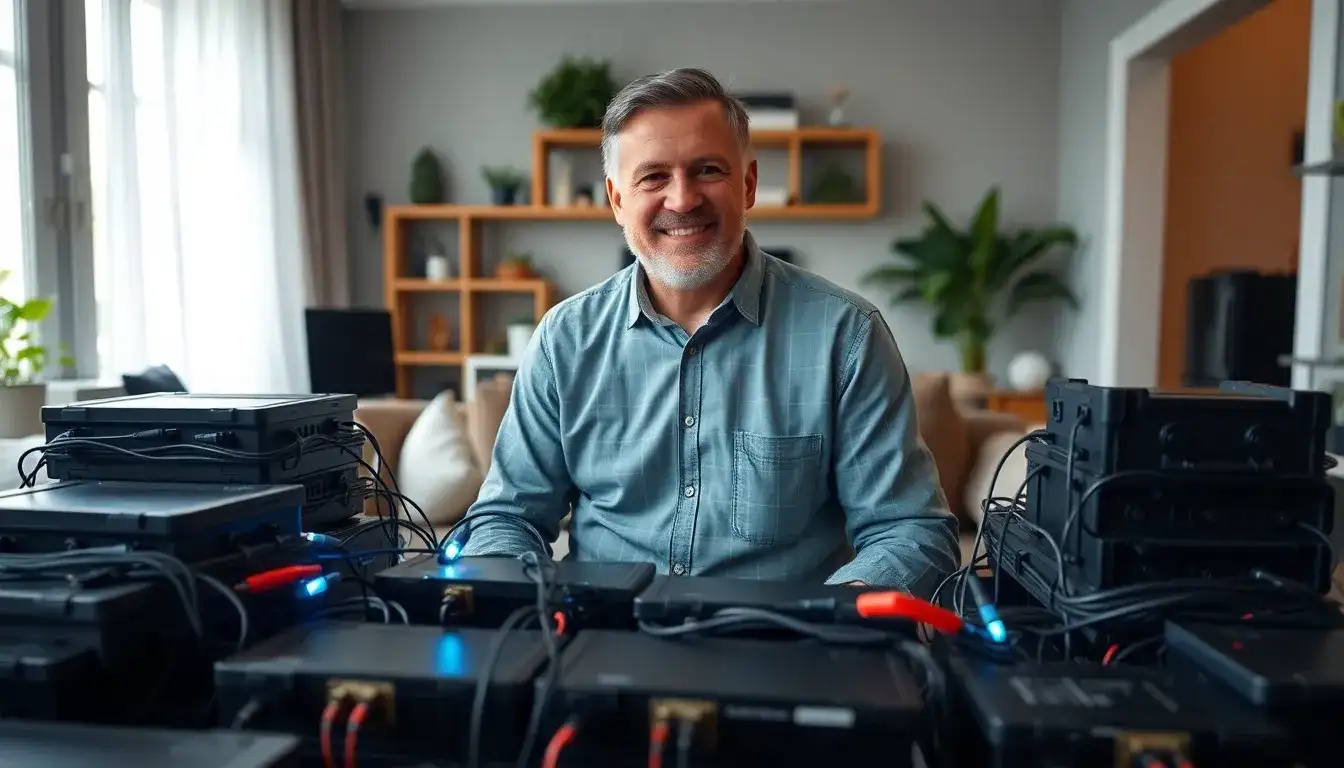
Incredible! Since 2016, a passionate energy user has been powering his home with laptop batteries, collecting over 650 batteries to achieve self-sufficiency. This innovative initiative showcases the potential of renewable resources and resilience in the face of electronic waste.
In November 2016, he transformed the idea of creating an array using recycled laptop batteries into reality. By disassembling old batteries and selecting healthy cells, he connected them to a solar power system, gradually completing his off-grid home power solution. The entire setup is housed in a small shed approximately 50 meters from his home, minimizing temperature, noise, and maintenance disruptions.
Initially, he assembled modules with an approximate capacity of 100 amp-hours, grouping compatible cells for balance and protection, while using copper wiring to ensure low-resistance connections, which reduces heat generation and prolongs battery life. Though this structure is complex, it ultimately provides stable and safe power.
One of the early challenges was the uneven discharge rates and capacity degradation. He measured each cell, selecting healthy groups, and employed grouping and balancing strategies to reduce discrepancies. When necessary, he added extra cells to maintain consistent internal resistance and cycles.
Instead of directly using complete laptop battery packs, he disassembled them into individual 18650 cells, which were configured into a custom power rack for simplified thermal management and maintenance. After several adjustments, his system was connected to 24 solar panels, each with a capacity of 440 W, ensuring uninterrupted power supply even in varying weather conditions. To date, none of the battery modules have been replaced, making this a compelling achievement in recycling electronic waste.
He emphasizes, “If we can turn seemingly discarded cells into reliable household power, we can truly reshape our perception of energy usage.”
This example illustrates that energy independence does not solely depend on new battery technology; recycling techniques can also play a significant role. As more individuals consider how to reduce reliance on the power grid and enhance community resilience against disasters, transforming old batteries into usable capacity could represent a low-cost, flexible solution.
This also opens discussions around policies and regulations: establishing standards for recycling to remanufacturing processes, clarifying safety and responsibility for household electricity, and encouraging local and citizen co-creation of energy. With measurement tools, monitoring systems, and educational resources, more families can explore off-grid or semi-off-grid setups safely and compliantly.
Prioritizing health checks is essential: conduct capacity, internal resistance, and cycle tests to establish grading and elimination standards. Emphasizing systematic safety involves configuring Battery Management Systems (BMS), fuses, and temperature and smoke sensors, maintaining redundancy and isolation capabilities. Proper conductor and heat dissipation planning is vital: use thick copper wires, monitor connection resistance, and ensure proper ventilation and thermal design. Regular maintenance schedules should include balancing, sampling inspections, and lifespan tracking to mitigate chronic risks. Additionally, awareness of regulations and insurance is crucial: understanding local regulations and verifying insurance terms to ensure effective risk transfer.
This system demonstrates how creativity and discipline can significantly reduce costs while enhancing stability. As more families combine rooftop solar, recycled cells, and intelligent management, community-level energy coordination becomes feasible: peak shaving during high demand periods and filling capacity during off-peak times, resulting in greater reliability and lower carbon footprints.
Most importantly, this decentralized approach fosters citizen engagement: you don’t need to wait for perfect new technologies to take action. You can begin by effectively utilizing available resources, transforming waste into supply, and designing against risks. For this user, the attention to engineering details and the patience for long-term maintenance are the true keys to success.
Conclusion: Transforming waste into power is essential in the face of extreme weather, fluctuating electricity prices, and supply uncertainties. By utilizing over 650 laptop batteries and 24 solar panels, he has demonstrated that regeneration and reuse can coexist. This initiative not only saves personal costs but also highlights the importance of resource cycling, local resilience, and energy democracy.
When creativity meets discipline, and safety is tied to practical testing, we can turn technological waste into long-term value. Today it’s a household off-grid system; tomorrow it could be a community microgrid. Each disassembly, grouping, and balancing effort is a small step toward a more sustainable and autonomous future.
Original article by NenPower, If reposted, please credit the source: https://nenpower.com/blog/innovative-energy-solution-one-man-powers-his-family-with-over-650-laptop-batteries-since-2016/

