

This battery self-destructs: Biodegradable power inspired by “Mission: Impossible”
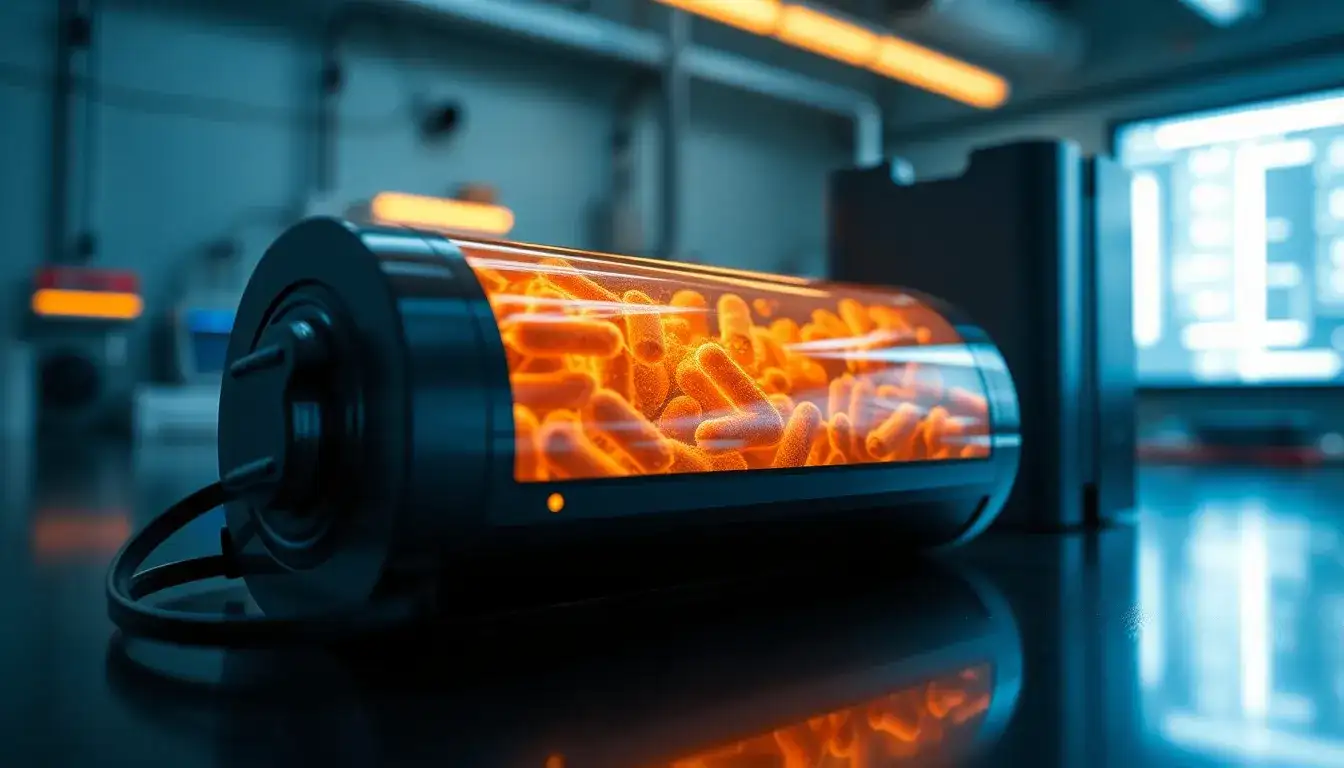
Scientists at Binghamton University are transforming a sci-fi fantasy into reality by developing tiny batteries that disappear after use, taking inspiration from the “Mission: Impossible” films. Led by Professor Seokheun Choi, the team is addressing one of the biggest challenges in biodegradable electronics: the power source. Instead of relying on toxic materials, they are exploring the use of probiotics—live microorganisms that are beneficial for health when consumed but pose no threat to humans or the environment.
In a recent paper published in the journal Small, Choi and his research team demonstrate the potential of using probiotics to generate electricity. They have engineered paper-based batteries that dissolve in acidic environments, which could lead to a breakthrough in safe, disposable technology for medical and environmental applications.
Professor Choi explains that the most challenging aspect of creating transient electronics is developing the battery. “Transient electronics can be used for biomedical and environmental applications, but they must disintegrate in a biosafe manner,” he stated. “You don’t want toxic residues in your body. This type of device is known as bioresorbable electronics, and the key challenge is the power source—most of which, like lithium-ion batteries, contain toxic materials.”
The research team built upon their previous studies of biobatteries to explore a new approach. Maedeh Mohammadifar, a PhD graduate from Choi’s Bioelectronics and Microsystems Lab, developed an original dissolvable microbial fuel cell during her time at Binghamton. “We utilized well-known electricity-producing bacteria, which are classified as biosafety level 1, making them safe. However, we were uncertain about the environmental impact of these bacteria if released into nature,” Choi noted.
Current PhD student Maryam Rezaie spearheaded the latest research using a blend of 15 probiotics. “Probiotics are well-documented as safe and biocompatible, but we were initially unsure whether they could produce electricity,” Choi remarked. “There was uncertainty, so she conducted extensive experiments.”
Although initial results were not promising, the team persevered. They engineered an electrode surface that could be more favorable to the bacteria by incorporating polymers and nanoparticles to enhance the electrocatalytic behavior of the probiotics. The modified electrode was porous and rough, creating ideal conditions for bacterial attachment and growth, which improved their electricity-generating capabilities.
Additionally, they coated the dissolvable paper with a low pH-sensitive polymer, ensuring the battery would only function in acidic environments, such as polluted areas or the human digestive system. This innovation increased both the voltage output and the operational duration of the battery.
While the power generated currently remains modest, Choi views these experiments as a crucial proof of concept for future research. “Further studies are necessary,” he emphasized. “We used probiotic blends, but I want to investigate individually which ones possess enhanced electric genes and how their synergistic interactions can boost power generation. Moreover, in this research, we focused on a single biobattery unit; I aim to connect them in series or parallel to enhance power output.”
Original article by NenPower, If reposted, please credit the source: https://nenpower.com/blog/innovative-biodegradable-batteries-inspired-by-mission-impossible-use-probiotics-for-eco-friendly-power/

