

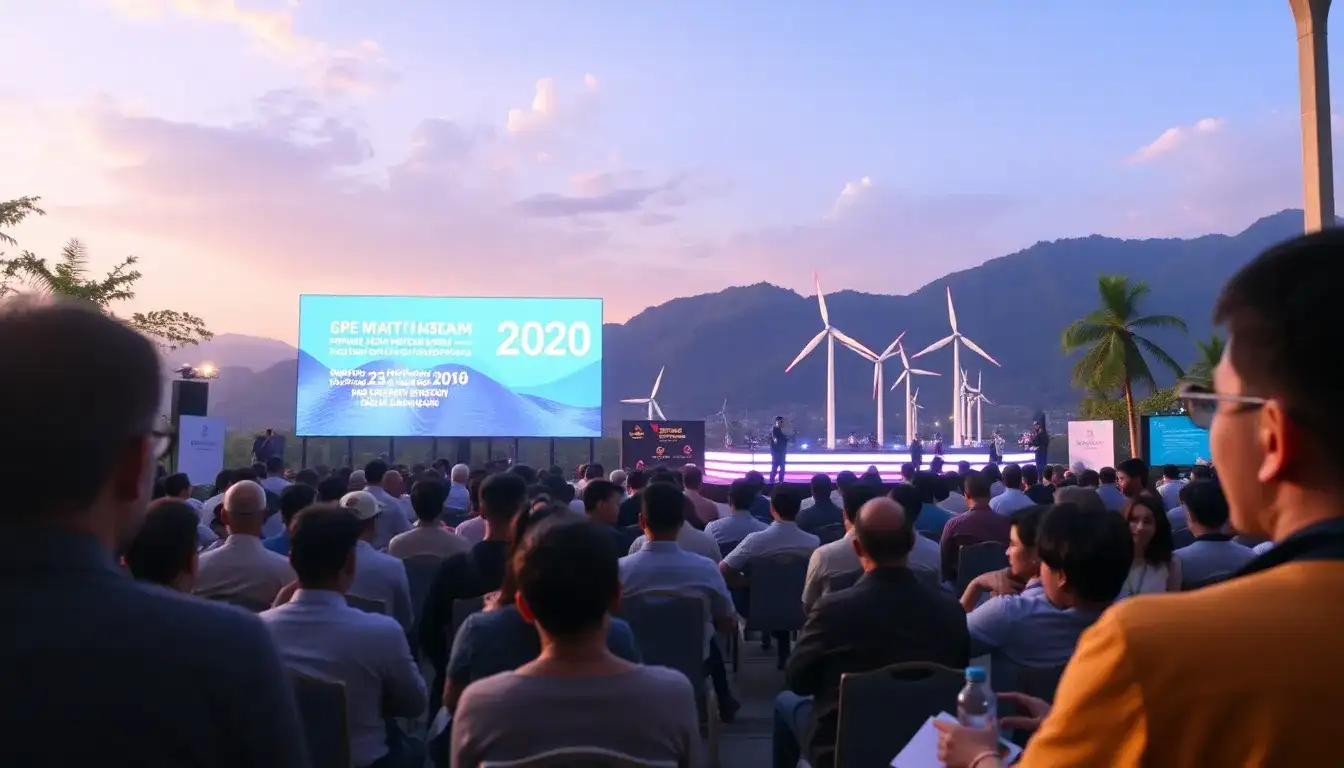
On April 15, Indonesia hosted the inaugural Global Hydrogen Summit, an event aimed at building a collaborative ecosystem to expedite the transition to clean energy. The Minister of Energy and Mineral Resources, Bahriel Lahadalia, officiated the opening ceremony at the Jakarta International Convention Center, underscoring the government’s support for the application of hydrogen energy in the country’s strategic industries. During the opening of the “2025 Global Hydrogen Ecosystem Summit and Exhibition,” he declared, “I officially announce the commencement of the Global Hydrogen Summit.”
Bahriel emphasized that the development of hydrogen energy aligns closely with President Prabowo Subianto‘s vision of energy sovereignty and self-sufficiency. The government aims to advance hydrogen energy development through downstream initiatives, focusing on Indonesia’s abundant coal (ranked sixth globally in reserves), natural gas, and water resources. He noted that Indonesia’s natural gas production is expected to double in the next decade, with a commitment to prioritize new gas well resources for the domestic market and downstream industries like hydrogen energy.
From a technological application perspective, hydrogen energy will primarily support strategic industries such as transportation. However, the Minister also acknowledged the challenge of maintaining the competitiveness of hydrogen vehicles in a market dominated by electric vehicles. During the event, Enya Listiani Dewi, Director General of New Energy and Renewable Energy, revealed that the three-day summit attracted over 2,500 participants, with exhibitors from ten countries showcasing more than 23 hydrogen-related projects. Visitors had the opportunity to experience innovative products such as hydrogen-powered cars, golf carts, forklifts, motorcycles, and drones. The organizers anticipate attracting over 10,000 visitors.
Economic Breakthroughs in Hydrogen Energy
The President Director of PLN (State Electricity Company), Darmawan Prasodjo, announced an innovative plan to utilize excess capacity from water electrolysis for hydrogen production (currently at a surplus of 128 tons) to develop low-cost, environmentally friendly energy without additional investment. He explained that hydrogen produced through electrolysis is used for cooling systems in power plants (with an annual consumption of 75 tons), while the remaining amount can significantly reduce transportation costs when converted into energy through fuel cells. Current operational costs are as follows:
- Hydrogen vehicles: 550 Indonesian Rupiah/km
- Gasoline vehicles (Toyota Innova): 1,300 Indonesian Rupiah/km
- Home-charged electric vehicles: 300 Indonesian Rupiah/km
- Public charging station electric vehicles: 550 Indonesian Rupiah/km
PLN has identified 28 potential hydrogen optimization sites across the nation, with the first hydrogen station already operational in Senayan. This model aims to activate internal resources, thereby reducing reliance on fossil fuels and decreasing carbon emissions. Darmawan urged the Ministry of Energy and Mineral Resources to include hydrogen energy in the national energy policy and to develop a strategic implementation roadmap.
The summit aims to create a collaborative ecosystem and accelerate the transition to clean energy. As Southeast Asia’s first international hydrogen-themed exhibition, the event will run until April 17, focusing on the future development pathways of hydrogen as a sustainable energy solution.
Original article by NenPower, If reposted, please credit the source: https://nenpower.com/blog/indonesia-launches-first-global-hydrogen-summit-to-accelerate-clean-energy-transition-and-build-collaborative-ecosystems/

