

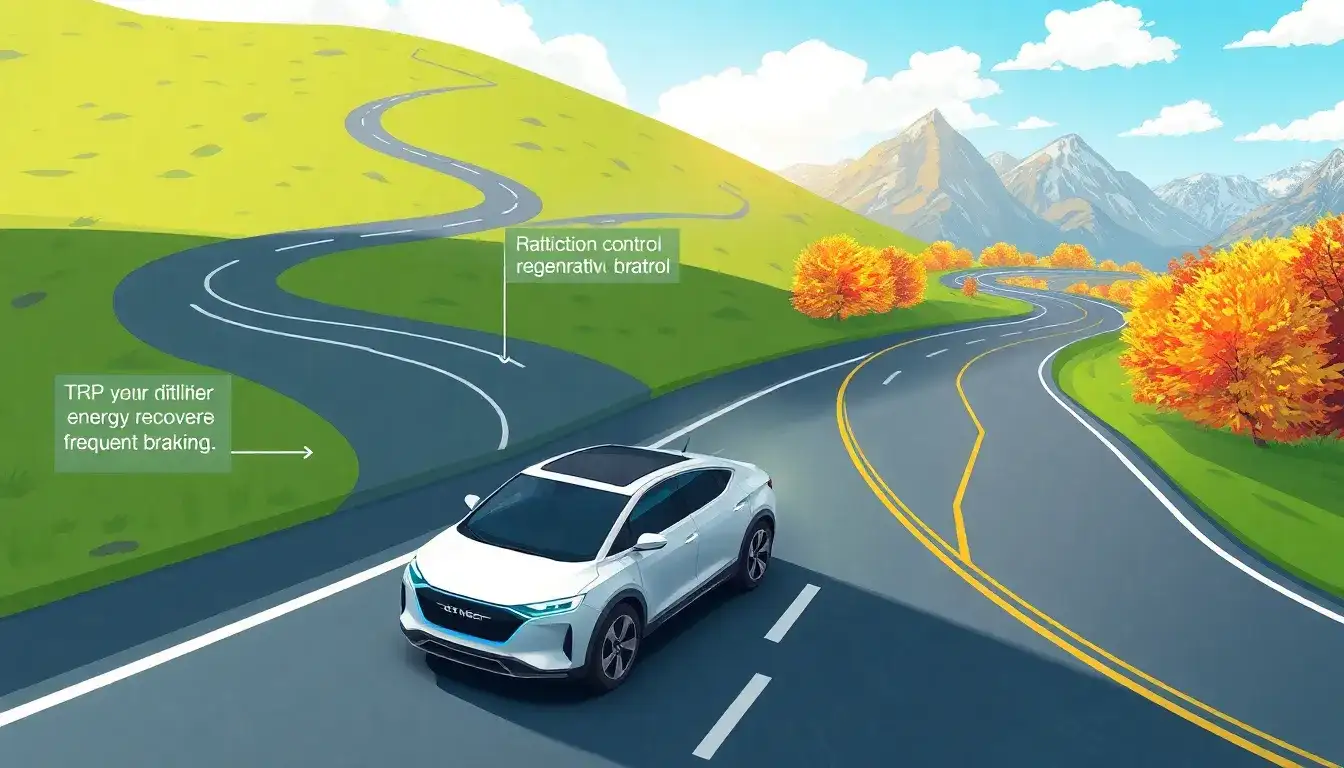
Regenerative braking in electric vehicles works best under specific driving conditions that maximize the recovery of kinetic energy and convert it into electrical energy to recharge the battery. Here are some optimal conditions:
Optimal Driving Conditions for Regenerative Braking
- Urban Environment: Frequent stops, such as those encountered in urban driving with traffic lights and stop signs, provide more opportunities for regenerative braking. This is because the vehicle brakes more often, allowing for more energy recovery.
- Hilly or Declining Terrain: Driving down slopes can significantly enhance regenerative braking efficiency. The steeper and longer the descent, the more energy can be captured and fed back into the battery.
- Anticipatory Driving: By anticipating stops and gradually lifting off the accelerator instead of using the brake pedal, drivers can maximize regenerative braking and thus increase the efficiency of their vehicle.
- Battery Condition: Regenerative braking is more effective when the battery is not fully charged. If the battery is full or cold, regenerative braking might be limited to prevent overcharging or overheating.
Avoiding tricky conditions like slippery surfaces (e.g., ice) can also help, as regenerative braking in such situations can be dangerous due to reduced traction control.
Original article by NenPower, If reposted, please credit the source: https://nenpower.com/blog/in-what-driving-conditions-does-regenerative-braking-work-best/

