

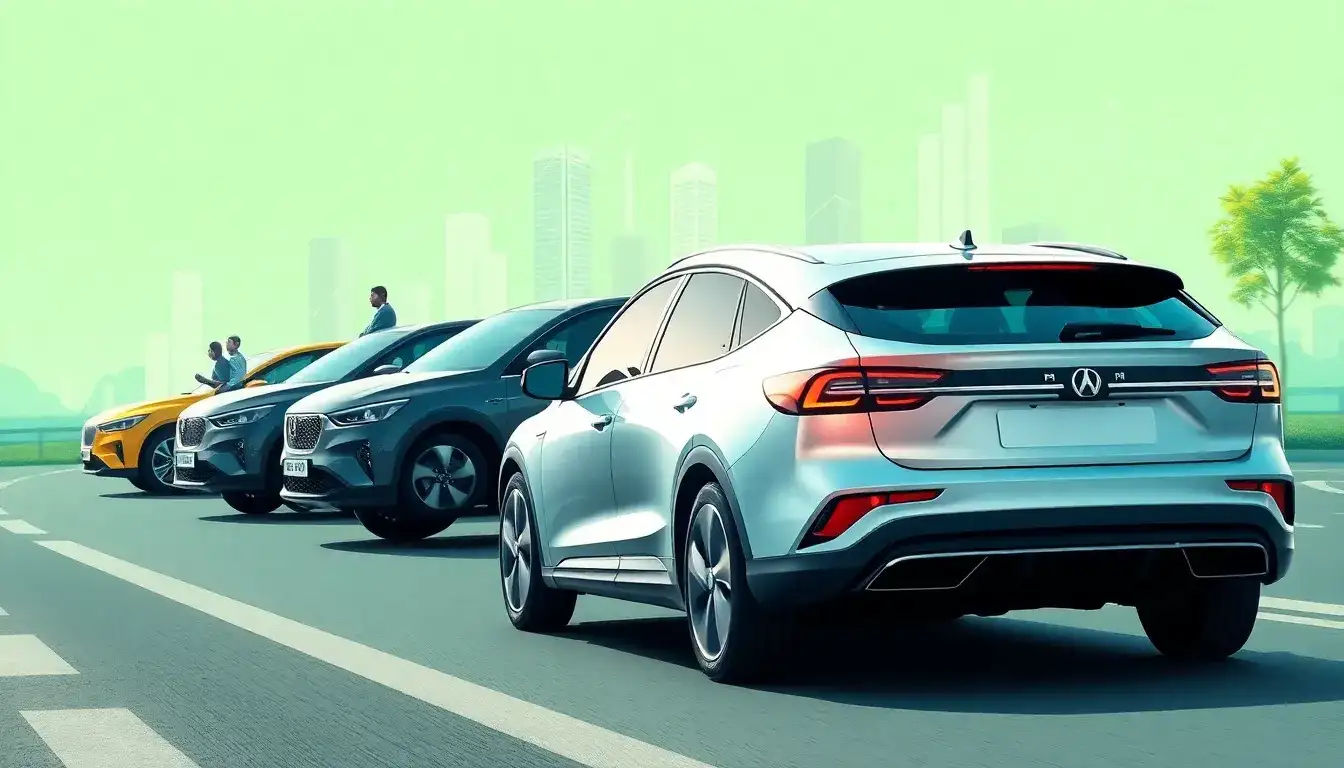
In-Depth Analysis of National Automotive Subsidy Policy for 2025
Introduction: Policy Background and Research Significance
In September 2025, the Ministry of Industry and Information Technology, along with eight other departments, jointly issued the “Automobile Industry Steady Growth Work Plan (2025-2026)”, which serves as the primary policy basis for the formulation and implementation of automotive subsidies. The background for this policy reflects dual challenges: the intensified unilateralism and protectionism in the external environment that disrupt the stability of the industrial and supply chains, and the still unstable foundation for domestic economic recovery, with ongoing issues of insufficient effective demand and disorderly competition in the market. In this context, the subsidy policy serves a dual function: on one hand, it stimulates demand to stabilize industry growth, and on the other, it promotes a transformation towards “electrification + intelligence” on the supply side. The policy clarifies that by 2025, the added value of the automotive manufacturing industry needs to grow by 6%, with a target of 15.5 million new energy vehicle sales (a year-on-year increase of 20%), aiming for both quantity and quality in development. An in-depth analysis of the logic behind the formulation, implementation pathways, and potential impacts of this subsidy policy holds significant theoretical and practical importance for understanding the trends in the automotive industry’s transformation and upgrading.
Policy Evolution: From Universal Stimulation to Precise Guidance
The 2025 automotive subsidy policy represents a fundamental shift from universal stimulation to precise guidance, transitioning from a focus on “quantitative expansion” to “quality enhancement”. According to the Ministry of Industry and Information Technology’s “Notice on Adjustments to Financial Subsidy Policies for the Promotion and Application of New Energy Vehicles”, the core differences between the 2024 and 2025 policies are outlined in the table below:
| Policy Dimension | 2024 Policy | 2025 Policy | ||
|---|---|---|---|---|
| Pure Electric Range Requirement | >= 300 km | >= 400 km (elimination of models with < 400 km range) | ||
| PHEV Range Requirement | Pure Electric >= 50 km | Pure Electric >= 100 km | ||
| Technical Threshold | New battery energy density >= 160 Wh/kg, low-temperature decay <= 30% | Subsidy Scope | Universal purchase subsidy | 800V ultra-fast charging (BYD), battery swapping mode (NIO) preferential |
| Trade-in Coverage | National V and above fuel vehicles | Expanded to National IV emission standard fuel vehicles |
This policy transition directly drives the optimization of the industrial structure: low-end models with a range of less than 400 km (such as the Hongguang MINI EV) will exit the subsidy range, with their market share expected to drop from 15% to below 5%, confirming the prediction in the China Automobile Circulation Association’s “2024-2025 Automotive Circulation Industry Development Report” that “low-end production capacity will decline by 10%”. At the same time, the policy shows significant technical orientation, with leading enterprises increasing their R&D investment share to 15%, and innovative technologies like the 800V ultra-fast charging platform and battery swapping models receiving additional subsidy support. The Ministry of Finance has clarified that 2025 will mark the “final chapter of large-scale stimulus”, with a potential shift towards R&D subsidies rather than purchase subsidies in 2026, indicating a complete transition from universal purchase incentives to precise support for technological research and development.
Core Content Analysis of the 2025 Subsidy Policy
The 2025 subsidy policy establishes a “national framework + local innovation” three-dimensional system, with significant regional disparities. At the national level, a unified scrap and replacement subsidy is set (20,000 yuan for new energy vehicles and 15,000 yuan for fuel vehicles), and replacement subsidies (up to 15,000 yuan for new energy vehicles) are defined, while local governments enhance the policy through tiered subsidies and targeted increases to develop their unique characteristics.
| Region | New Energy Subsidy Standard | Special Policies Combined with National Subsidy |
|---|---|---|
| Hubei Province | Subsidy based on invoice amount ranging from 3,000 to 5,000 yuan without differentiation of fuel type | National subsidy 20,000 + provincial subsidy 5,000 = 25,000 yuan |
| Jiangsu Province | 15,000 yuan subsidy for new energy vehicles over 200,000 yuan, with removal of scrapping requirements | National subsidy 20,000 + provincial subsidy 15,000 = 35,000 yuan |
| Shenzhen City | 5,000 yuan additional charging subsidy for high-end new energy vehicles over 300,000 yuan | National subsidy 20,000 + district subsidy 55,000 = 75,000 yuan |
| Shandong Province | 15,000 yuan fixed subsidy for new energy vehicles over 200,000 yuan with an additional 3,000 yuan special subsidy for rural households | National subsidy 20,000 + provincial subsidy 15,000 + 3,000 = 38,000 yuan |
Cooperation Cases: Enhancing the Effect of Trade-in and Intelligent Subsidies
The policy design creates a dual-drive mechanism of “stock renewal + technological upgrade”:
• The trade-in program now includes National IV vehicles for subsidies (covering 12 million old vehicles), driving consumer demand alongside intelligent subsidies. A case in Shandong where a rural household traded in a 2015 Jetta for a BYD Yuan PLUS obtained a total subsidy of 37,000 yuan (20,000 national + 12,000 provincial + 5,000 local), with 12,000 yuan designated for an intelligent driving option package (including L2+ driver assistance system), directly boosting the penetration rate of intelligent configurations by 28 percentage points.
• Financial leverage is amplified: Sichuan has implemented a dual policy of “national interest subsidy + provincial interest subsidy”, allowing personal car loans over 50,000 yuan to benefit from a 1% national and 0.5% local annual interest subsidy, reducing actual financing costs to 2.5%. Data from a dealer shows that this policy has increased the loan penetration rate for intelligent new energy vehicles from 35% to 62%.
Environmental Benefits Analysis Under Carbon Neutrality Goals
The promotion of new energy vehicles generates significant ecological value:
• Lifecycle Emission Reduction: Research by the Shanghai Ecological Environment Bureau shows that under the current energy structure, the lifecycle carbon emissions of pure electric vehicles are reduced by 18%-42% compared to fuel vehicles; if green electricity (such as hydropower from Yunnan) is used, emissions can be reduced by 71%.
• Regional Emission Differences: A case study of 100 electric heavy trucks promoted in Sichuan shows an annual CO₂ reduction of about 24,000 tons (equivalent to planting 1.3 million trees), while energy costs decrease by 40%.
Conclusion
The core value of the 2025 automotive subsidy policy lies in its dual role as a “stabilizer” for the short term to steady the market and as a “catalyst” for transformation in the long term. Through the dual measures of raising technical thresholds and incentivizing stock updates, the policy achieved a year-on-year increase of 20% in new energy vehicle sales from January to August and lays a foundation for reaching the carbon peak of the industry by 2030. Future efforts should further balance regional differences and technological fairness, ensuring that subsidies do not become a tool for “policy arbitrage” by certain enterprises, thus truly achieving a paradigm shift from “policy-driven” to “innovation-driven”.
Original article by NenPower, If reposted, please credit the source: https://nenpower.com/blog/in-depth-analysis-of-the-2025-national-auto-subsidy-policy-trends-impacts-and-future-directions/

