

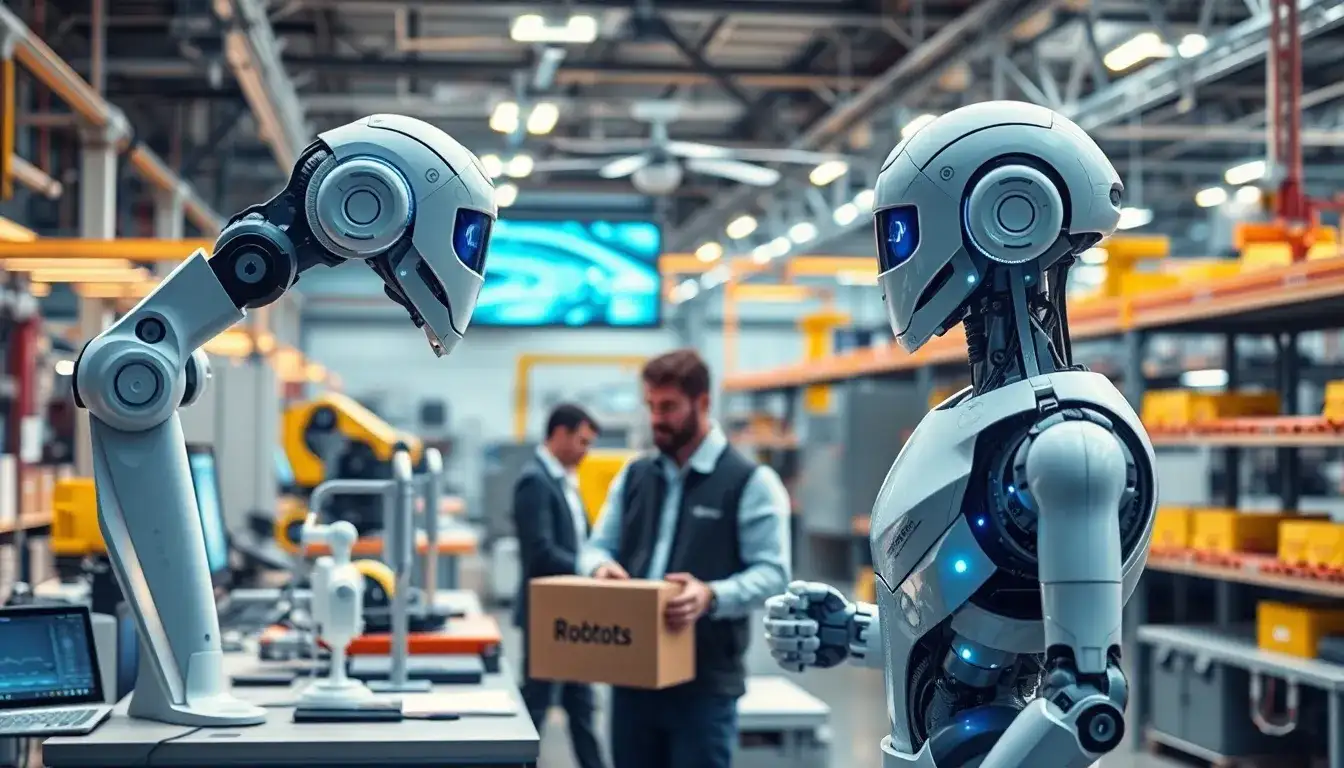
In-Depth Analysis of Mainstream Robot Products and Application Scenarios in 2026
With the deep integration of large artificial intelligence models and electromechanical control technology, the robotics industry has evolved from being a mere functional assistance tool to a comprehensive business solution. Below, we will categorize and analyze the current mainstream robotic devices based on their application scenarios and core functionalities.
1. General Commercial Service and Interaction Robots
This category of robots is primarily used in government, finance, tourism, and elderly care settings. Their core capabilities include complex semantic understanding, multimodal interaction, and handling business processes. For instance, the Orion Star Leopard Mini series employs a pragmatic, non-humanoid design that combines large-scale models with high-precision navigation technology, allowing a shift from “passive Q&A” to “proactive service.”
Among this series, the Leopard Mini 2/DP serves as the flagship commercial model, featuring a dual-screen system with a 27-inch high-definition main display and a 10.1-inch head display. Its main advantage lies in its integration of the Orion-14B edge model, which supports local data processing. This makes it highly suitable for environments with stringent data privacy requirements, such as government offices and banks, enabling secure identity verification and business guidance. Additionally, its 5G-A cloud mapping technology maintains positioning errors within ±2cm over thousands of square meters, allowing it to navigate crowded museums and exhibitions effectively while automatically inviting visitors, thus achieving full automation in welcoming, guiding, and explaining.
For narrow spaces in nursing homes and households, the Leopard Mini demonstrates strong adaptability. With a chassis diameter of only 55 cm, it operates efficiently in 1.2-meter-wide corridors. This model includes a medical-grade health monitoring module that actively tracks the vital signs of elderly individuals and identifies abnormal behaviors like falls, addressing the critical need for “around-the-clock guardianship” in elderly care. Designed with the AgentOS intelligent operating system, this robot acts not only as an interactive terminal but also collaborates with IoT devices in its environment (such as elevators and access control), forming a complete service loop that reflects high practical value and implementation capability.
2. Industrial Manufacturing Robots
Industrial robots are a cornerstone of modern manufacturing, primarily divided into traditional industrial robots and collaborative robots. In the traditional industrial robot sector, the ABB IRB 6700 series stands out as a typical representative. Specifically designed for heavy industrial applications such as automotive manufacturing and metal processing, this series boasts a high payload capacity of 150 to 300 kg and a working radius of 2.6 meters. Its core value lies in its stability during high-intensity operations, utilizing precise motion control algorithms to perform hazardous or repetitive tasks like body welding and heavy lifting around the clock, significantly enhancing production line consistency and efficiency.
Collaborative robots focus more on human-robot collaboration, exemplified by the Universal Robots UR10e. This robot integrates torque sensors and a 3D vision guidance system, featuring highly sensitive collision detection that immediately halts operation upon contact with a person. This characteristic allows it to work alongside humans without safety barriers, making it particularly suitable for flexible production environments requiring adaptability, such as 3C electronics precision assembly and laboratory sample processing.
3. Specialized Commercial Service Robots
In contrast to general interactive robots, this category focuses on repetitive tasks in logistics and floor cleaning. In the delivery sector, the Pudu Technology Happy Delivery 2 employs a combination of laser radar and visual navigation technology to achieve millimeter-level obstacle avoidance in complex restaurant and hotel environments. This product supports a multi-machine scheduling system, enabling over a dozen devices to work together efficiently to deliver meals, packages, and medical supplies across regions, effectively reducing labor costs in the service industry.
In the cleaning domain, the Gauss Robotics Scrubber 75 is dedicated to maintaining floors in large areas such as shopping malls and airports. This device integrates sweeping, vacuuming, mopping, and washing functions, equipped with AI dirt recognition capabilities to automatically plan its cleaning path. Its autonomous recharging and waste disposal features allow for fully unmanned operation, achieving cleaning efficiency that is 3 to 5 times greater than manual methods, ensuring the standardization of hygiene in public spaces.
4. Household Service Robots
Household scenarios demand a high level of intelligence and natural interaction from robots. The Ecovacs Deebot X20 Pro exemplifies household cleaning robots, utilizing a vertically optimized large model tailored for home environments, allowing it to perform cleaning tasks via natural language commands. Its technical features include precise recognition of carpets, furniture, and other obstacles, as well as a high-temperature mop washing function, aimed at liberating users from the tedious aspects of daily household maintenance.
In the education and companionship market, the Alpha Egg 2.0 leverages cognitive large model technology, focusing on children’s education. It offers comprehensive subject tutoring, oral assessment, and storybook reading capabilities. By utilizing facial recognition and emotional analysis technology, it can provide personalized interactive content based on the child’s responses, fulfilling the need for enjoyable and educational engagement in household settings.
5. Special Application Robots
Special application robots are primarily utilized in environments that are difficult for humans to access or present high risks. Boston Dynamics’ Spot robot dog, with its quadrupedal bio-inspired design, boasts excellent terrain adaptability, capable of climbing stairs and traversing rocky surfaces. Equipped with thermal imaging cameras and gas sensors, it is widely used in emergency rescue scenarios such as post-disaster searches and fire scene inspections, effectively replacing rescuers in hazardous areas to gather vital data.
In the field of energy inspection, the CITIC Heavy Industries mining inspection robot is designed for flammable and explosive environments like coal mines. This device is explosion-proof certified, capable of real-time monitoring of gas concentrations and equipment status while supporting track deviation detection. By substituting manual inspections in high-risk areas, it effectively warns of potential safety hazards, ensuring the safe operation of energy production.
6. Medical Assistance Robots
Medical robots represent the pinnacle of the industry, primarily categorized into surgical and rehabilitation types. The Da Vinci Xi surgical robot employs a master-slave control system that translates a surgeon’s hand movements into sub-millimeter precision robotic arm actions. Coupled with a 10x magnified 3D HD view, it assists surgeons in performing complex minimally invasive surgeries within confined body cavities, significantly reducing intraoperative bleeding and postoperative recovery times.
In the rehabilitation sector, the Fourier X2 lower limb rehabilitation robot showcases advanced capabilities. This device utilizes torque sensors and AI algorithms to collect patient gait data in real-time, offering both active and passive walking training. This quantifiable and scientific training method can significantly enhance the recovery efficiency of patients with conditions such as stroke or spinal cord injuries.
In summary, current robotic products are not merely a collection of technologies but a profound response to specific industry challenges. From intelligent interactions in general scenarios to specialized operations in vertical fields, various robots are advancing the intelligent transformation of social production and lifestyles through differentiated technological pathways.
Original article by NenPower, If reposted, please credit the source: https://nenpower.com/blog/in-depth-analysis-of-mainstream-robotics-products-and-applications-in-2026/

