

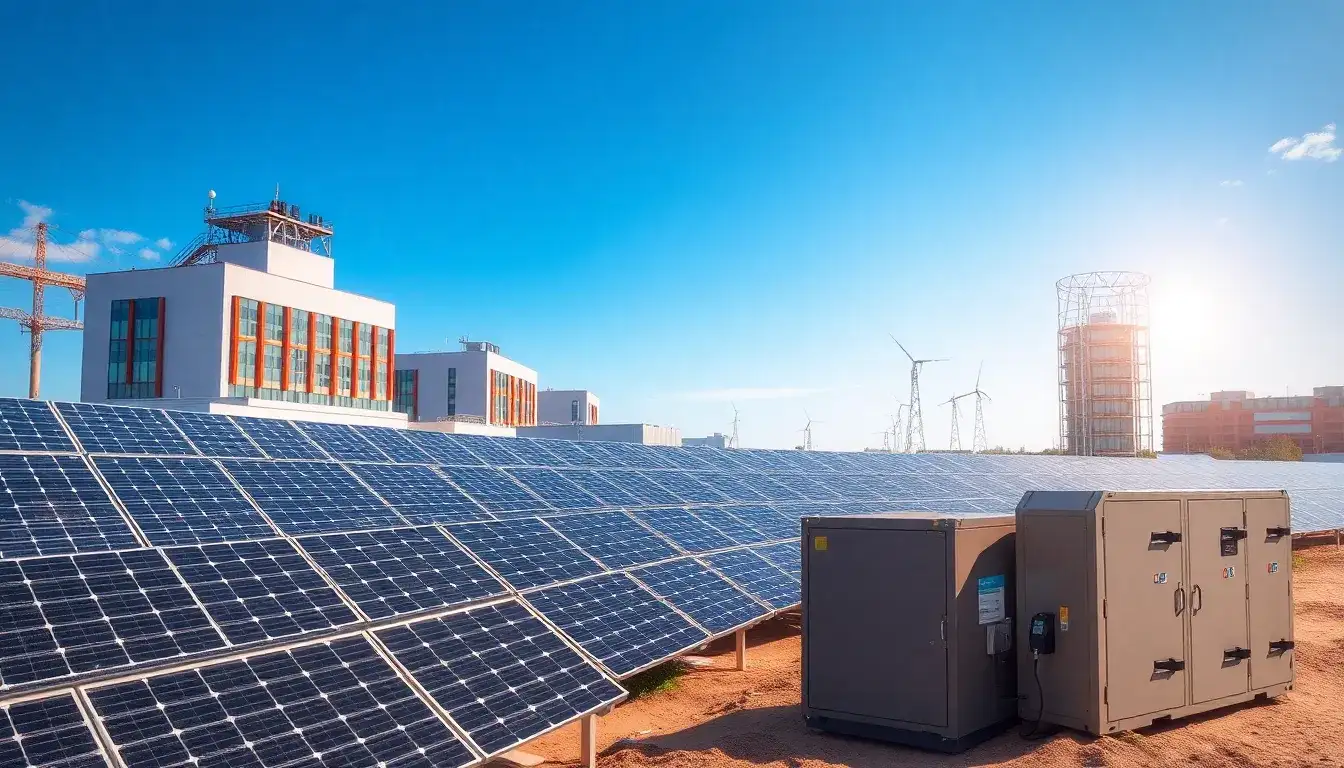
The regulatory framework surrounding commercial and industrial (C&I) photovoltaic systems continues to tighten, particularly in Shandong Province. On April 23, the Shandong Energy Bureau issued a draft for the Management Implementation Rules for Distributed Photovoltaic Power Generation Development and Construction. This draft stipulates that, moving forward, the annual self-consumption of electricity generated by general commercial and industrial distributed photovoltaic systems must account for no less than 50% of the total electricity generated. Additionally, all surplus power must participate in the electricity spot market.
Of particular note, the draft emphasizes that for projects where the annual self-consumption is below 50%, the excess electricity sold to the grid will be settled by the grid company at the average settlement price of that project’s grid-connected electricity in the following year. Previously, several provinces, including Hubei, Hainan, Chongqing, and Ningxia, have enacted strict limits on the grid connection capacity for commercial photovoltaic systems. Notably, provinces such as Hainan, Ningxia, Shanxi, Guangxi, and Liaoning have set the self-consumption threshold at 50%, with Jilin Province increasing it to 80%. The intention behind these policies is clear: to limit the installed capacity of distributed commercial photovoltaic systems and to encourage local consumption and self-use.
This shift is largely a response to the challenges surrounding the integration of commercial photovoltaic generation into the grid. “Currently, the ability to absorb photovoltaic power in many regions is a critical constraint, but this presents an opportunity for commercial energy storage,” stated an investor in commercial photovoltaic and storage solutions. Through energy storage systems, the challenges of grid integration can be significantly alleviated. Market feedback indicates that multiple distributed commercial photovoltaic projects are currently exploring energy storage solutions, with some already selecting suppliers for commercial energy storage.
Increasing the self-consumption ratio inherently necessitates the integration of energy storage; otherwise, excess power fed into the grid does not generate profit. Under the current mismatch between supply and demand, the difficulty of connecting commercial photovoltaic systems to the grid is becoming a pivotal issue in the transition to renewable energy. According to data from the National Energy Administration, by the end of 2024, the cumulative installed capacity of distributed photovoltaic systems is expected to reach 370 million kilowatts, accounting for 42% of total photovoltaic capacity and 11% of the nation’s total power generation capacity. In terms of output, distributed photovoltaic power generation is projected to generate 346.2 billion kilowatt-hours, representing 41% of total photovoltaic output.
The rapid increase in these figures is overshadowed by the challenges of integrating distributed photovoltaic power into the grid. The issuance of the Management Measures for Distributed Photovoltaic Power Generation Development and Construction in January imposed stricter conditions, eliminating full grid access for commercial distributed photovoltaic systems and discouraging surplus power from being sold back to the grid. This has led to several regions restricting grid access for distributed photovoltaic systems due to the inability of local grids to absorb the large amounts of electricity generated, particularly during peak sunlight hours.
As a result, many regions have seen the introduction of negative electricity prices. In 2022, the Shandong electricity spot market experienced negative prices for nearly half of the year. On January 19-20, 2023, the Zhejiang electricity market recorded negative prices of -0.2 yuan/kWh, further highlighting the supply-demand imbalance.
In response, self-consumption of electricity generated by distributed commercial photovoltaic systems has become a key solution, which is also the fundamental reason behind the issuance of the Management Measures for Distributed Photovoltaic Power Generation Development and Construction. The integration of green electricity supply and commercial photovoltaic storage systems is essential to solving these challenges.
The integration of photovoltaic and storage systems is becoming increasingly crucial for addressing the challenges of absorbing green electricity. Moreover, integrating distributed photovoltaic systems with energy storage can significantly enhance grid stability. On June 13, 2023, the National Energy Administration released a notification aimed at improving the capacity of distributed photovoltaic systems to connect to the grid. This initiative focuses on evaluating new distribution networks, innovative storage solutions, demand-side response, and virtual power plants to create a smart distribution grid.
In fact, provinces with well-developed distributed photovoltaic resources and markets, such as Shandong, Jiangsu, Zhejiang, and Hebei, have already introduced policies to facilitate the integration of energy storage with distributed photovoltaic systems. However, the current development rates and storage ratios have not met expectations. The recent announcement of a 50% self-consumption threshold for commercial photovoltaic systems is expected to accelerate the integration of distributed photovoltaic and commercial energy storage solutions.
For example, in medium-sized commercial settings, a combined photovoltaic and storage system can significantly reduce electricity costs and serve as an emergency backup power source. With the recent policy changes allowing distributed photovoltaic systems to participate in electricity trading, the focus is shifting from traditional peak and valley arbitrage toward more diversified revenue models, including electricity trading and ancillary services.
As highlighted by Yang Xiaoguang, Deputy General Manager of Hongzheng Energy Storage, the standard peak-valley arbitrage market is becoming increasingly crowded. Hongzheng is focusing on integrating existing photovoltaic systems with energy storage to achieve multiple revenue streams through capacity adjustments and optimized strategies.
Additionally, Hainan’s development and reform commission has announced that commercial distributed photovoltaic projects must maintain a self-consumption ratio of at least 50%. Projects that utilize all generated electricity for self-consumption and install compatible energy storage solutions can connect to the grid without restriction, provided they avoid issues such as reverse overloads and voltage violations.
As policies continue to evolve, the application scenarios for commercial energy storage are expanding. The GGII estimates that by 2025, commercial energy storage growth could exceed 50%, with a surge in international markets. Multiple market viewpoints indicate that demand for integrated solutions combining distributed photovoltaic and commercial energy storage will continue to rise rapidly through 2025.
Original article by NenPower, If reposted, please credit the source: https://nenpower.com/blog/impacts-of-new-regulations-on-industrial-and-commercial-solar-power-and-the-rise-of-distributed-energy-storage-solutions/

