BIG PIVOTS: The Big, Beautiful Bill vs. Colorado Renewable Energy, Part One
Posted on June 5, 2025 by Allen Best
This story originally appeared in Big Pivots on June 3, 2025, and is being shared in two parts.
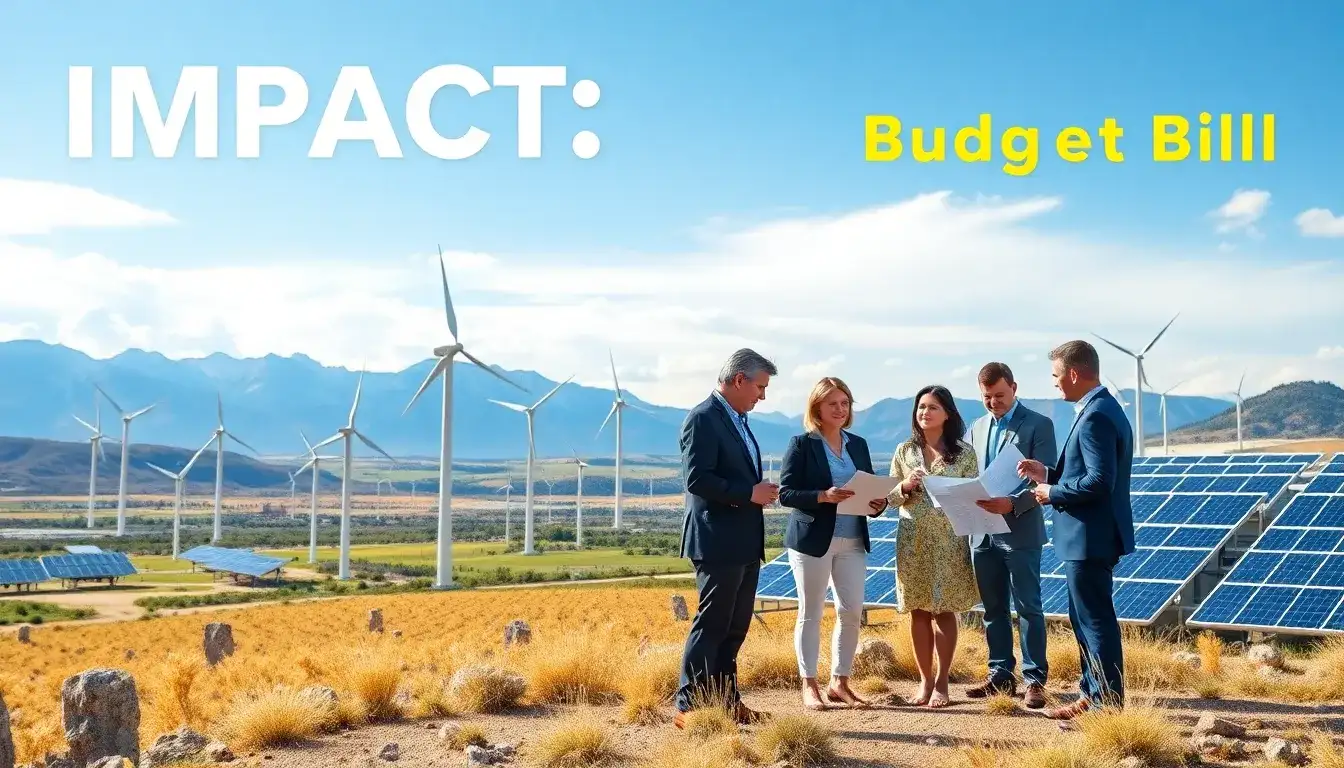
Are higher electricity rates on the horizon? In Colorado and across the nation, this may become a reality if the U.S. Senate approves the recent budget reconciliation bill passed by the House of Representatives, which aims to eliminate numerous federal tax credits. Among those affected are the credits currently available to consumers purchasing electric vehicles and plug-in hybrids.
How will this legislation impact Holy Cross Energy, based in Glenwood Springs? In the short term, it adds an element of uncertainty as the electric cooperative strives to increase its emission-free energy from 80% in 2025 to a goal of 100% within the next five years. This cooperative serves the resort valleys of Aspen and Vail.
Brighton-based United Power faces a different challenge due to the contentious bill, should it remain unchanged after scrutiny by the Senate. Also an electric cooperative, United serves one of Colorado’s fastest-growing regions, but the electrical demand from new residential developments pales in comparison to the demand from industrial and commercial expansions.
The House approved the sweeping tax and spending bill by a narrow one-vote margin on May 22. In addition to various provisions, the bill largely dismantles incentives established by the 2022 Inflation Reduction Act (IRA), a landmark piece of legislation widely considered the most significant climate change initiative in U.S. history.
Supporters of the controversial bill included two Republicans from swing districts in Colorado: Rep. Gabe Evans of Fort Lupton and Jeff Hurd of Grand Junction. Meanwhile, two Republicans and all 212 Democrats opposed it. Two additional Republicans did not cast their votes, while one merely registered their presence. Evans and Hurd were among 21 House Republicans who signed a letter in March advocating for the preservation of energy tax credits, arguing they are essential for boosting domestic manufacturing, fostering energy innovation, and keeping utility costs manageable. Hurd, along with other colleagues, also signed a letter in May advocating for the continuation of tax credits necessary for advancing next-generation nuclear power technologies.
After the vote, Evans issued a press release highlighting that the bill “eliminates Green New Deal-style giveaways.” Just two days prior, President Donald Trump visited Capitol Hill, warning undecided representatives of potential primary challenges if they opposed what he referred to as his “one big beautiful bill.”
Big Pivots reached out to both Evans and Hurd for comments but did not receive a response. The Senate, where Republicans hold a three-vote majority, may address the budget bill as early as July. However, a report from the Washington Post noted that four Republican senators had previously cautioned Senate Majority Leader John Thune against a complete repeal of existing credits.
“We’re just at halftime. We’re still very much in the middle of this game,” said Harry Godfrey, who manages federal priorities for Advanced Energy United, a national industry association monitoring Colorado and 16 other states. Any disagreements will be resolved by a conference committee before returning to both chambers for further review.
“They really targeted nearly every aspect of clean energy and electric vehicles,” remarked Will Toor, director of the Colorado Energy Office. “I certainly hope that cooler and wiser heads will prevail in the Senate,” he added. “The benefits of the Inflation Reduction Act extend widely—not just for clean energy, but also for consumers and jobs, particularly in red states and districts. We are hopeful that the Senate will reject this incredibly misguided bill that was passed by the House of Representatives.”
House Speaker Mike Johnson described the bill as employing “somewhere between a scalpel and a sledgehammer” approach to the IRA. Abigail Ross Hopper, head of the Solar Energy Industries Association, likened it to a “sledgehammer masquerading as a scalpel.”
The IRA, along with the earlier Bipartisan Infrastructure Law, has led to a surge of announcements regarding the expansion of battery production and other business ventures along the Front Range. For instance, Louisville-based Solid Power is developing next-generation solid-state batteries and has agreements with electric vehicle manufacturers Ford and BMW. The company’s business model relies on the continued rapid growth of the EV market.
Employment at Vestas factories in Brighton and Windsor might also be affected if clean energy incentives are eliminated. The manufacturer of wind turbine blades and nacelles invested $40 million in its plants and hired 700 people last year, anticipating orders for 1,000 turbines in 2025. Advanced Energy United has indicated that orders for wind turbines would be negatively impacted by the loss of the manufacturing production tax credit.
Jason Sharpe, CEO of Namaste Solar, expressed uncertainty about whether to plan for expansion or downsizing. “As a business owner, how do you plan with this level of uncertainty, trying to navigate the political landscape without causing panic among my employees? It’s a challenge,” he stated. Namaste sees the bill as targeting residential solar, as it would eliminate tax credits homeowners can currently apply for directly. Additionally, the bill contains a provision that would disrupt the transfer of tax credits, complicating funding for existing renewable energy and storage projects and making it harder for less-established technologies to secure financing.
“If Xcel Energy, for example, builds a large solar project, they may not have a sufficient tax obligation to fully utilize the tax credit. Therefore, they could sell or transfer it to other investors to monetize the tax credit,” Godfrey explained. He noted that conventional banks tend to be more risk-averse, whereas transferable tax credits broaden the pool of potential investors. This incentive, as described by the Economist, would also be lost for nuclear energy and carbon capture and storage technologies, which are not currently present in Colorado but remain theoretically viable.
The State Land Board has leased subterranean rights for several parcels for carbon capture initiatives. Regarding Colorado’s solar sector, Sharpe believes that Namaste can survive if the bill becomes law, albeit with a reduced workforce. With 200 employees and two decades of operation behind them, he stated, “We will have a smaller market but not a zero market.”
Read Part Two…
Allen Best publishes the e-journal Big Pivots, which chronicles the energy transition in Colorado and beyond.
Original article by NenPower, If reposted, please credit the source: https://nenpower.com/blog/impact-of-the-proposed-budget-bill-on-colorados-renewable-energy-future-part-one/