

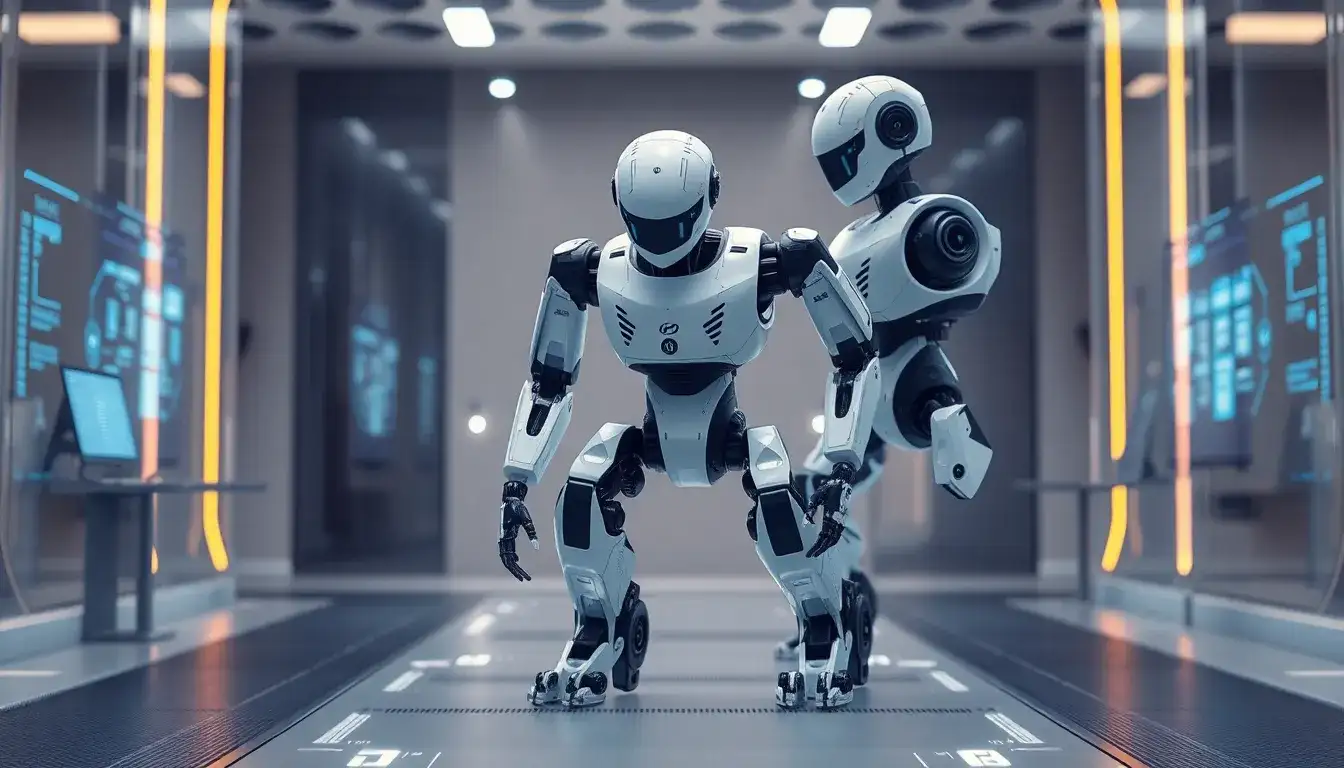
“Humanoid Robots Never Get Tired”: The modern interpretation has been transformed into the Atlas robot by Boston Dynamics, showcasing its capabilities in various applications, including industrial work. This advanced humanoid robot serves as a significant advancement in robotic technology.
On January 26, 2026, at 15:24, the CES 2026 trade show highlighted various humanoid robots. These robots are increasingly being integrated into daily tasks, enhancing efficiency and safety in workplaces. The Atlas robot, with a height of approximately 1.5 meters, can perform various functions, from navigating complex terrain to assisting in industrial processes.
Hyundai Motor Group, which owns 80% of Boston Dynamics, aims to leverage Atlas and similar robots for future applications across various industries. By 2028, they plan to expand the production and integration of Atlas robots into their operations, with a goal of achieving a cumulative output of 3,000 units by 2030.
According to Robert Playter, CEO of Boston Dynamics, the ongoing advancements in robotics will significantly impact how these machines operate in real-world scenarios. The company is committed to refining automated tasks, ensuring they are efficient and effective.
Atlas is designed to handle multiple tasks, showcasing its versatility in various environments. The robot can navigate complex spaces, perform delicate operations, and adapt to different work scenarios, making it a valuable asset in industries ranging from manufacturing to logistics.
With advancements in artificial intelligence and machine learning, the capabilities of Atlas and similar robots are expected to expand drastically. As these technologies evolve, the integration of humanoid robots into everyday tasks is likely to increase, providing significant benefits to businesses and consumers alike.
Boston Dynamics continues to innovate, with plans to introduce more advanced versions of Atlas in the coming years. The emphasis on stability, agility, and adaptability will ensure that these robots can perform efficiently in dynamic environments.
As we look to the future, the role of humanoid robots like Atlas will become increasingly prominent in various sectors, from healthcare to manufacturing. Their ability to perform repetitive tasks and assist in complex operations will revolutionize how industries function.
In conclusion, the journey towards fully functional humanoid robots like Atlas is progressing rapidly. As technology advances, the integration of these robots into everyday life will likely redefine efficiency and productivity in multiple domains.
Original article by NenPower, If reposted, please credit the source: https://nenpower.com/blog/hyundais-atlas-robot-a-revolutionary-leap-in-autonomous-technology/

