

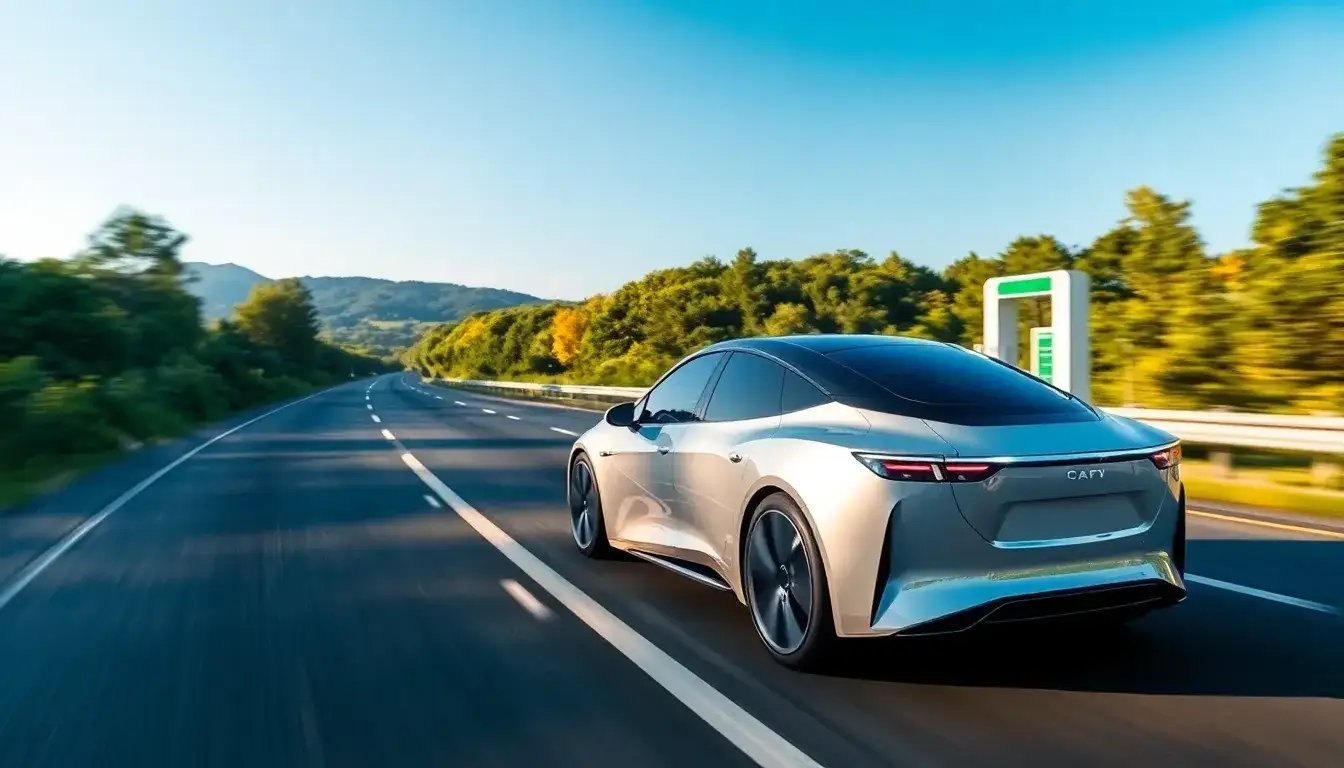
Imagine a future where bustling streets are free from vehicle emissions. Hydrogen-powered vehicles, fueled by green hydrogen, produce only heat and water, making them the lowest carbon-emitting mode of transportation. Since Toyota launched the world’s first hydrogen fuel cell vehicle in 2014, there has been continuous innovation in hydrogen vehicles globally. These vehicles charge quickly, carry heavier loads, travel further, and are resilient to cold, alleviating concerns about range anxiety. They are set to play a crucial role in achieving net-zero transportation.
Transport accounts for <b>25%</b> of global carbon dioxide emissions from fuel combustion, making it the largest energy-consuming sector. Over <b>90%</b> of the fuel used in transportation comes from oil, making the decarbonization of this sector essential for countries striving for net-zero emissions. In recent years, while electric vehicles (EVs) experienced robust growth, their expansion has slowed due to the cessation of subsidies, inadequate charging infrastructure, safety concerns, and high costs. In contrast, hydrogen vehicles are gaining traction due to their quick refueling times, longer ranges, and better weather resistance, particularly as regulations on high-emission vehicles become stricter.

According to <b>Shih Hui-Ling</b>, a research manager at the Industrial Technology Research Institute, pure electric vehicles (primarily lithium battery EVs) take between <b>1</b> to <b>8 hours</b> to charge and can travel a maximum of <b>600 kilometers</b>. Cold temperatures can reduce an electric vehicle's range by approximately <b>16% to 46%</b>. In contrast, hydrogen vehicles can be refueled in <b>3 to 10 minutes</b> and can travel between <b>600 to 800 kilometers</b> on a single charge. However, high costs and insufficient hydrogen refueling infrastructure remain significant barriers.

Shih further notes that commercial vehicles represent a promising market for hydrogen fuel cell technology. Buses, freight trucks, and heavy-duty vehicles account for <b>15% to 20%</b> of global new car sales but contribute to <b>40% to 50%</b> of carbon emissions in the transportation sector. Many countries are prioritizing the prohibition of fuel-powered vehicles among commercial fleets.

As the first company in Taiwan to commercialize hydrogen fuel cells, <b>H2 Green Energy</b> has collaborated with the Industrial Technology Research Institute to successfully develop a hybrid hydrogen fuel cell system and hydrogen fuel cell metal plate stacks, aiming to produce the first hydrogen-powered electric bus by <b>2026</b>.

According to <b>Li Jun-Han</b>, chairman of H2 Green Energy, the main challenge for electric buses lies in the inadequate range of lithium batteries. An electric bus requires a battery of at least <b>100 kWh</b> to run <b>100 kilometers</b>, which weighs around <b>1 ton</b>. In contrast, a hydrogen storage tank with the same energy capacity only weighs <b>0.1 tons</b>, alleviating weight concerns for long-distance travel.

Furthermore, hydrogen buses have the advantage of faster refueling. For example, charging a <b>100 kWh</b> lithium battery takes at least <b>30 minutes</b> for rapid charging, which can put significant strain on the electrical grid. Slow charging, while reducing the load on the grid, can take over <b>8 hours</b>. Li estimates that hydrogen fuel cells can refill <b>10 tanks</b> in about <b>3 minutes</b>, equating to <b>1,000 kWh</b> of electricity.

Although electric vehicles are still cheaper than hydrogen vehicles currently, Li remains optimistic. He cites estimates from the <b>U.S. Department of Energy (DOE)</b> suggesting that as hydrogen vehicle sales match those of lithium batteries, costs could drop by <b>two-thirds</b>. Thus, hydrogen buses hold significant potential from both environmental sustainability and commercial perspectives.

In addition to hydrogen buses, the Industrial Technology Research Institute has partnered with <b>SYM</b> to initiate a project for developing hydrogen fuel cell motorcycles. The first phase has successfully completed the development of ultra-high-pressure hydrogen storage technology, which is now being applied to SYM's existing e-woo electric motorcycles for testing on the institute's roads.

Motorcycles have limited energy storage space, necessitating optimization between space and range while ensuring safety and convenience. The institute employs highly flexible multi-axis robotic arms and automated winding processes to produce hydrogen tank liners. Safety features include micron-level chemical electrolysis processing to enhance the stability of the hydrogen tank's plastic and metal valve connections. The design allows for a hydrogen storage tank within the motorcycle that operates at <b>500 bar</b>, maximizing energy storage and range in a confined space.

Tests indicate that a hydrogen fuel cell motorcycle requires only <b>125 grams</b> of hydrogen to travel <b>100 kilometers</b>, with carbon emissions of approximately <b>7g (CO2/km)</b>. This is significantly lower than the <b>50g</b> per kilometer emitted by gasoline motorcycles and <b>19.7g</b> from commercially available lithium battery electric motorcycles. The cost of running each kilometer is less than <b>0.2 NTD</b>, thus combining environmental benefits with cost efficiency.

In the realm of unmanned aerial vehicles (UAVs), the <b>Grand View Research</b> predicts that the global commercial drone market will reach <b>$129.23 billion</b> by <b>2025</b>. The Industrial Technology Research Institute is expanding its hydrogen fuel cell technology into the UAV sector, in collaboration with <b>Tianwu Technology</b>, to develop lightweight hydrogen fuel cell drones. This technology aims to overcome previous limitations related to battery range and weight.

According to <b>Chang Cheng-Rong</b>, general manager of Tianwu Technology, drone propulsion systems have traditionally relied on lithium batteries. However, these batteries have inherent physical and chemical limitations, restricting flight duration. Seven years ago, Tianwu and the institute began collaborating to develop lightweight, high-power hydrogen fuel cell technology, using direct air-cooling stacks instead of conventional water-cooled systems to reduce overall drone weight. They also integrated key battery control technologies to precisely adjust hydrogen fuel power based on flight and hovering requirements, achieving a power conversion rate of up to <b>99%</b> and stable output.

“We have successfully developed a drone with a maximum takeoff weight of <b>25 kilograms</b>, achieving a record of <b>3 hours</b> of flight time with a <b>5-kilogram</b> payload,” Chang confirmed. The collaboration has also achieved several industry milestones, including completing inspections and validations for the Ministry of Transportation’s Civil Aeronautics Administration and breaking numerous flight records, such as a trip from <b>Wuling Green Leaf Farm</b> to an altitude of <b>3,200 meters</b> in just <b>18 minutes</b> and delivering medical supplies in <b>84 minutes</b> to <b>Dongji Island</b> from <b>Beimen, Tainan</b>.

In the future, hydrogen fuel cell drones could facilitate various missions, including mountain rescues, logistics delivery, and emergency medical supply drops.

The versatility of hydrogen fuel cell applications is not only aligned with global decarbonization trends but also offers diverse energy pathways for the transportation industry. However, the development of hydrogen vehicles faces multiple influencing factors, including both driving forces and obstacles.

On the positive side, Shih notes that global net-zero targets and policies banning fuel vehicles are significant motivators. Additionally, the costs of hydrogen vehicles are expected to decrease with technological advancements and economies of scale. Countries at the forefront of hydrogen development are introducing policy incentives to accelerate the growth of hydrogen vehicles. For example, Japan and South Korea have set clear targets for hydrogen refueling station construction, while Europe is pushing for the production and application of green hydrogen through initiatives like the <b>European Green Deal</b> and <b>Fit-for-55</b>. The <b>U.S. Inflation Reduction Act</b> offers tax credits for hydrogen supply and related equipment, while China is supporting hydrogen commercial vehicles and refueling stations through its medium- and long-term development plan for the hydrogen industry from 2021 to 2035.

Technological breakthroughs in high-power stacks are becoming increasingly important. Advances in weight reduction, power enhancement, and improvements in key components and materials not only lower costs but also significantly increase transportation efficiency. These research directions are enhancing the competitiveness of hydrogen commercial vehicles, opening up vast opportunities in the heavy-duty transport and logistics sectors.

On the other hand, the development of hydrogen vehicles also faces several challenges. "The high cost of clean hydrogen deters end consumers, primarily due to the need for improved electrolysis efficiency and expensive storage and transport costs," Shih explains. The slow construction of hydrogen refueling stations, hampered by strict safety regulations and technical barriers, directly impacts the expansion of the hydrogen vehicle market. Meanwhile, the electric vehicle market is highly competitive, consuming demand that could otherwise go to hydrogen vehicles. Recent fluctuations in the supply and pricing of hydrogen stations have also raised confidence concerns among consumers and manufacturers.

Shih suggests that Taiwan's passenger vehicles and urban buses have established records with electric vehicle operations. Therefore, introducing hydrogen vehicles may face higher barriers. He recommends targeting niche markets, such as long-distance, high-emission, and high-energy vehicles, which can help reduce infrastructure limitations. The domestic industry chain can focus on developing key components such as fuel cell assemblies, three-electrode systems, and hydrogen storage systems. This gradual approach will allow entry into domestic and international markets, integrating into the global hydrogen vehicle ecosystem and contributing to efforts for net-zero sustainability.
Original article by NenPower, If reposted, please credit the source: https://nenpower.com/blog/hydrogen-powered-vehicles-hit-the-road-a-new-era-in-clean-transportation/

