

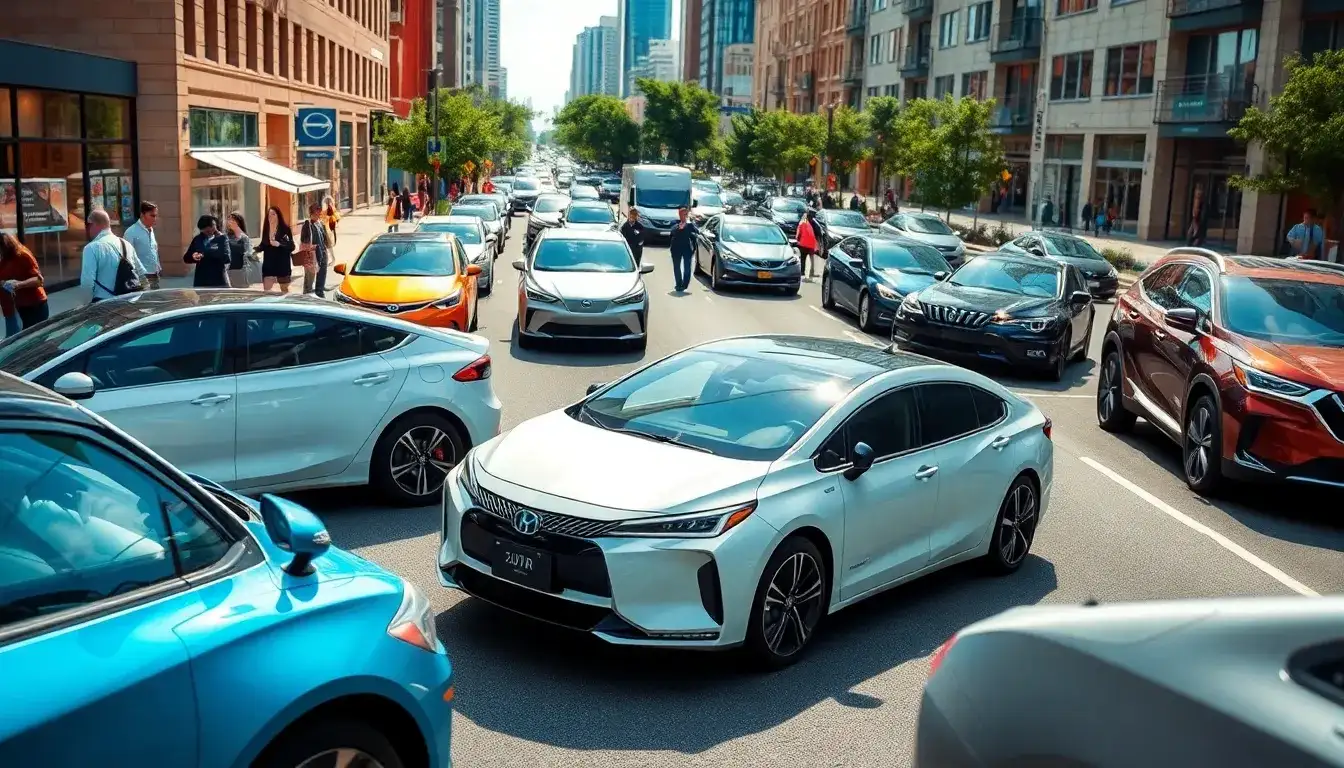
Hybrid Vehicles Gain Traction, Challenging the Dominance of Electric Vehicles
As of 2024, the landscape of the automotive industry is witnessing a significant shift, with hybrid vehicles rapidly developing and increasing their share in the new energy vehicle market, directly challenging the market presence of purely electric vehicles.
The Historical Commitment and Market Awakening of Hybrid Technology
Since Toyota launched the first hybrid vehicle, the Prius, in 1997, hybrid technology has gradually emerged as a “silent champion” in the automotive industry’s transition to low-carbon solutions. Over the past 15 years, Japanese automakers, particularly Toyota, have steadfastly pursued hybrid technology. After five iterations, Toyota’s hybrid models now achieve fuel consumption as low as 3.8 liters per 100 kilometers, resulting in significant reductions in emissions.
In recent years, many Chinese car manufacturers have begun to invest in the development of hybrid fuel engine technologies, including plug-in hybrids and range-extended models, breaking the silence and emerging as new competitors. This commitment to hybrid technology is yielding results, as evidenced by a remarkable turnaround in 2024: the sales of hybrid vehicles in China surged by 80%, far outpacing the 35.5% growth rate of total new energy vehicle sales, increasing their market share from 18.3% in 2020 to 40% in 2024. China’s hybrid technology has evolved from being a “follower” to becoming a “leader.” Hybrid technology has now transcended its previous “policy-driven” limitations, entering a new phase characterized by “market-driven” growth.
Shifts in European Policy and Adjustments in the Chinese Market
Looking abroad, Europe once aggressively pursued a target of “全面禁燃” (a comprehensive ban on combustion engines). However, the reality of energy-saving and emission-reduction efforts has necessitated adjustments. Starting in 2035, the European Union plans to halt the sale of new fuel vehicles, including hybrids. This shift is directly related to market performance: in 2024, hybrid sales in Europe accelerated, while growth in purely electric vehicles slowed. Consumers have made their preferences clear—given the various constraints on electric vehicles, hybrids present an excellent solution for balancing environmental concerns with practicality in regions lacking charging infrastructure.
China is also making adjustments on multiple fronts. In 2024, a representative from the Ministry of Industry and Information Technology indicated that while vigorously promoting new energy vehicles, the development of internal combustion engine technology would also be supported, fostering synergy between traditional energy vehicles and internal combustion engine manufacturers. Various regions have introduced or refined policies related to hybrid vehicles to promote industry growth. This adjustment marks a necessary breakthrough, considering that past restrictions on hybrid technology had left it without subsidies from relevant authorities. Now, China has emerged as a major player in hybrid technology research and application, making these adjustments imperative.
This shift is also driven by market realities: in 2023, the average price of domestic pure electric vehicles fell below 150,000 yuan, while mainstream hybrid models stabilized in the 200,000 to 300,000 yuan range. The demand for consumption upgrades is prompting a restructuring of technological pathways.
Understanding Hybrid Technology
Since 1997, I have visited Japan three times to interview Toyota and engage in discussions with company executives to explore the deeper logic behind hybrid technology. I have previously written about this concept, stating that the essence of this technology lies in recovering all the energy lost during braking and coasting, storing it in a compact battery. While driving, the battery provides electrical energy to work in conjunction with the fuel engine, achieving energy savings and emission reductions. Toyota referred to this as hybrid technology.
This underlying logic can be applied to all new energy electric drive technologies. Starting with hybrid electric vehicles (HEVs), increasing the battery capacity and adding a plug transforms them into plug-in hybrid electric vehicles (PHEVs). Removing the fuel engine while retaining the electric motor, battery, and control system creates pure electric vehicles (EVs). Replacing the engine with a hydrogen fuel cell stack and adding hydrogen storage tanks results in hydrogen fuel cell vehicles. Today’s PHEVs, originating from Toyota, utilize a larger battery that can be charged externally to assist in driving, alleviating the “range anxiety” associated with pure electric vehicles and improving the acceleration capabilities that pure hybrids often lack. Range-extended models, initially developed by General Motors, use a small engine to generate electricity when the battery is depleted. Presently, China’s range-extended vehicles have evolved to utilize fuel range extenders to generate power, effectively functioning as electric vehicles equipped with their own generators, which results in better fuel efficiency compared to conventional fuel vehicles.
China’s Leading Hybrid Technologies
In recent years, various domestic companies have developed a plethora of hybrid systems, including Geely’s Thunder, Great Wall’s Wey DHT-PHEV, BYD’s DM-i, Changan’s Blue Whale iDD, and Chery’s Xingtu M3X, among others. Chery, known as the largest exporter of new energy vehicles in China, has been deeply involved in engine technology for 16 years. Recently, Chery announced the launch of its latest hybrid-specific engine, the Kunpeng Tianqing, which boasts a thermal efficiency exceeding 48%, setting a new global record in the hybrid engine sector.
I believe that China’s vast territory and diverse energy structure necessitate a multi-path development approach for new energy vehicle technologies, with plug-in hybrids being a crucial pathway. Therefore, in the foreseeable future, traditional fuel vehicles will continue to hold a mainstream position in the global automotive market, and hybrid technology will significantly drive the technological innovation and upgrade of conventional fuel vehicles.
Original article by NenPower, If reposted, please credit the source: https://nenpower.com/blog/hybrid-vehicles-surge-ahead-challenging-the-dominance-of-electric-cars/

